
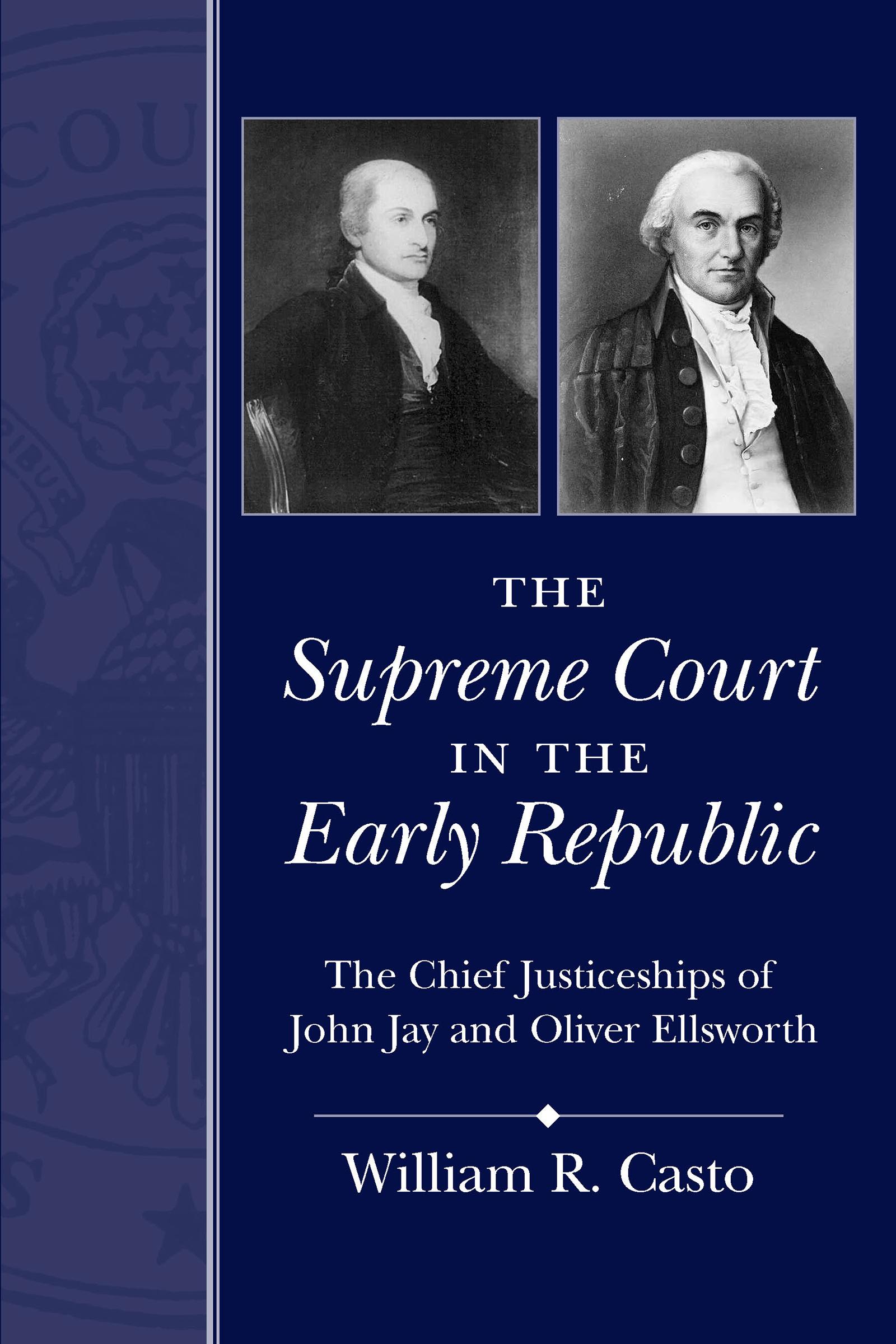
An insightful look at the first Supreme Court and the controversies that surrounded the judicial body
William R. Casto sheds a new light on America's federal judiciary and the changing legal landscape with his detailed examination of the Supreme Court's formative years. In a study that spans the period from the Court's tentative beginnings through the appointment of its third chief justice, Casto reveals a judicial body quite different in orientation and philosophy from the current Supreme Court and one with a legacy of enduring significance for the U.S. legal system.
Casto portrays the founding of the Supreme Court as a conscious effort to help the newly established government deal more effectively with national security and foreign policy concerns, and he credits the Court with assisting the Washington and Adams administrations establish stable relationships with Great Britain and France. The initial debate over the Supreme Court's jurisdiction as well as over the method of selecting its justices is recalled here.
Casto also reveals the philosophical mindset of the first Supreme Court, contrasting the eighteenth-century concept of natural law with the legal positivism on which the Supreme Court now relies. Using this historical context, he addresses the political controversy over federal common-law crimes, the drafting of the Judiciary Act of 1789, and the adoption of judicial
review.
Betal enkelt med kort, Klarna, Apple Pay eller Google Pay. Ikke fornøyd? Du har alltid 14 dagers angrerett. Les mer i våre vilkår. Har du spørsmål, send oss en e-post på hello@memmo.org.
Memmo gjør det enklere å studere – uansett hvor du er i verden. Hos oss samler du pensumbøker og smarte studieverktøy på ett og samme sted: sammendrag, quizer, podkaster og flashcards. Og så Ted, din studiekompis som svarer på alt du lurer på. Over 50 000 studenter studerer allerede her – bygget for at du skal lære raskere og stresse mindre.