
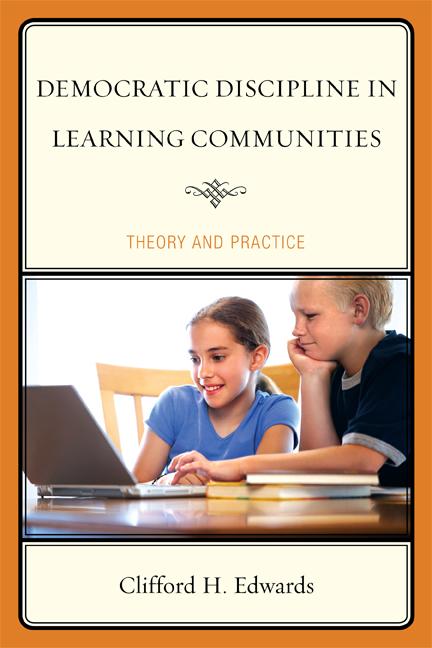
This book describes in detail the attributes of learning communities and how these characteristics help students acquire a sense of moral responsibility and commitment to fellow students. Clifford H. Edwards provides an account of how schools fail to satisfy student needs and thus promote discipline problems. Special attention is given to children's need for self-direction and how empowering them can promote more responsible learning involvement. There is also a focus on the factors that motivate learning and those that do not and how teachers can help their students become more intrinsically interested in school learning. Constructivist learning theory is presented as the most accepted explanation of how children learn and how it articulates with the learning community approach to education. The inquiry learning strategy is given as the most effective way to apply constructivist learning theory in classrooms. Appropriate relationships and effective communications are presented as essential components of learning communities and how they accentuate the effectiveness of this learning orientation. Democratic discipline within learning communities is described in detail.
Betal enkelt med kort, Klarna, Apple Pay eller Google Pay. Ikke fornøyd? Du har alltid 14 dagers angrerett. Les mer i våre vilkår. Har du spørsmål, send oss en e-post på hello@memmo.org.
Memmo gjør det enklere å studere – uansett hvor du er i verden. Hos oss samler du pensumbøker og smarte studieverktøy på ett og samme sted: sammendrag, quizer, podkaster og flashcards. Og så Ted, din studiekompis som svarer på alt du lurer på. Over 50 000 studenter studerer allerede her – bygget for at du skal lære raskere og stresse mindre.