
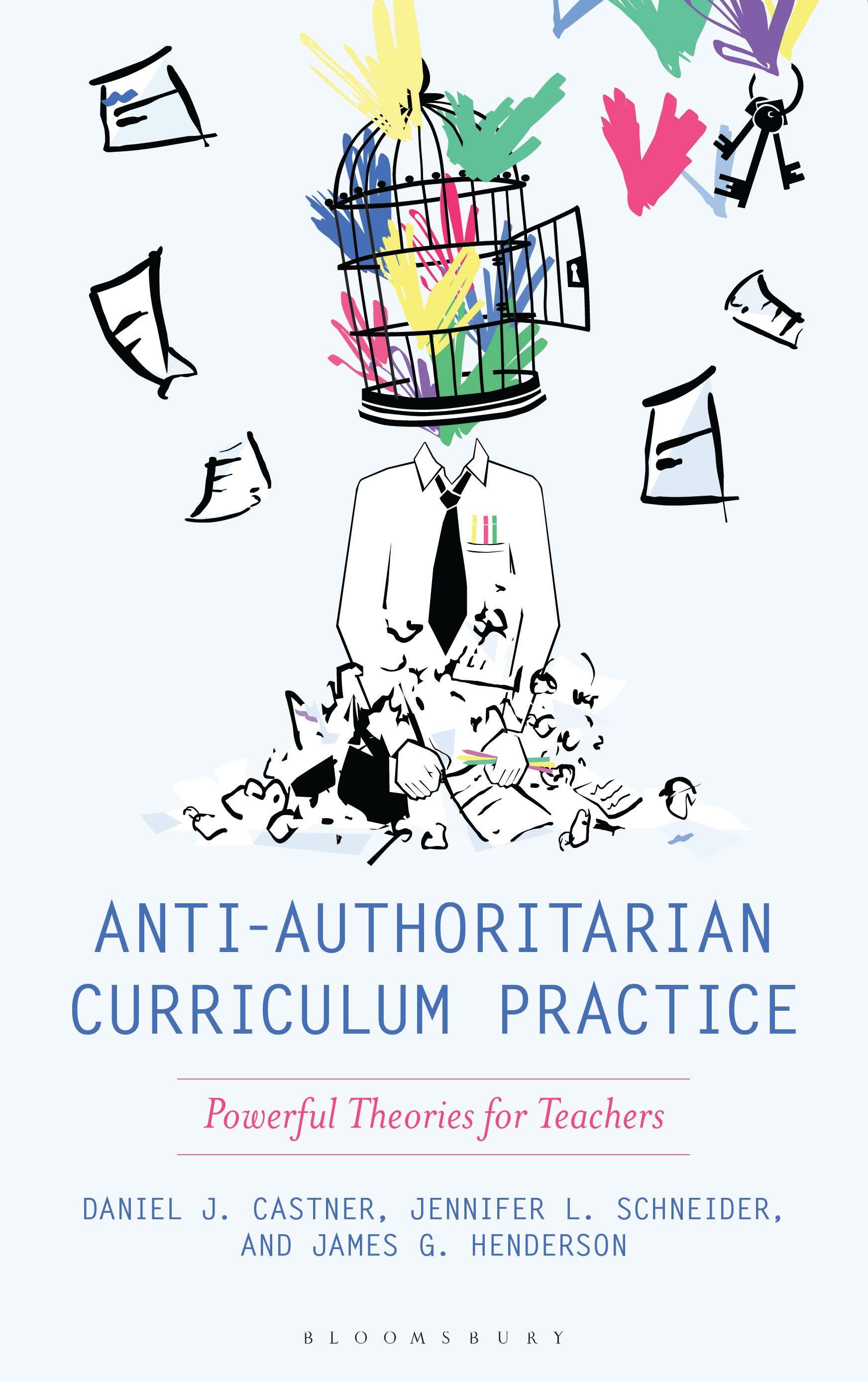
The pervasive politicization of education in the United States makes teachers' work extraordinarily challenging. Decades of bi-partisan accountability-based reform policies and top-down instructional management have conceived of teachers as mere technicians who consume and implement prefabricated curricular plans. Such views fail to recognize the intimate relationship between curriculum and teaching and minimize educators' professional authority.
Anti-Authoritarian Curriculum Practice is for teachers exasperated by contemporary education's politicized conditions. Instead of identifying specific authoritarian figures or ideologies, this book critiques authoritarian practices-actions that undermine accountability for how power is exercised. It advocates for anti-authoritarian curriculum practices, emphasizing the intellectual and moral responsibilities of professional curricular decision-making. Appreciating that significant decisions are made at school, district, and policy levels without teachers' meaningful involvement, the authors utilize practical curriculum theorizing to examine commonly overlooked elements of curriculum practice, emphasizing teachers' direct roles in shaping what is experienced in their classrooms. Readers are introduced to the HI-STAR process, a three-part framework that invites educators to holistically imagine curricular visions (HI), engage in study and teaching activities (ST), and assess student outcomes while reflecting on their practices (AR).
Anti-Authoritarian Curriculum Practice is for teachers exasperated by contemporary education's politicized conditions. Instead of identifying specific authoritarian figures or ideologies, this book critiques authoritarian practices-actions that undermine accountability for how power is exercised. It advocates for anti-authoritarian curriculum practices, emphasizing the intellectual and moral responsibilities of professional curricular decision-making. Appreciating that significant decisions are made at school, district, and policy levels without teachers' meaningful involvement, the authors utilize practical curriculum theorizing to examine commonly overlooked elements of curriculum practice, emphasizing teachers' direct roles in shaping what is experienced in their classrooms. Readers are introduced to the HI-STAR process, a three-part framework that invites educators to holistically imagine curricular visions (HI), engage in study and teaching activities (ST), and assess student outcomes while reflecting on their practices (AR).
Betal enkelt med kort, Klarna, Apple Pay eller Google Pay. Ikke fornøyd? Du har alltid 14 dagers angrerett. Les mer i våre vilkår. Har du spørsmål, send oss en e-post på hello@memmo.org.
Memmo gjør det enklere å studere – uansett hvor du er i verden. Hos oss samler du pensumbøker og smarte studieverktøy på ett og samme sted: sammendrag, quizer, podkaster og flashcards. Og så Ted, din studiekompis som svarer på alt du lurer på. Over 50 000 studenter studerer allerede her – bygget for at du skal lære raskere og stresse mindre.