
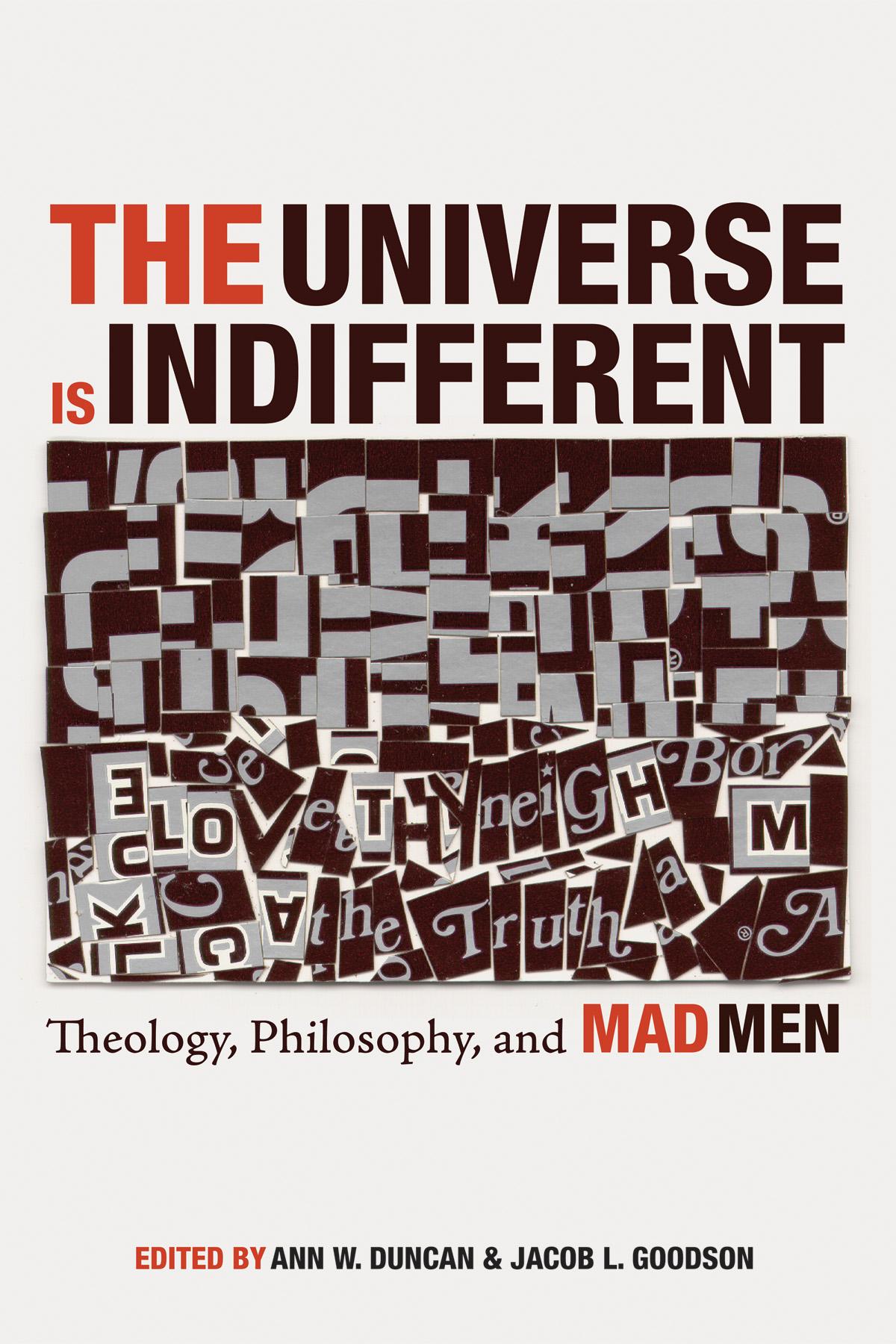
Centered upon the lives of employees at a Manhattan advertising firm, the AMC television series Mad Men touches on the advertising world's unique interests in consumerist culture, materialistic desire, and the role of deception in Western capitalism.
While the subject matters of the chapters in this collection have a decidedly socio-historical focus, the authors use basic topics as starting points for philosophical, religious, and theological reflections. The authors show how Mad Men reveals deep truths concerning the social trends of the 1960s and early 1970s in American life and deserves a significant amount of reflection from philosophical, religious, and theological perspectives. Some of the chapters go beyond mere reflection and make deeper inquiries into what these trends say about American cultural habits, the business world within Western capitalism, and the rapid social changes (gender, race, and sexuality) that occur during this period. Chapters examine paradigms of masculinity and femininity as well as the presentation of motherhood, fatherhood, sexuality, and childhood.
This collection shows how social change represents the undercurrent of the interpersonal dramas of the characters on Mad Men, from the staid and conventional early seasons to the war, assassinations, riots, and counterculture of later seasons.
Betal enkelt med kort, Klarna, Apple Pay eller Google Pay. Ikke fornøyd? Du har alltid 14 dagers angrerett. Les mer i våre vilkår. Har du spørsmål, send oss en e-post på hello@memmo.org.
Memmo gjør det enklere å studere – uansett hvor du er i verden. Hos oss samler du pensumbøker og smarte studieverktøy på ett og samme sted: sammendrag, quizer, podkaster og flashcards. Og så Ted, din studiekompis som svarer på alt du lurer på. Over 50 000 studenter studerer allerede her – bygget for at du skal lære raskere og stresse mindre.
Du vil kanskje også like
Kjøp boken0