
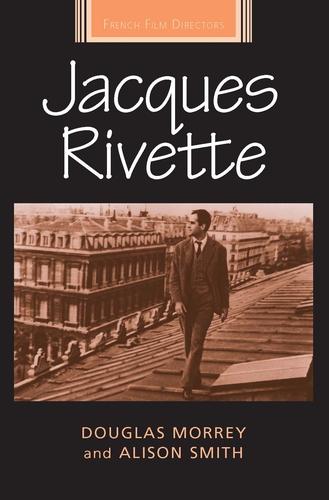
Jacques Rivette is perhaps the best-kept secret of French cinema. A founding figure in the New Wave, and at the centre of the Cahiers du cinéma team, he developed into one of the most unusual and adventurous French directors of the last sixty years, yet his work remains little-known in comparison with his contemporaries, and this study is the first in English to look at the full span of his career. Starting with his decisively influential film criticism of the 1950s, it moves from the New Wave through the complex, experimental films of the 1970s to the challenging, playful dramas which ensured his visibility during the following two decades, and ends in the present, including Rivette’s most recent films, Histoire de Marie et Julien (2003) and Ne touchez pas la hache (2007).
The book takes a thematic approach, offering detailed discussion of key elements of Rivette’s film world, including games, conspiracy and jealousy, as well as a study of what Rivette’s cinema adds to our understanding of key theoretical concepts in Film Studies such as narrative, space and adaptation. There are many close analyses of sequences from Rivette’s films including Paris nous appartient (1961), Céline et Julie vont en bateau (1974) and La Belle Noiseuse (1991).
Betal enkelt med kort, Klarna, Apple Pay eller Google Pay. Ikke fornøyd? Du har alltid 14 dagers angrerett. Les mer i våre vilkår. Har du spørsmål, send oss en e-post på hello@memmo.org.
Memmo gjør det enklere å studere – uansett hvor du er i verden. Hos oss samler du pensumbøker og smarte studieverktøy på ett og samme sted: sammendrag, quizer, podkaster og flashcards. Og så Ted, din studiekompis som svarer på alt du lurer på. Over 50 000 studenter studerer allerede her – bygget for at du skal lære raskere og stresse mindre.