
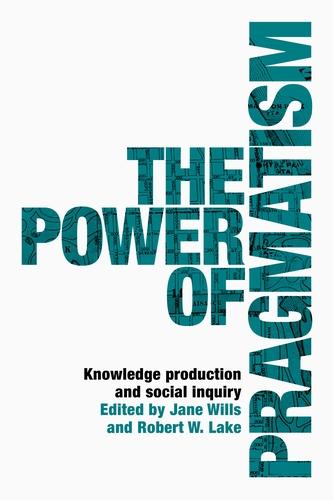
This book makes the case for a pragmatist approach to the practice of social inquiry and knowledge production. Through diverse examples from multiple disciplines, contributors explore the power of pragmatism to inform a practice of inquiry that is democratic, community-centred, problem-oriented and experimental. Drawing from both classical and neo-pragmatist perspectives, the book advances a pragmatist sensibility in which truth and knowledge are contingent rather than universal, made rather than found, provisional rather than dogmatic, subject to continuous experimentation rather than ultimate proof, and verified in their application in action rather than in the accuracy of their representation of an antecedent reality. The Power of Pragmatism offers a path forward for mobilizing the practice of inquiry and knowledge production on behalf of achieving what Dewey called a sense for the better kind of life to be led.
Betal enkelt med kort, Klarna, Apple Pay eller Google Pay. Ikke fornøyd? Du har alltid 14 dagers angrerett. Les mer i våre vilkår. Har du spørsmål, send oss en e-post på hello@memmo.org.
Memmo gjør det enklere å studere – uansett hvor du er i verden. Hos oss samler du pensumbøker og smarte studieverktøy på ett og samme sted: sammendrag, quizer, podkaster og flashcards. Og så Ted, din studiekompis som svarer på alt du lurer på. Over 50 000 studenter studerer allerede her – bygget for at du skal lære raskere og stresse mindre.
Du vil kanskje også like
Kjøp boken0