
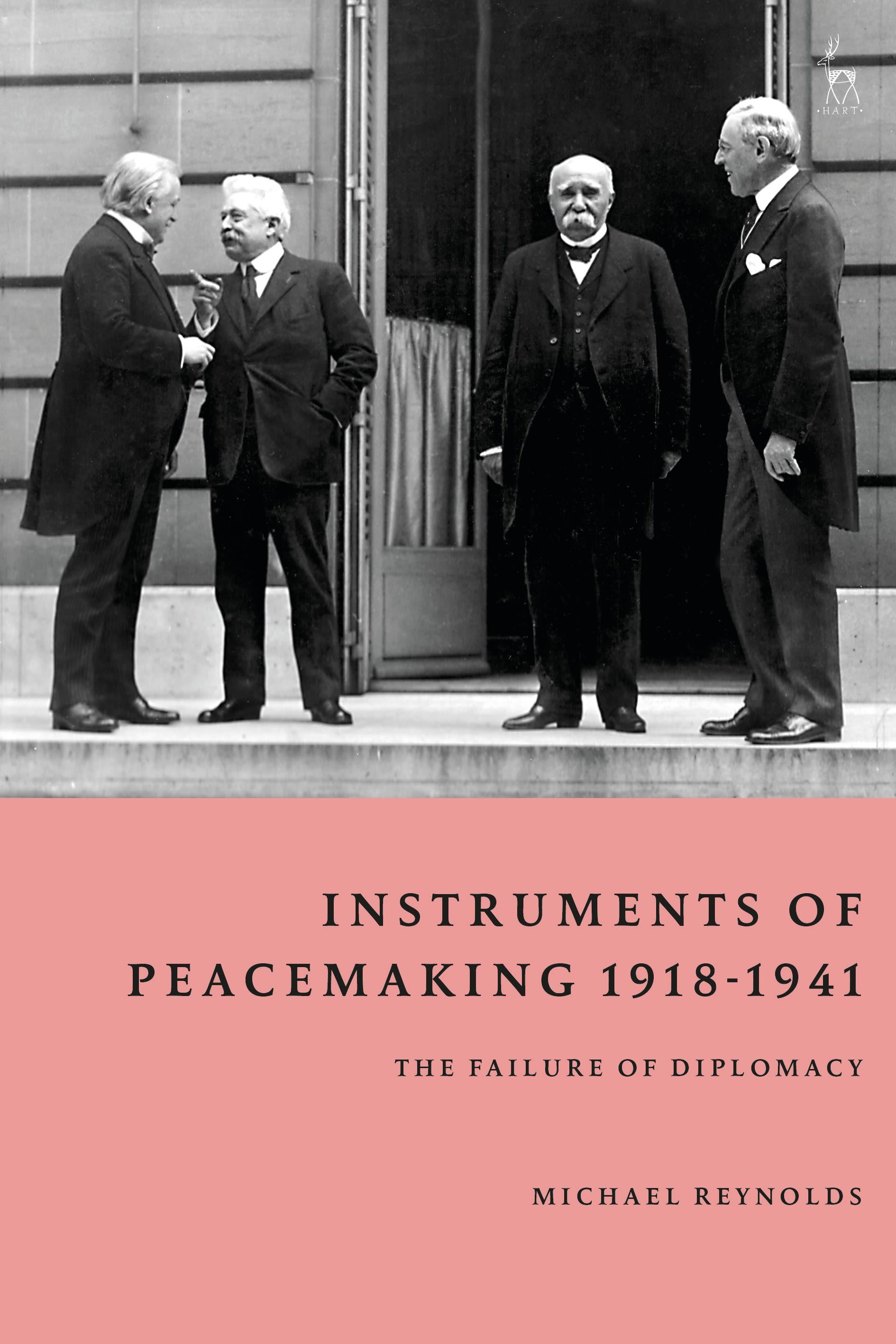
This book is a sequel to Instruments of Peacemaking 1870-1914 in that it considers how attempts were made to settle disputes between states without recourse to war after 'the war to end all wars'.
It considers the idealism of President Woodrow Wilson's Fourteen Points which formed the basis for the Armistice in 1918, and his scheme for a League of Nations providing for self-determination of nations and 'collective security' for European states.
It goes on to analyse the key challenges that faced statesmen and jurists in attempting to resolve disputes under the provisions of the Treaty of Versailles. It considers the consequences of the Peace Conference of 1919 as well as defects in the treaty as an instrument for resolving future disputes and tensions between the victors and the vanquished.
Cases referred to the Reparations Commission and to arbitration under the Treaty of Versailles regarding boundary, industrial property, and shipping including the Lusitania claims are considered. More importantly, it analyses the diplomatic challenges faced by statesmen after 1919. The decline and failure of Wilsonian idealism, the League of Nations, collective security, and diplomacy are traced through the various diplomatic exchanges that took place between governments from official records and contemporaneous accounts of the times as well as academic sources. Mr Chamberlain's private diplomacy to appease Hitler is critically analysed. The final chapter briefly considers aspects of America's isolationism resulting in the attack on Pearl Harbor and her peacetime state of unreadiness.
It considers the idealism of President Woodrow Wilson's Fourteen Points which formed the basis for the Armistice in 1918, and his scheme for a League of Nations providing for self-determination of nations and 'collective security' for European states.
It goes on to analyse the key challenges that faced statesmen and jurists in attempting to resolve disputes under the provisions of the Treaty of Versailles. It considers the consequences of the Peace Conference of 1919 as well as defects in the treaty as an instrument for resolving future disputes and tensions between the victors and the vanquished.
Cases referred to the Reparations Commission and to arbitration under the Treaty of Versailles regarding boundary, industrial property, and shipping including the Lusitania claims are considered. More importantly, it analyses the diplomatic challenges faced by statesmen after 1919. The decline and failure of Wilsonian idealism, the League of Nations, collective security, and diplomacy are traced through the various diplomatic exchanges that took place between governments from official records and contemporaneous accounts of the times as well as academic sources. Mr Chamberlain's private diplomacy to appease Hitler is critically analysed. The final chapter briefly considers aspects of America's isolationism resulting in the attack on Pearl Harbor and her peacetime state of unreadiness.
Betal enkelt med kort, Klarna, Apple Pay eller Google Pay. Ikke fornøyd? Du har alltid 14 dagers angrerett. Les mer i våre vilkår. Har du spørsmål, send oss en e-post på hello@memmo.org.
Memmo gjør det enklere å studere – uansett hvor du er i verden. Hos oss samler du pensumbøker og smarte studieverktøy på ett og samme sted: sammendrag, quizer, podkaster og flashcards. Og så Ted, din studiekompis som svarer på alt du lurer på. Over 50 000 studenter studerer allerede her – bygget for at du skal lære raskere og stresse mindre.