
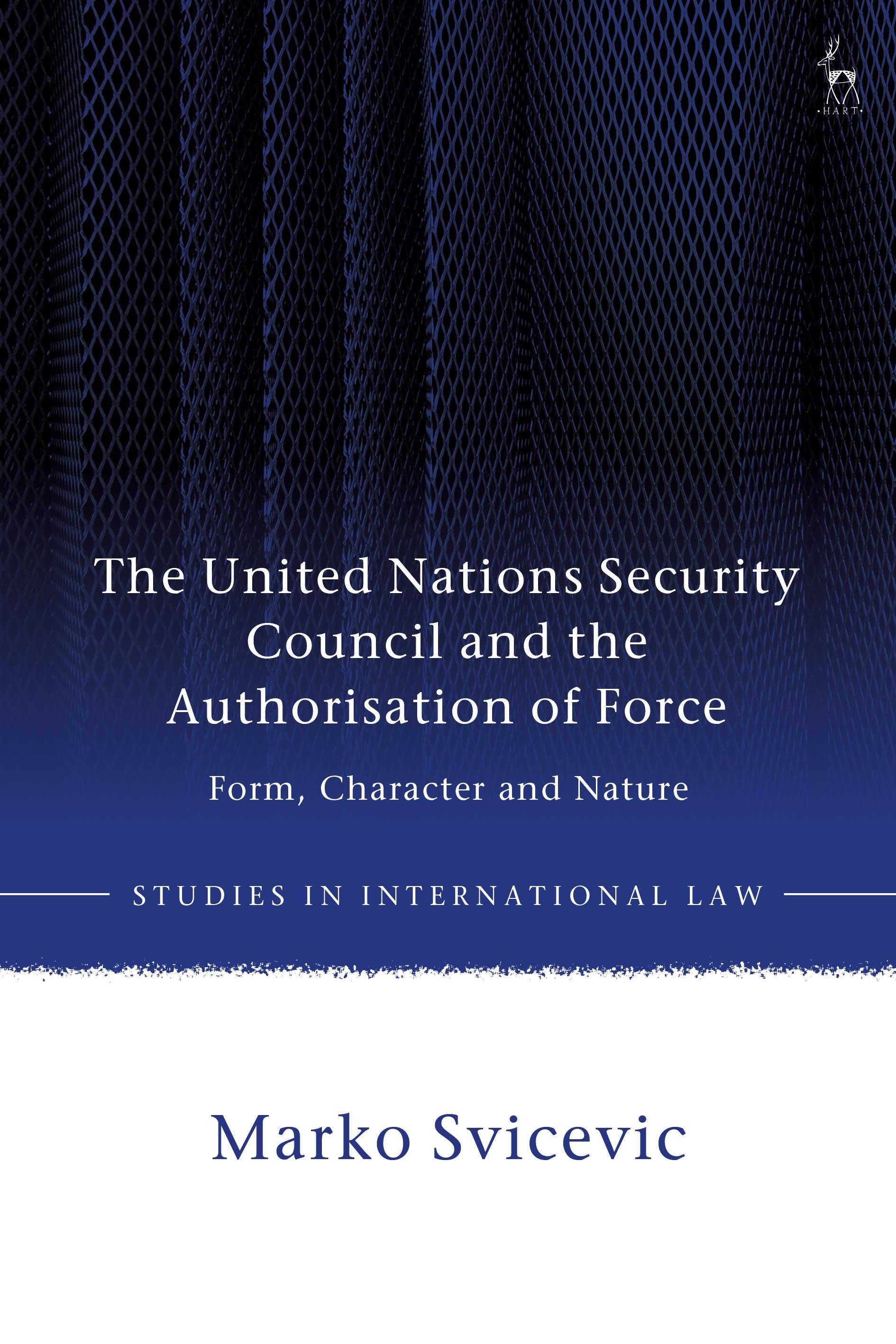
This book examines the United Nations Security Council's authorisation of the use of force, considering the extensive body of UN Security Council resolutions across its now eighty years of existence.
As one of the established exceptions to the Article 2(4) UN Charter prohibition on the use of force, UN Security Council authorisation of force remains a key focus for both States and scholars alike. Despite the apparent consequences of authorisation, authorising resolutions lack prescribed formats or mandatory content. The UN Security Council has over time, however, developed a consistent practice of prior explicit authorisation.
The development of this practice is reflected in a number of essential characteristics within authorising resolutions of the UN Security Council. These include explicit determinations of a threat to international peace and security, the invocation of Chapter VII (or VIII) of the UN Charter, the use of specific authorising language, the inclusion of time or functional limits on authorisation, and the imposition of reporting obligations on those authorised to use force. The book ultimately argues that prior explicit authorisation constitutes a well-established practice, rejecting the legality and admissibility of implicit and retroactive authorisation.
As one of the established exceptions to the Article 2(4) UN Charter prohibition on the use of force, UN Security Council authorisation of force remains a key focus for both States and scholars alike. Despite the apparent consequences of authorisation, authorising resolutions lack prescribed formats or mandatory content. The UN Security Council has over time, however, developed a consistent practice of prior explicit authorisation.
The development of this practice is reflected in a number of essential characteristics within authorising resolutions of the UN Security Council. These include explicit determinations of a threat to international peace and security, the invocation of Chapter VII (or VIII) of the UN Charter, the use of specific authorising language, the inclusion of time or functional limits on authorisation, and the imposition of reporting obligations on those authorised to use force. The book ultimately argues that prior explicit authorisation constitutes a well-established practice, rejecting the legality and admissibility of implicit and retroactive authorisation.
Betal enkelt med kort, Klarna, Apple Pay eller Google Pay. Ikke fornøyd? Du har alltid 14 dagers angrerett. Les mer i våre vilkår. Har du spørsmål, send oss en e-post på hello@memmo.org.
Memmo gjør det enklere å studere – uansett hvor du er i verden. Hos oss samler du pensumbøker og smarte studieverktøy på ett og samme sted: sammendrag, quizer, podkaster og flashcards. Og så Ted, din studiekompis som svarer på alt du lurer på. Over 50 000 studenter studerer allerede her – bygget for at du skal lære raskere og stresse mindre.