
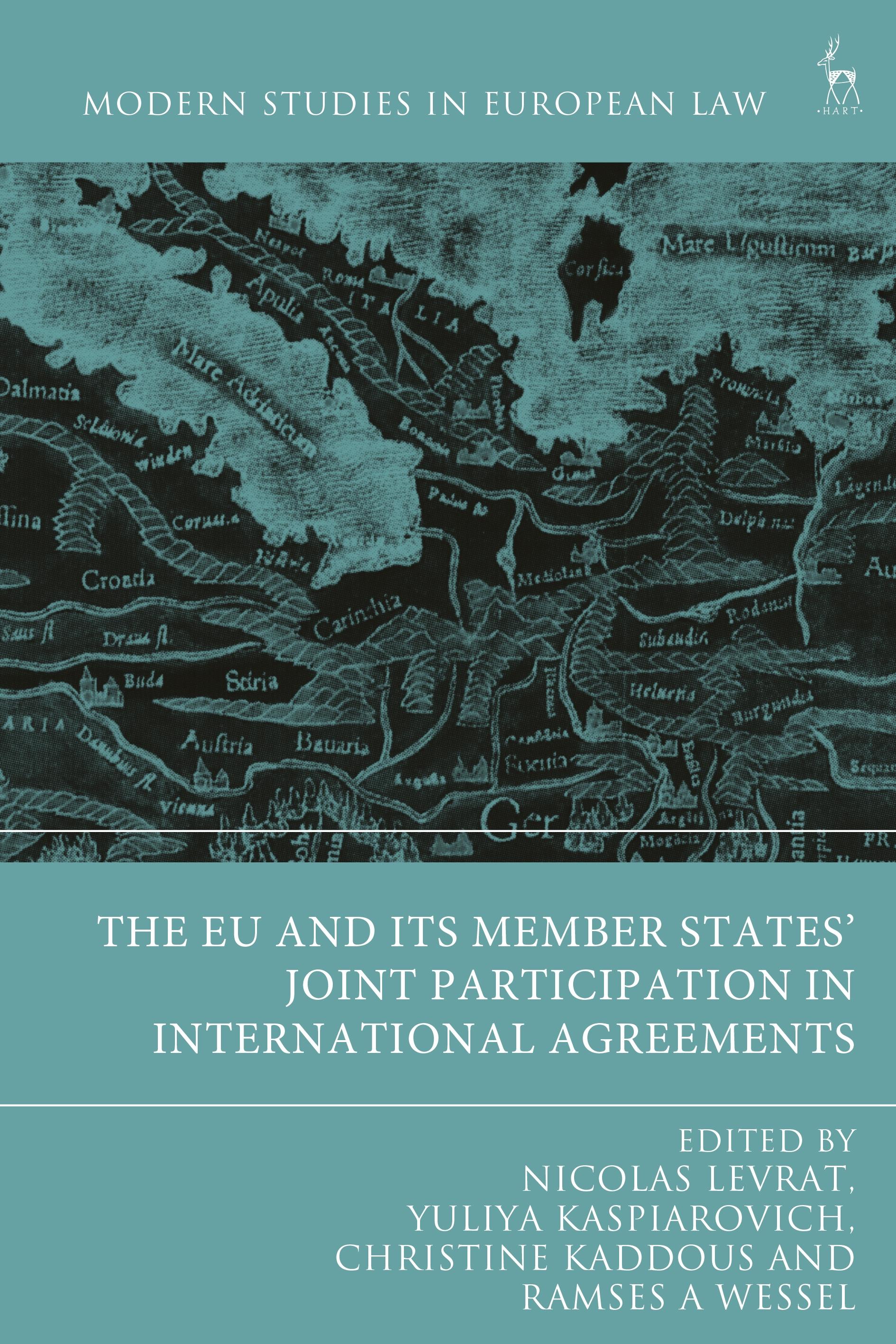
EU law has developed a unique and complex system under which the Union and its Member States can both act under international law, separately, jointly or in parallel. International law was not set up to deal with such complex and hybrid arrangements, which raise questions under both international and EU law.
This book assesses how EU law has been adapted to cope with the constraints of international law in situations in which the EU and its Member States act jointly in relations with other States and international organisations. In an innovative scholarly approach, reflecting this duality, each chapter is jointly written by a team of two authors. The various contributions offer new insights into the tension that continues to exist between EU and international law obligations in relation to the (joint) participation of the EU and its Member States in international agreements.
This book assesses how EU law has been adapted to cope with the constraints of international law in situations in which the EU and its Member States act jointly in relations with other States and international organisations. In an innovative scholarly approach, reflecting this duality, each chapter is jointly written by a team of two authors. The various contributions offer new insights into the tension that continues to exist between EU and international law obligations in relation to the (joint) participation of the EU and its Member States in international agreements.
Betal enkelt med kort, Klarna, Apple Pay eller Google Pay. Ikke fornøyd? Du har alltid 14 dagers angrerett. Les mer i våre vilkår. Har du spørsmål, send oss en e-post på hello@memmo.org.
Memmo gjør det enklere å studere – uansett hvor du er i verden. Hos oss samler du pensumbøker og smarte studieverktøy på ett og samme sted: sammendrag, quizer, podkaster og flashcards. Og så Ted, din studiekompis som svarer på alt du lurer på. Over 50 000 studenter studerer allerede her – bygget for at du skal lære raskere og stresse mindre.