
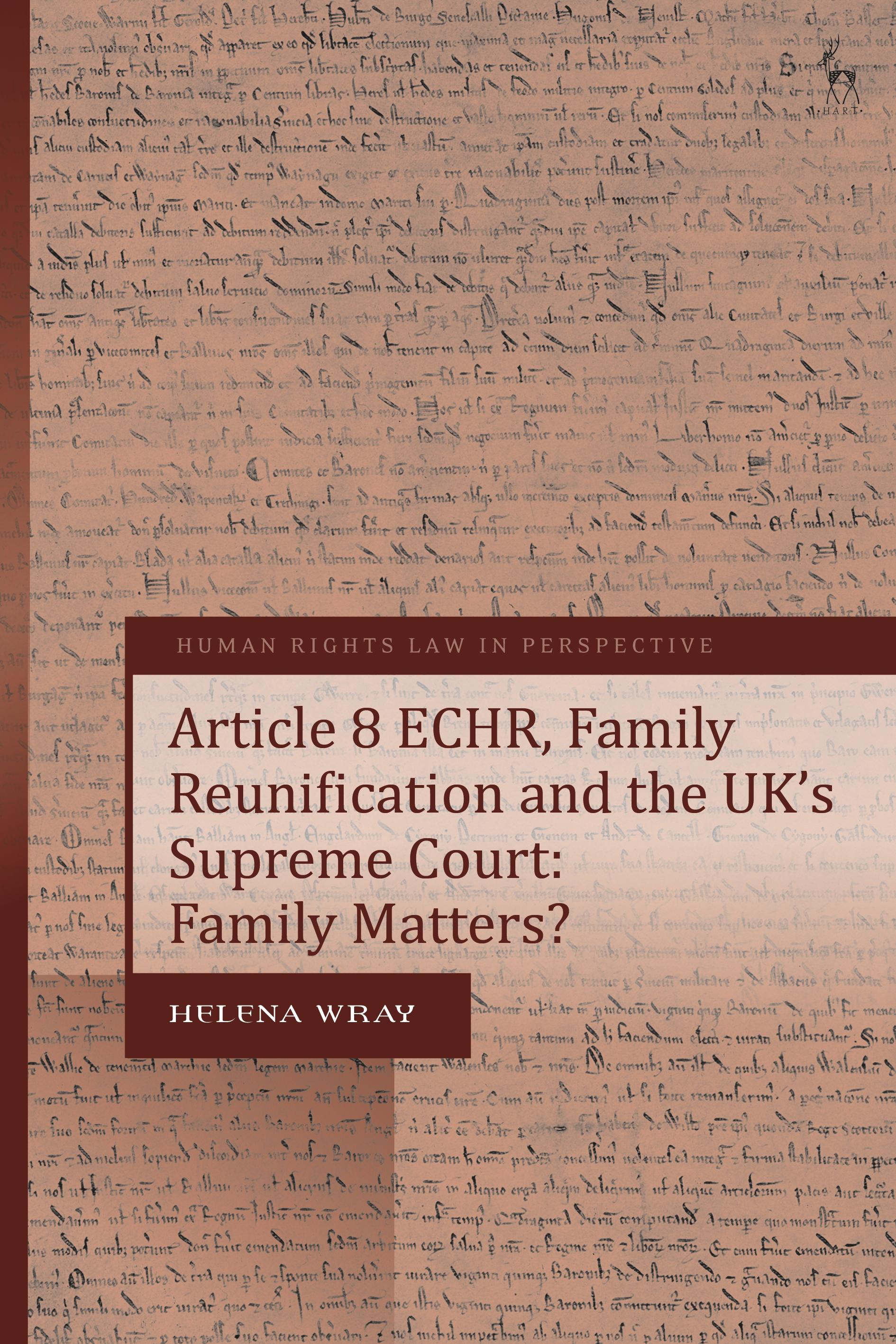
How do courts reconcile protecting family life with immigration control in human rights cases? This book addresses that question through an analysis of 11 UK Supreme Court decisions on immigration and family life, mostly focusing on Article 8 ECHR, the right to respect for family life, and starting with Huang v SSHD in 2007. The analysis is set against a national context that includes the Human Rights Act 1998 and regular controversies over immigration.
The book explains how the European Court of Human Rights jurisprudence has developed in recent years, but, particularly in the absence of children, it often still awards little weight to claims by citizens and residents to be joined by family when immigration status is an issue. This reflects governments' resistance to encroachment on their control over borders. The Supreme Court decisions show that, despite powers conferred by the Human Rights Act, a more nuanced position in domestic law was difficult to articulate and sustain. The book explores the way in which these problems were reflected in the changing language, argumentation, and structure of judgments. These problems revealed judges to be strategic actors drawing on personal and institutional values and responding to the shifting political context.
A more generous reading of Article 8 would be legally coherent but needs wider societal support to be realisable. The book ends with a discussion of how, if such support were present, the jurisprudence could give more weight to the needs of families. It is vital reading for anyone interested in families and immigration, and in the problems and potential of human rights adjudication.
The book explains how the European Court of Human Rights jurisprudence has developed in recent years, but, particularly in the absence of children, it often still awards little weight to claims by citizens and residents to be joined by family when immigration status is an issue. This reflects governments' resistance to encroachment on their control over borders. The Supreme Court decisions show that, despite powers conferred by the Human Rights Act, a more nuanced position in domestic law was difficult to articulate and sustain. The book explores the way in which these problems were reflected in the changing language, argumentation, and structure of judgments. These problems revealed judges to be strategic actors drawing on personal and institutional values and responding to the shifting political context.
A more generous reading of Article 8 would be legally coherent but needs wider societal support to be realisable. The book ends with a discussion of how, if such support were present, the jurisprudence could give more weight to the needs of families. It is vital reading for anyone interested in families and immigration, and in the problems and potential of human rights adjudication.
Betal enkelt med kort, Klarna, Apple Pay eller Google Pay. Ikke fornøyd? Du har alltid 14 dagers angrerett. Les mer i våre vilkår. Har du spørsmål, send oss en e-post på hello@memmo.org.
Memmo gjør det enklere å studere – uansett hvor du er i verden. Hos oss samler du pensumbøker og smarte studieverktøy på ett og samme sted: sammendrag, quizer, podkaster og flashcards. Og så Ted, din studiekompis som svarer på alt du lurer på. Over 50 000 studenter studerer allerede her – bygget for at du skal lære raskere og stresse mindre.