
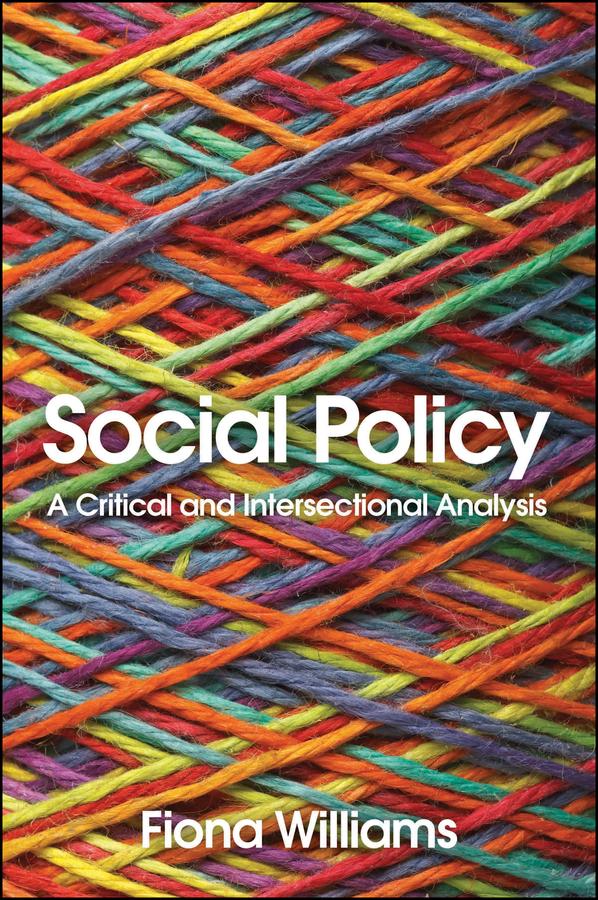
Welfare states face profound challenges. Widening economic and social inequalities have been intensified by austerity politics, sharpened by the rise in ethno-nationalism and exposed by the COVID-19 pandemic. At the same time, recent decades have seen a resurgence of social justice activism at both the local and the transnational level. Yet the transformative power of feminist, anti-racist and postcolonial/decolonial thinking has become relatively marginal to core social policy theory, while other critical approaches – around disability, sexuality, migration, age and the environment – have found recognition only selectively.
This book provides a much needed new analysis of this complex landscape, drawing together critical approaches in social policy with intersectionality and political economy. Fiona Williams contextualizes contemporary social policies not only in the global crisis of finance capitalism but also in the interconnected global crises of care, ecology and racialized borders. These shape and are shaped at national scale by the intersecting dynamics of family, nation, work and nature. Through critical assessment of these realities, the book probes the ethical, prefigurative and transformative possibilities for a future welfare commons.
This significant intervention will animate social policy thinking, teaching and research. It will be essential reading for anyone wanting to understand the complexities of social policy for the years ahead.
Betal enkelt med kort, Klarna, Apple Pay eller Google Pay. Ikke fornøyd? Du har alltid 14 dagers angrerett. Les mer i våre vilkår. Har du spørsmål, send oss en e-post på hello@memmo.org.
Memmo gjør det enklere å studere – uansett hvor du er i verden. Hos oss samler du pensumbøker og smarte studieverktøy på ett og samme sted: sammendrag, quizer, podkaster og flashcards. Og så Ted, din studiekompis som svarer på alt du lurer på. Over 50 000 studenter studerer allerede her – bygget for at du skal lære raskere og stresse mindre.