
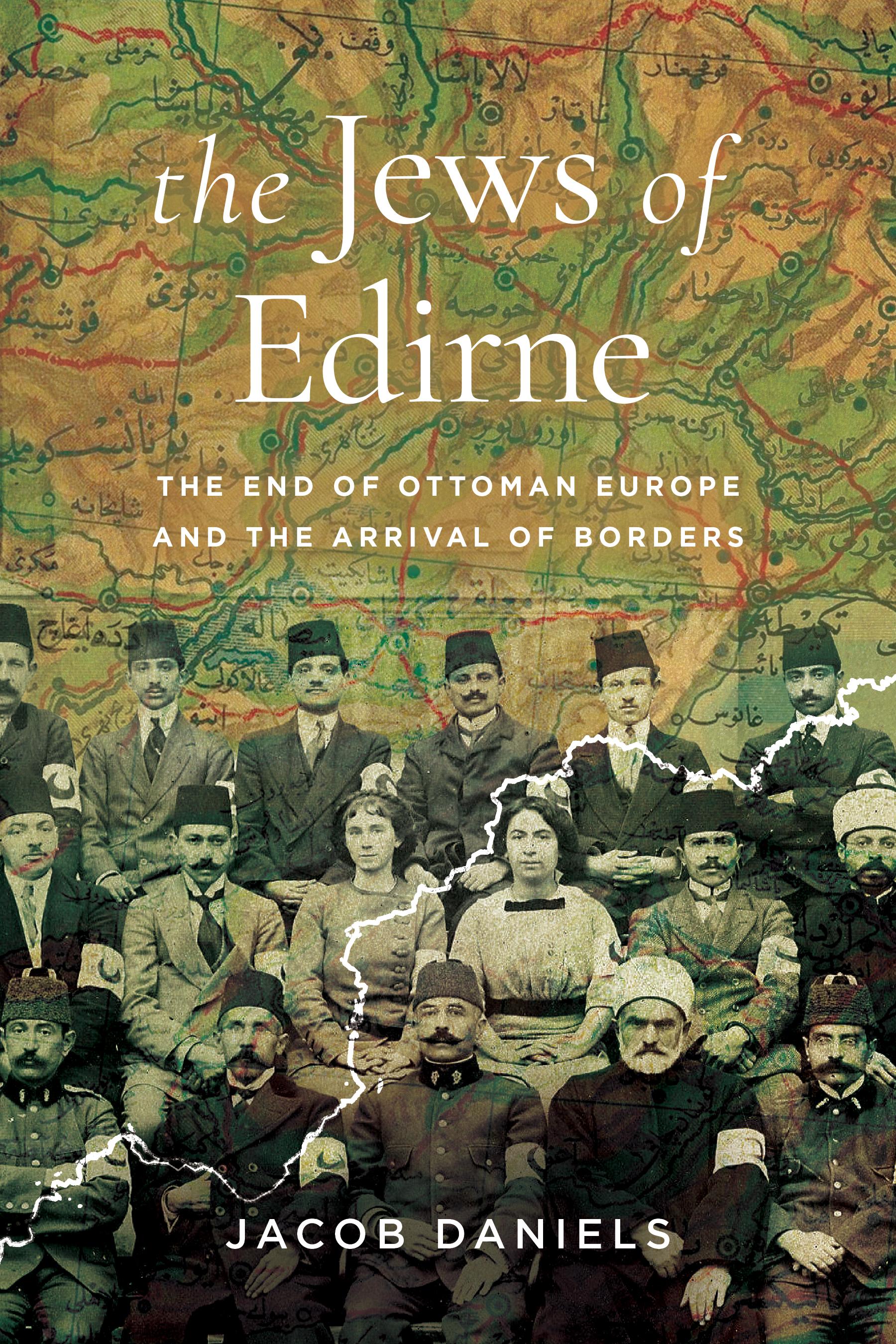
At the turn of the twentieth century, the city of Edirne was a bustling center linking Istanbul to Ottoman Europe. It was also the capital of Edirne Province—among the most religiously diverse regions of the Ottoman Empire. But by 1923, the city had become a Turkish border town, and the province had lost much of its non-Muslim population. With this book, Jacob Daniels explores how one of the world's largest Sephardi communities dealt with the encroachment of modern borders.
Using Ladino, French, English, and Turkish sources, Daniels offers a new take on the ways in which ethno-religious minorities experienced the transition "from empire to nation-state." Rather than tracing a linear path, Edirne Jews zigzagged between the Ottoman Empire and three nation-states—without moving a mile. And by maintaining interstate Sephardi networks, they resisted pressure to treat the shifting border as a limit to their zone of belonging. Ultimately, proximity to the border would undo Edirne's Jewish community, but the way this ending came about—local Jews were rarely killed or deported—challenges common assumptions about state borders and Jewish history. By studying Jewish encounters with the nation-state alongside the emergence of modern borders, Daniels sheds light on both phenomena.
Betal enkelt med kort, Klarna, Apple Pay eller Google Pay. Ikke fornøyd? Du har alltid 14 dagers angrerett. Les mer i våre vilkår. Har du spørsmål, send oss en e-post på hello@memmo.org.
Memmo gjør det enklere å studere – uansett hvor du er i verden. Hos oss samler du pensumbøker og smarte studieverktøy på ett og samme sted: sammendrag, quizer, podkaster og flashcards. Og så Ted, din studiekompis som svarer på alt du lurer på. Over 50 000 studenter studerer allerede her – bygget for at du skal lære raskere og stresse mindre.