
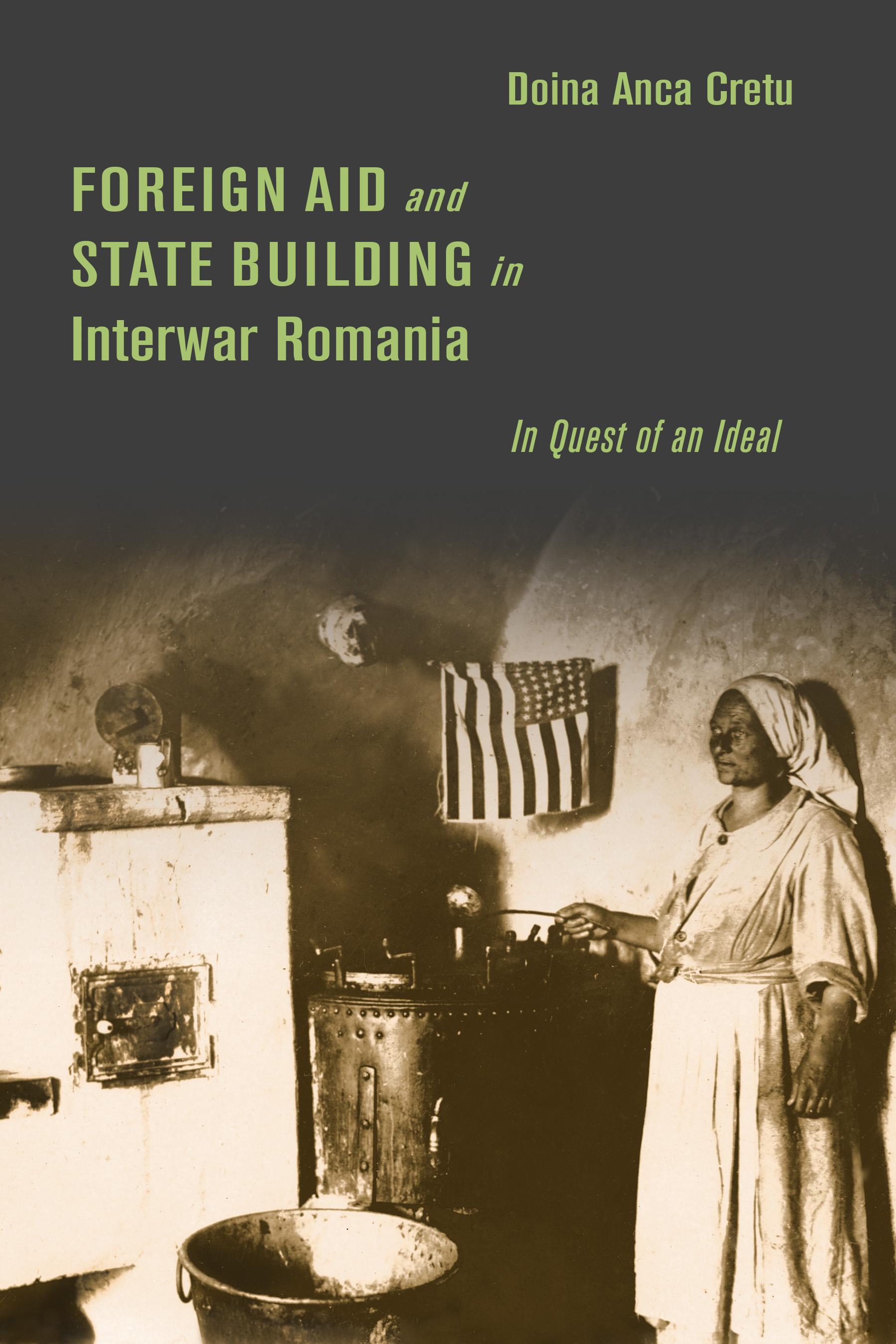
The decades following World War I were a period of political, social, and economic transformation for Central and Eastern Europe. This book considers the role of foreign aid in Romania between 1918 and 1940, offering a new history of the interrelation between state building and nongovernmental humanitarianism and philanthropy in the interwar period. Doina Anca Cretu argues that Romania was a laboratory for transnational intervention, as various state builders actively pursued, accessed, and often instrumentalized American assistance in order to accelerate reconstructive and modernizing projects after World War I.
At its core, this is a study of how local views, ambitions, and practical agendas framed trajectories of humanitarian and philanthropic endeavors in postimperial Central and Eastern Europe. Conversely, it is a reflection on the ways that architects and practitioners of foreign aid sought to transfer notions of democracy, civilization, and modernity within shifting local and national contexts in the aftermath of the war and after the collapse of European empires. At the intersection of the history of interwar Europe and international philanthropy and humanitarianism, this book's innovative and explicitly transnational approach provides a new framework for understanding the contours of European nationalism in the twentieth century.
Betal enkelt med kort, Klarna, Apple Pay eller Google Pay. Ikke fornøyd? Du har alltid 14 dagers angrerett. Les mer i våre vilkår. Har du spørsmål, send oss en e-post på hello@memmo.org.
Memmo gjør det enklere å studere – uansett hvor du er i verden. Hos oss samler du pensumbøker og smarte studieverktøy på ett og samme sted: sammendrag, quizer, podkaster og flashcards. Og så Ted, din studiekompis som svarer på alt du lurer på. Over 50 000 studenter studerer allerede her – bygget for at du skal lære raskere og stresse mindre.