
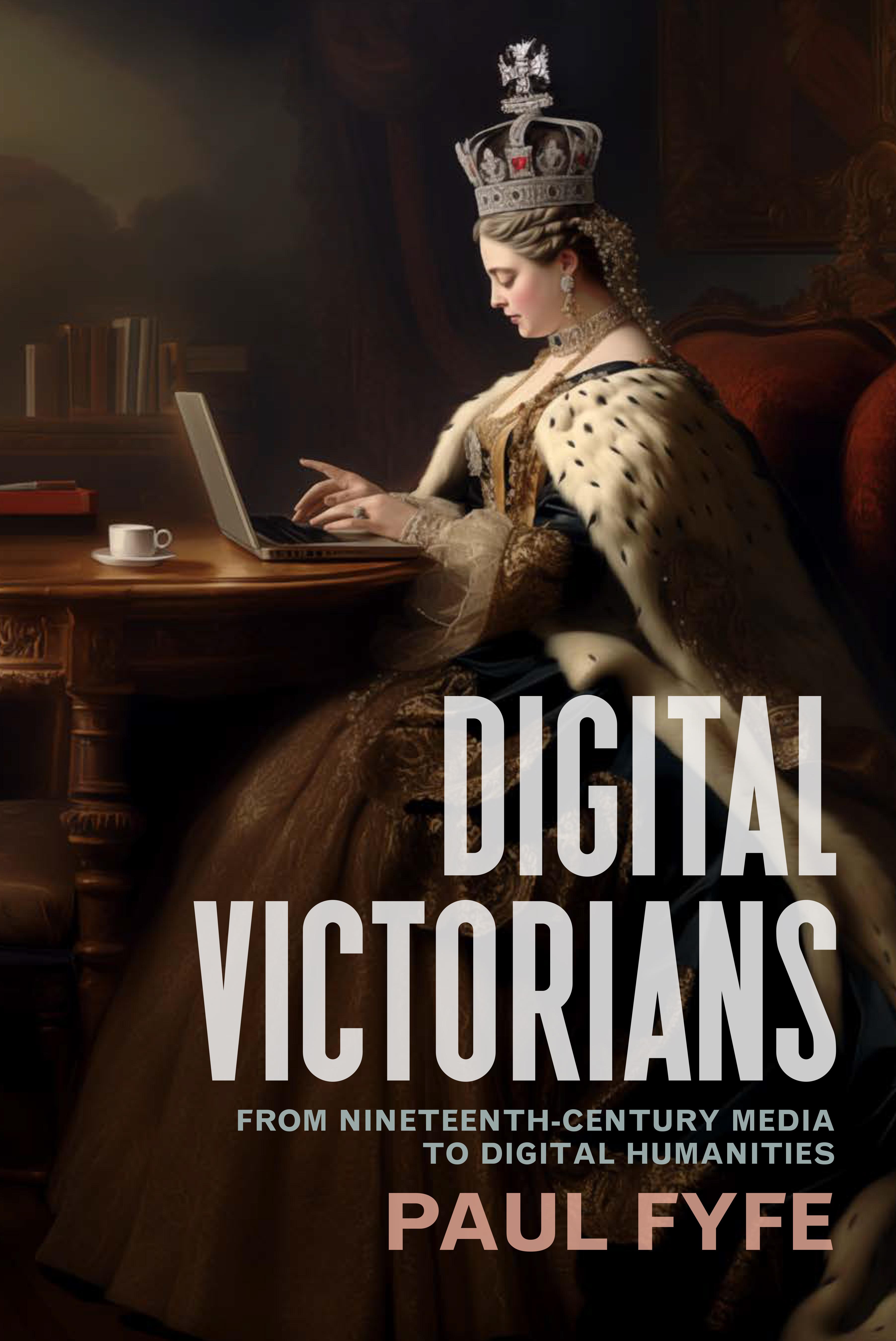
Perhaps no period better clarifies our current crisis of digital information than the nineteenth century. Self-aware about its own epochal telecommunications changes and awash in a flood of print, the nineteenth century confronted the consequences of its media shifts in ways that still define contemporary responses. In this authoritative new work, Paul Fyfe argues that writing about Victorian new media continues to shape reactions to digital change. Among its unexpected legacies are what we call digital humanities, characterized by the self-reflexiveness, disciplinary reconfigurations, and debates that have made us digital Victorians, so to speak, struggling again to resituate humanities practices amid another technological revolution.
Engaging with writers such as Thomas De Quincey, George Eliot, George du Maurier, Henry James, and Robert Louis Stevenson who confronted the new media of their day, Fyfe shows how we have inherited Victorian anxieties about quantitative and machine-driven reading, professional obsolescence in the face of new technology, and more—telling a longer history of how writers, readers, and scholars adapt to dramatically changing media ecologies, then and now. The result is a predigital history for the digital humanities through nineteenth-century encounters with telecommunication networks, privacy intrusions, quantitative reading methods, remediation, and their effects on literary professionals. As Fyfe demonstrates, well before computers, the Victorians were already digital.
Betal enkelt med kort, Klarna, Apple Pay eller Google Pay. Ikke fornøyd? Du har alltid 14 dagers angrerett. Les mer i våre vilkår. Har du spørsmål, send oss en e-post på hello@memmo.org.
Memmo gjør det enklere å studere – uansett hvor du er i verden. Hos oss samler du pensumbøker og smarte studieverktøy på ett og samme sted: sammendrag, quizer, podkaster og flashcards. Og så Ted, din studiekompis som svarer på alt du lurer på. Over 50 000 studenter studerer allerede her – bygget for at du skal lære raskere og stresse mindre.