
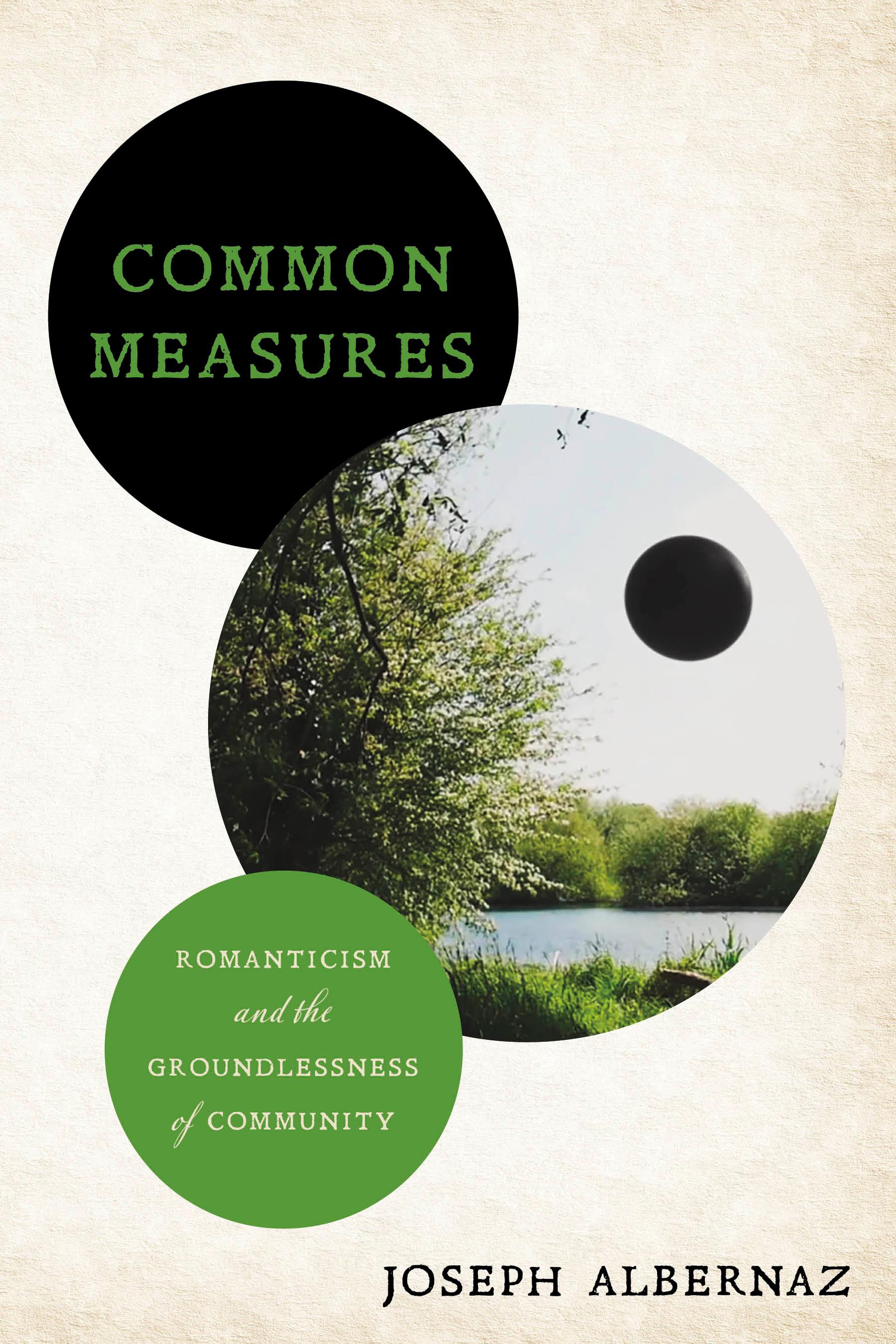
What happens to the experience of community when the grounds of communal life collapse? The Romantic period's upheaval cast both traditional communal organizations of life and outgrowths of the new revolutionary age into crisis. In this context, Joseph Albernaz argues that Romantic writers articulate a vital conception of "groundless community," while following this idea through its aesthetic, ecological, political, and philosophical registers into the present.
Amidst the violent expropriation of the commons, Romantic writers including the Wordsworths, Clare, Hölderlin, and the revolutionary abolitionist Robert Wedderburn reimagined the forms of their own lives through literature to conceive community as groundless, a disposition toward radically open forms of sharing—including with nonhuman beings—without recourse to any collective identity. Both a poetics and ethics, groundless community names an everyday sociality that surges beneath and against the enclosures of property and identity, binding us to the movements of the earth.
Unearthing Romanticism's intersections with the history of communism and the general strike, Albernaz also demonstrates how Romantic literature's communal imagination reverberates through later theories of community in Bataille, Derrida, Nancy, Moten, and others. With sharp close readings, new historical constellations, and innovative theoretical paradigms, Common Measures recasts the relationship of the Romantic period to the basic terms of modernity.
Betal enkelt med kort, Klarna, Apple Pay eller Google Pay. Ikke fornøyd? Du har alltid 14 dagers angrerett. Les mer i våre vilkår. Har du spørsmål, send oss en e-post på hello@memmo.org.
Memmo gjør det enklere å studere – uansett hvor du er i verden. Hos oss samler du pensumbøker og smarte studieverktøy på ett og samme sted: sammendrag, quizer, podkaster og flashcards. Og så Ted, din studiekompis som svarer på alt du lurer på. Over 50 000 studenter studerer allerede her – bygget for at du skal lære raskere og stresse mindre.