
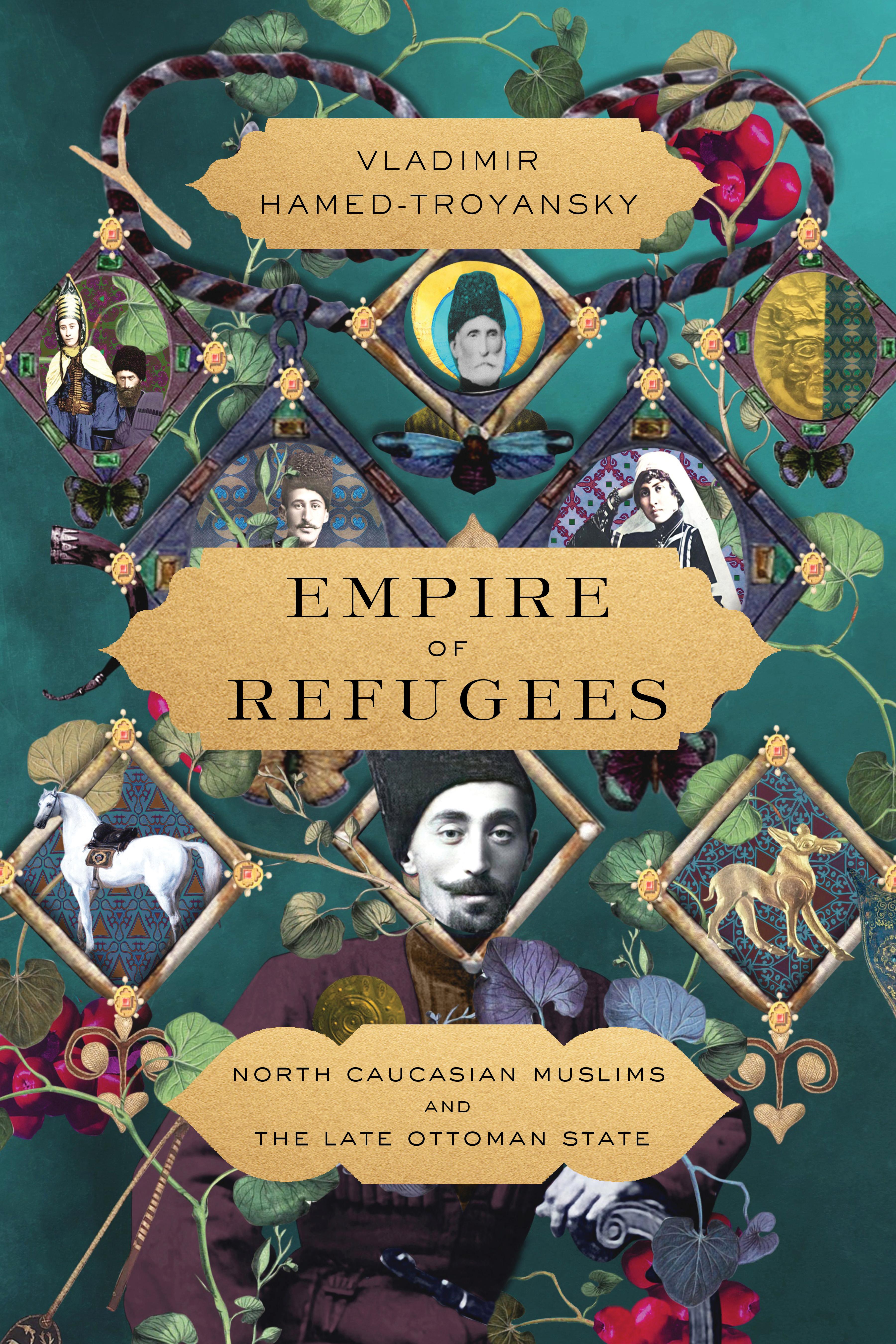
Between the 1850s and World War I, about one million North Caucasian Muslims sought refuge in the Ottoman Empire. This resettlement of Muslim refugees from Russia changed the Ottoman state. Circassians, Chechens, Dagestanis, and others established hundreds of refugee villages throughout the Ottoman Balkans, Anatolia, and the Levant. Most villages still exist today, including what is now the city of Amman. Muslim refugee resettlement reinvigorated regional economies, but also intensified competition over land and, at times, precipitated sectarian tensions, setting in motion fundamental shifts in the borderlands of the Russian and Ottoman empires.
Empire of Refugees reframes late Ottoman history through mass displacement and reveals the origins of refugee resettlement in the modern Middle East. Vladimir Hamed-Troyansky offers a historiographical corrective: the nineteenth-century Ottoman Empire created a refugee regime, predating refugee systems set up by the League of Nations and the United Nations. Grounded in archival research in over twenty public and private archives across ten countries, this book contests the boundaries typically assumed between forced and voluntary migration, and refugees and immigrants, rewriting the history of Muslim migration in the nineteenth and early twentieth centuries.
Betal enkelt med kort, Klarna, Apple Pay eller Google Pay. Ikke fornøyd? Du har alltid 14 dagers angrerett. Les mer i våre vilkår. Har du spørsmål, send oss en e-post på hello@memmo.org.
Memmo gjør det enklere å studere – uansett hvor du er i verden. Hos oss samler du pensumbøker og smarte studieverktøy på ett og samme sted: sammendrag, quizer, podkaster og flashcards. Og så Ted, din studiekompis som svarer på alt du lurer på. Over 50 000 studenter studerer allerede her – bygget for at du skal lære raskere og stresse mindre.