
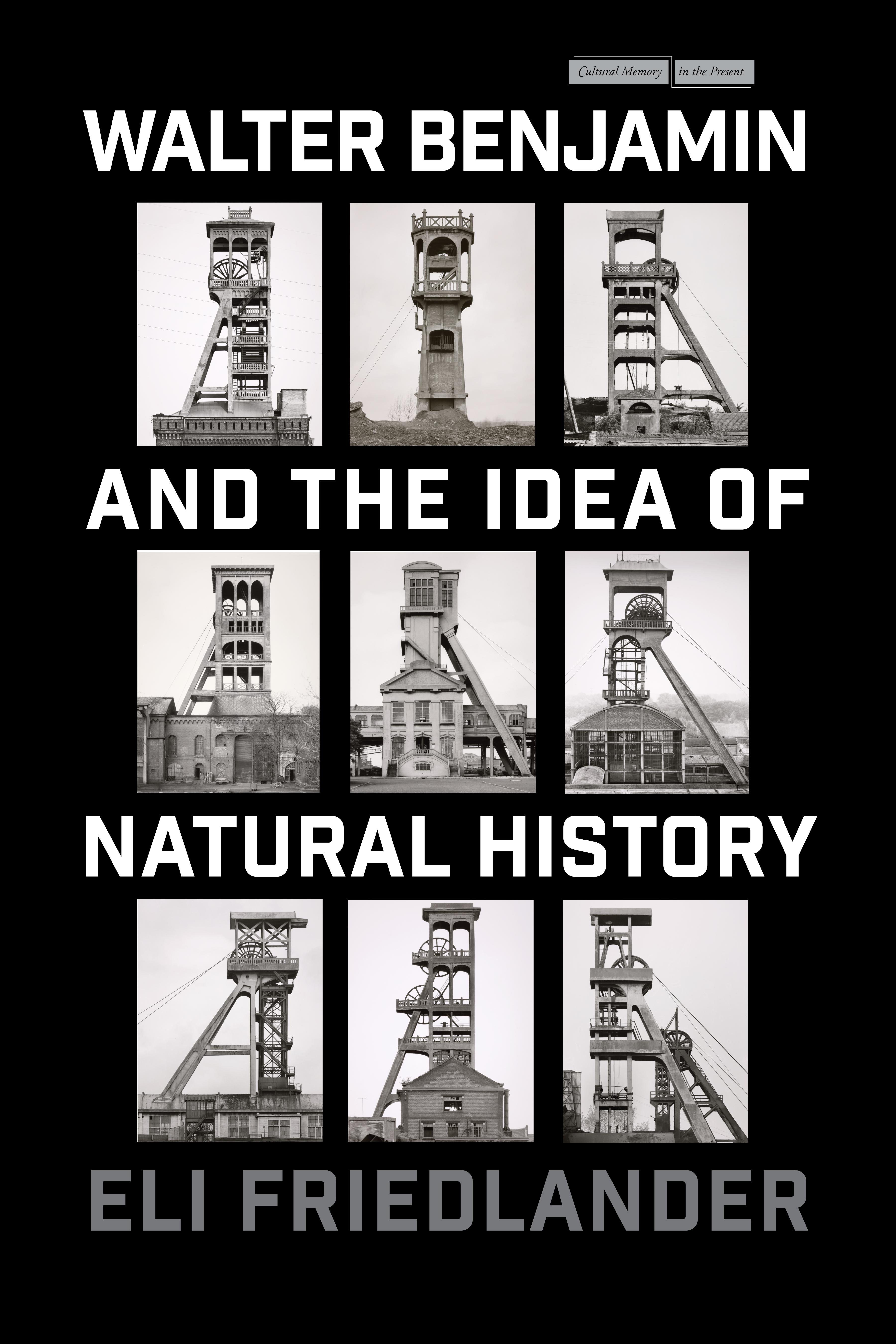
In this incisive new work, Eli Friedlander demonstrates that Walter Benjamin's entire corpus, from early to late, comprises a rigorous and sustained philosophical questioning of how human beings belong to nature.
Across seemingly heterogeneous writings, Friedlander argues, Benjamin consistently explores what the natural in the human comes to, that is, how nature is transformed, actualized, redeemed, and overcome in human existence. The book progresses gradually from Benjamin's philosophically fundamental writings on language and nature to his Goethean empiricism, from the presentation of ideas to the primal history of the Paris arcades. Friedlander's careful analysis brings out how the idea of natural history inflects Benjamin's conception of the work of art and its critique, his diagnosis of the mythical violence of the legal order, his account of the body and of action, of material culture and technology, as well as his unique vision of historical materialism.
Featuring revelatory new readings of Benjamin's major works that differ, sometimes dramatically, from prevailing interpretations, this book reveals the internal coherence and philosophical force of Benjamin's thought.
Betal enkelt med kort, Klarna, Apple Pay eller Google Pay. Ikke fornøyd? Du har alltid 14 dagers angrerett. Les mer i våre vilkår. Har du spørsmål, send oss en e-post på hello@memmo.org.
Memmo gjør det enklere å studere – uansett hvor du er i verden. Hos oss samler du pensumbøker og smarte studieverktøy på ett og samme sted: sammendrag, quizer, podkaster og flashcards. Og så Ted, din studiekompis som svarer på alt du lurer på. Over 50 000 studenter studerer allerede her – bygget for at du skal lære raskere og stresse mindre.