
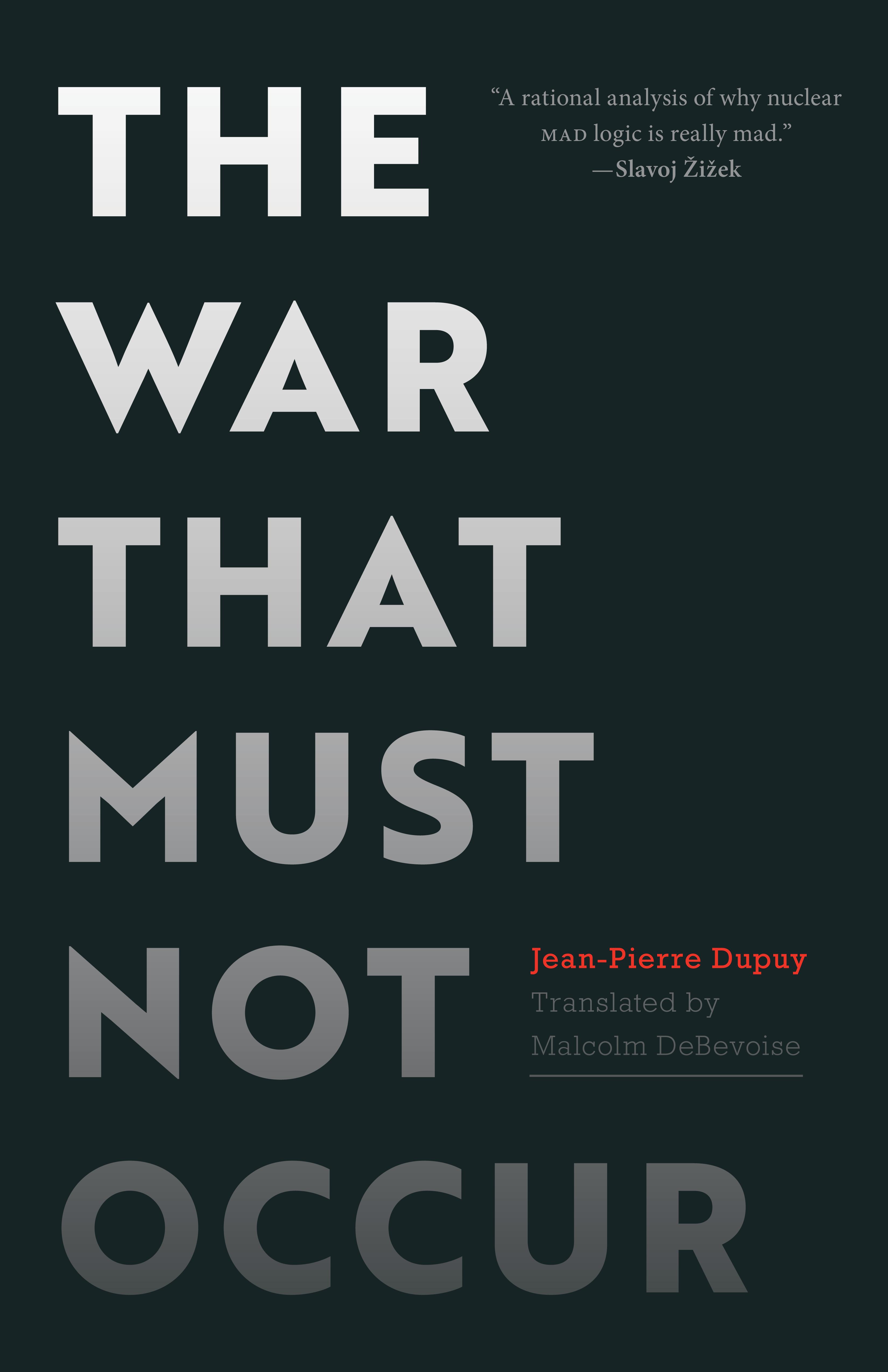
The possibility of a nuclear war that could destroy civilization has influenced the course of international affairs since 1945, suspended like a sword of Damocles above the heads of the world's leaders. The fact that we have escaped a third world war involving strategic nuclear weapons—indeed, that no atomic weapon of limited power has yet been used under battlefield conditions—seems nothing short of a miracle.
Revisiting debates on the effectiveness and ethics of nuclear deterrence, Jean-Pierre Dupuy is led to reformulate some of the most difficult questions in philosophy. He develops a counterintuitive but powerful theory of apocalyptic prophecy: once a major catastrophe appears to be possible, one must assume that it will in fact occur. Dupuy shows that the contradictions and paradoxes riddling discussions of deterrence arise from the tension between two opposite conceptions of time: one in which the future depends on decisions and strategy, and another in which every occurring event is one that could not have failed to occur.
Considering the immense destructive power of nuclear warheads and the almost unimaginable ruin they are bound to cause, Dupuy reaches a provocative conclusion: whether they bring about good or evil does not depend on the present or future intentions of those who are in a position to use them. The mere possession of nuclear weapons is a moral abomination.
Betal enkelt med kort, Klarna, Apple Pay eller Google Pay. Ikke fornøyd? Du har alltid 14 dagers angrerett. Les mer i våre vilkår. Har du spørsmål, send oss en e-post på hello@memmo.org.
Memmo gjør det enklere å studere – uansett hvor du er i verden. Hos oss samler du pensumbøker og smarte studieverktøy på ett og samme sted: sammendrag, quizer, podkaster og flashcards. Og så Ted, din studiekompis som svarer på alt du lurer på. Over 50 000 studenter studerer allerede her – bygget for at du skal lære raskere og stresse mindre.