
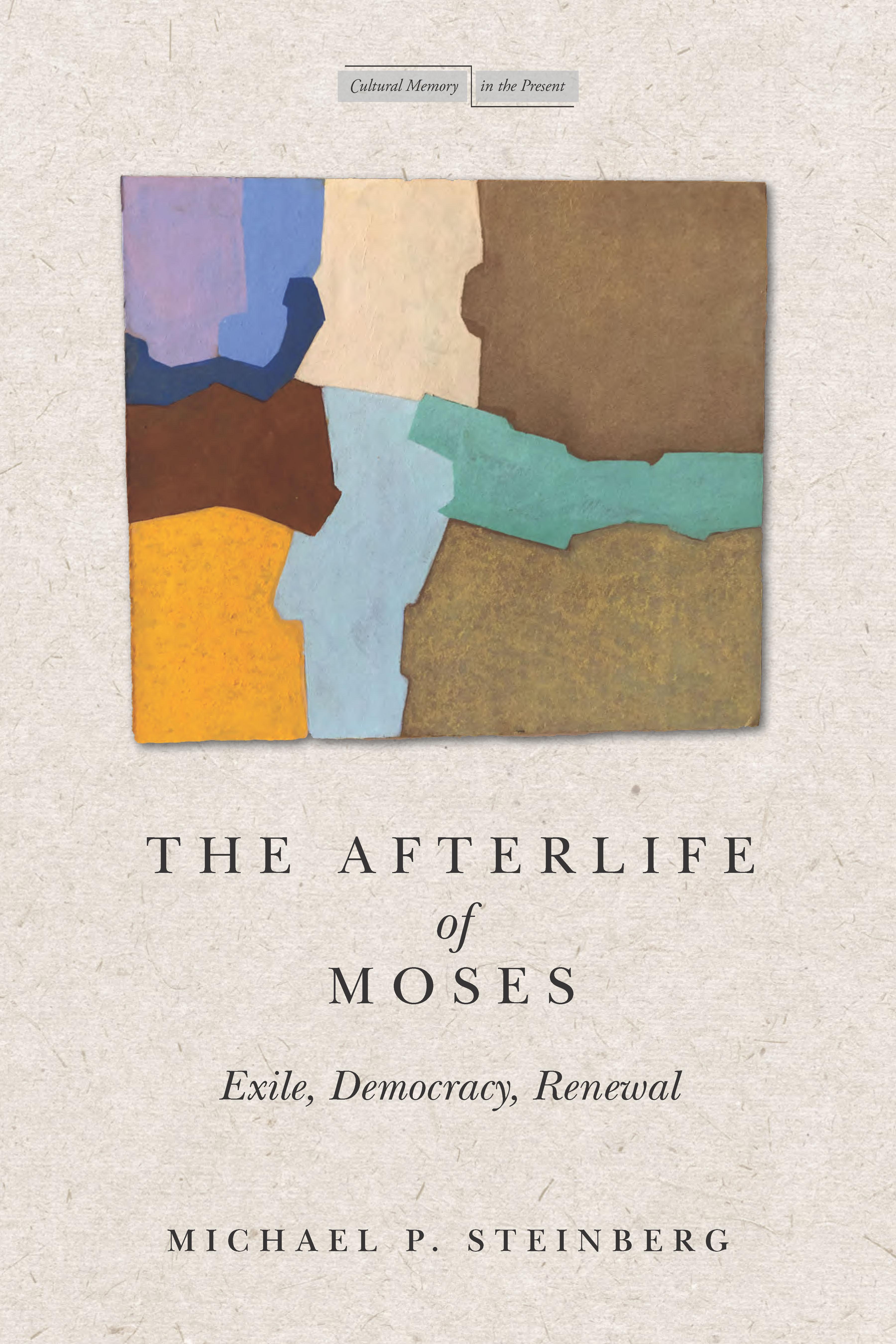
In this elegant and personal new work, Michael P. Steinberg reflects on the story of Moses and the Exodus as a foundational myth of politics—of the formation not of a nation but of a political community grounded in universal law.
Modern renderings of the story of Moses, from Michelangelo to Spinoza to Freud to Schoenberg to Derrida, have seized on the story's ambivalences, its critical and self-critical power. These literal returns form the first level of the afterlife of Moses. They spin a persistent critical and self-critical thread of European and transatlantic art and argument. And they enable the second strand of Steinberg's argument, namely the depersonalization of the Moses and Exodus story, its evolving abstraction and modulation into a varied modern history of political beginnings. Beginnings, as distinct from origins, are human and historical, writes Steinberg. Political constitutions, as a form of beginning, imply the eventuality of their own renewals and their own reconstitutions.
Motivated in part by recent reactionary insurgencies in the US, Europe, and Israel, this astute work of intellectual history posits the critique of myths of origin as a key principle of democratic government, affect, and citizenship, of their endurance as well as their fragility.
Betal enkelt med kort, Klarna, Apple Pay eller Google Pay. Ikke fornøyd? Du har alltid 14 dagers angrerett. Les mer i våre vilkår. Har du spørsmål, send oss en e-post på hello@memmo.org.
Memmo gjør det enklere å studere – uansett hvor du er i verden. Hos oss samler du pensumbøker og smarte studieverktøy på ett og samme sted: sammendrag, quizer, podkaster og flashcards. Og så Ted, din studiekompis som svarer på alt du lurer på. Over 50 000 studenter studerer allerede her – bygget for at du skal lære raskere og stresse mindre.