
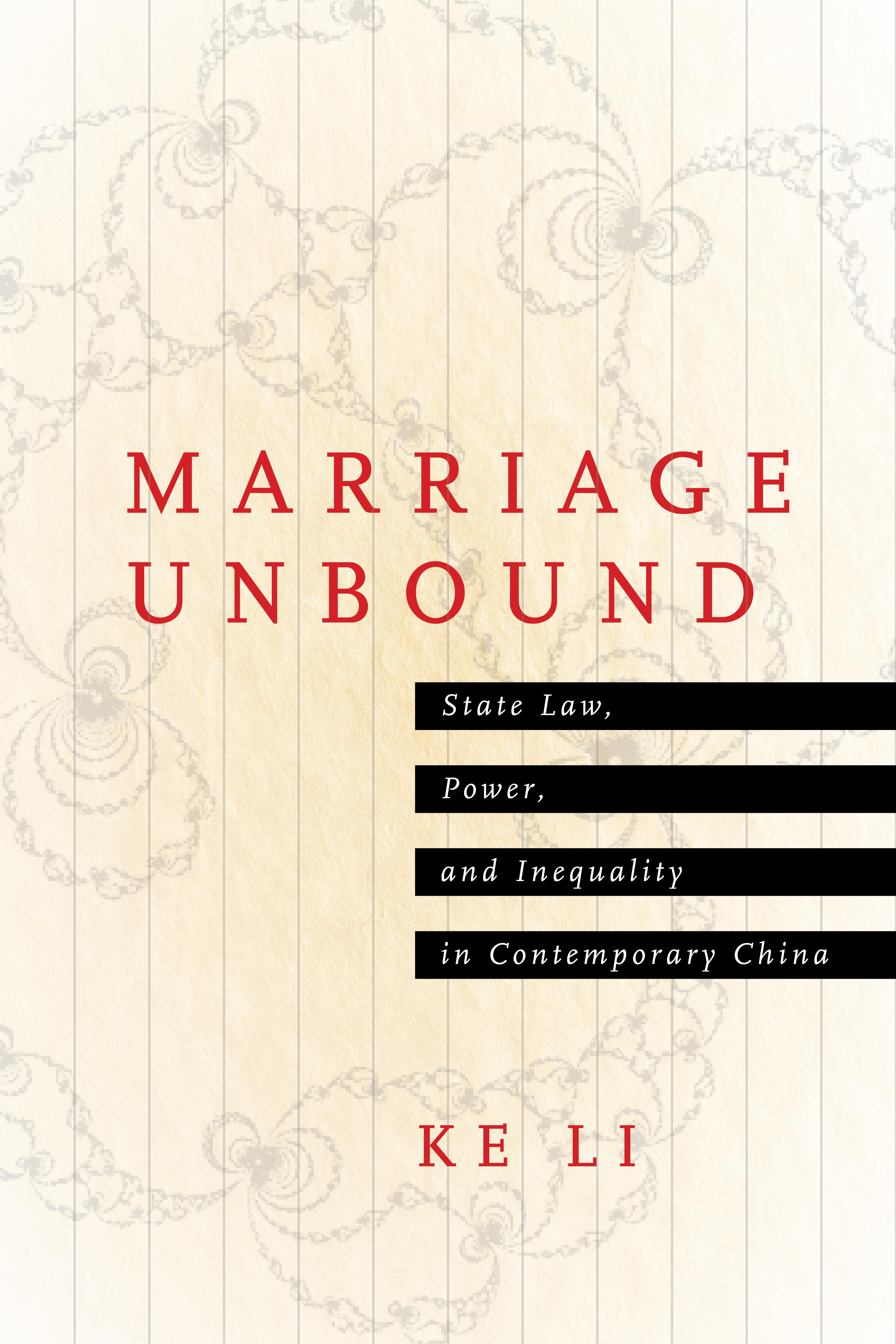
China after Mao has undergone vast transformations, including massive rural-to-urban migration, rising divorce rates, and the steady expansion of the country's legal system. Today, divorce may appear a private concern, when in fact it is a profoundly political matter—especially in a national context where marriage was and has continued to be a key vehicle for nation-state building. Marriage Unbound focuses on the politics of divorce cases in contemporary China, following a group of women seeking judicial remedies for conjugal grievances and disputes.
Drawing on extensive archival and ethnographic data, paired with unprecedented access to rural Chinese courtrooms, Ke Li presents not only a stirring portrayal of how these women navigate divorce litigation, but also a uniquely in-depth account of the modern Chinese legal system. With sensitive and fluid prose, Li reveals the struggles between the powerful and the powerless at the front lines of dispute management; the complex interplay between culture and the state; and insidious statecraft that far too often sacrifices women's rights and interests. Ultimately, this book shows how women's legal mobilization and rights contention can forge new ground for our understanding of law, politics, and inequality in an authoritarian regime.
Betal enkelt med kort, Klarna, Apple Pay eller Google Pay. Ikke fornøyd? Du har alltid 14 dagers angrerett. Les mer i våre vilkår. Har du spørsmål, send oss en e-post på hello@memmo.org.
Memmo gjør det enklere å studere – uansett hvor du er i verden. Hos oss samler du pensumbøker og smarte studieverktøy på ett og samme sted: sammendrag, quizer, podkaster og flashcards. Og så Ted, din studiekompis som svarer på alt du lurer på. Over 50 000 studenter studerer allerede her – bygget for at du skal lære raskere og stresse mindre.