
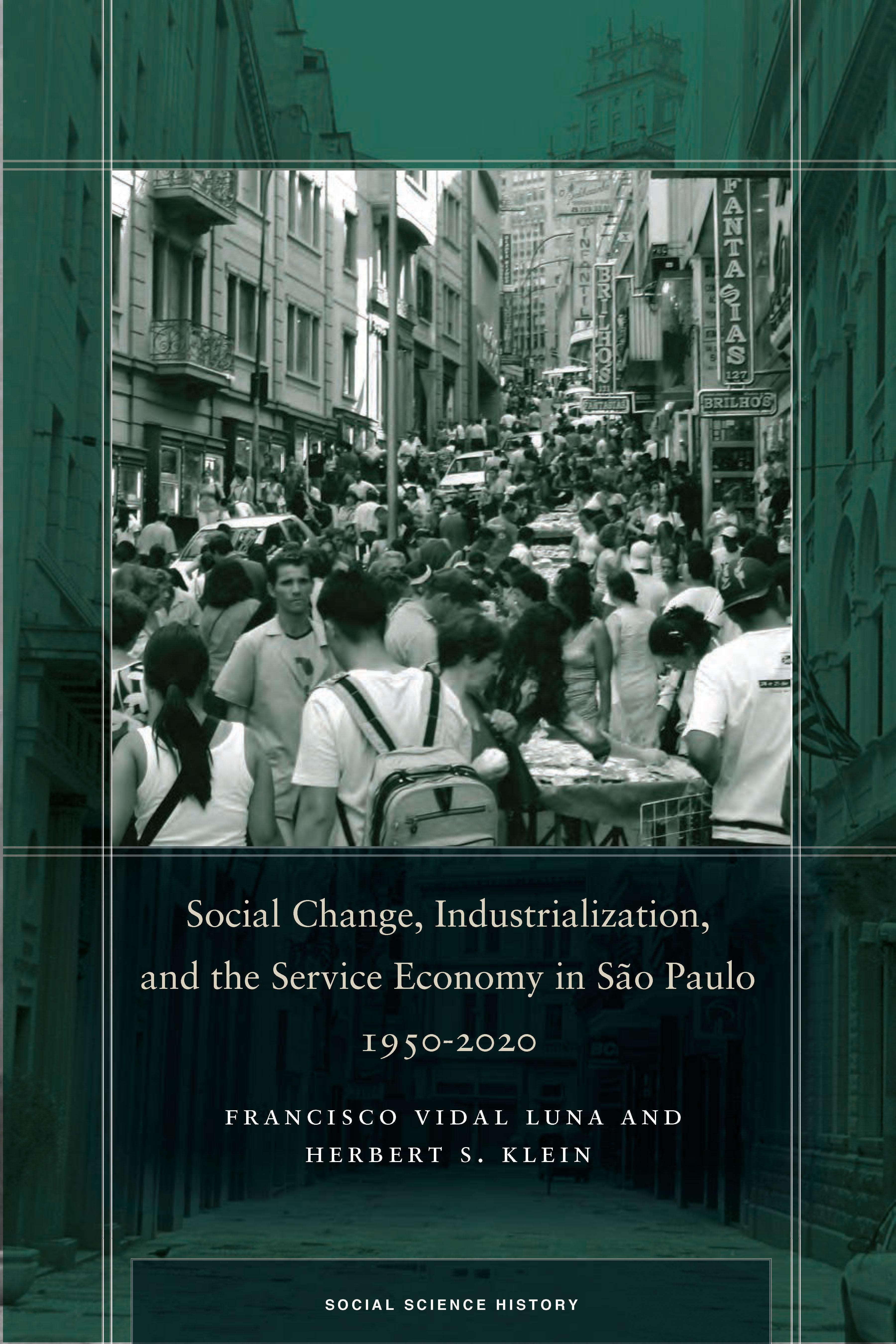
In the 1950s–80s, Brazil built one of the most advanced industrial networks among the "developing" countries, initially concentrated in the state of São Paulo. But from the 1980s, decentralization of industry spread to other states reducing São Paulo's relative importance in the country's industrial product. This volume draws on social, economic, and demographic data to document the accelerated industrialization of the state and its subsequent shift to a service economy amidst worsening social and economic inequality.
Through its cultural institutions, universities, banking, and corporate sectors, the municipality of São Paulo would become a world metropolis. At the same time, given its rapid growth from 2 million to 12 million residents in this period, São Paulo dealt with problems of distribution, housing, and governance. This significant volume elucidates these and other trends during the late twentieth and early twenty-first centuries, and will be an invaluable reference for scholars of history, policy, and the economy in Latin America.
Betal enkelt med kort, Klarna, Apple Pay eller Google Pay. Ikke fornøyd? Du har alltid 14 dagers angrerett. Les mer i våre vilkår. Har du spørsmål, send oss en e-post på hello@memmo.org.
Memmo gjør det enklere å studere – uansett hvor du er i verden. Hos oss samler du pensumbøker og smarte studieverktøy på ett og samme sted: sammendrag, quizer, podkaster og flashcards. Og så Ted, din studiekompis som svarer på alt du lurer på. Over 50 000 studenter studerer allerede her – bygget for at du skal lære raskere og stresse mindre.