
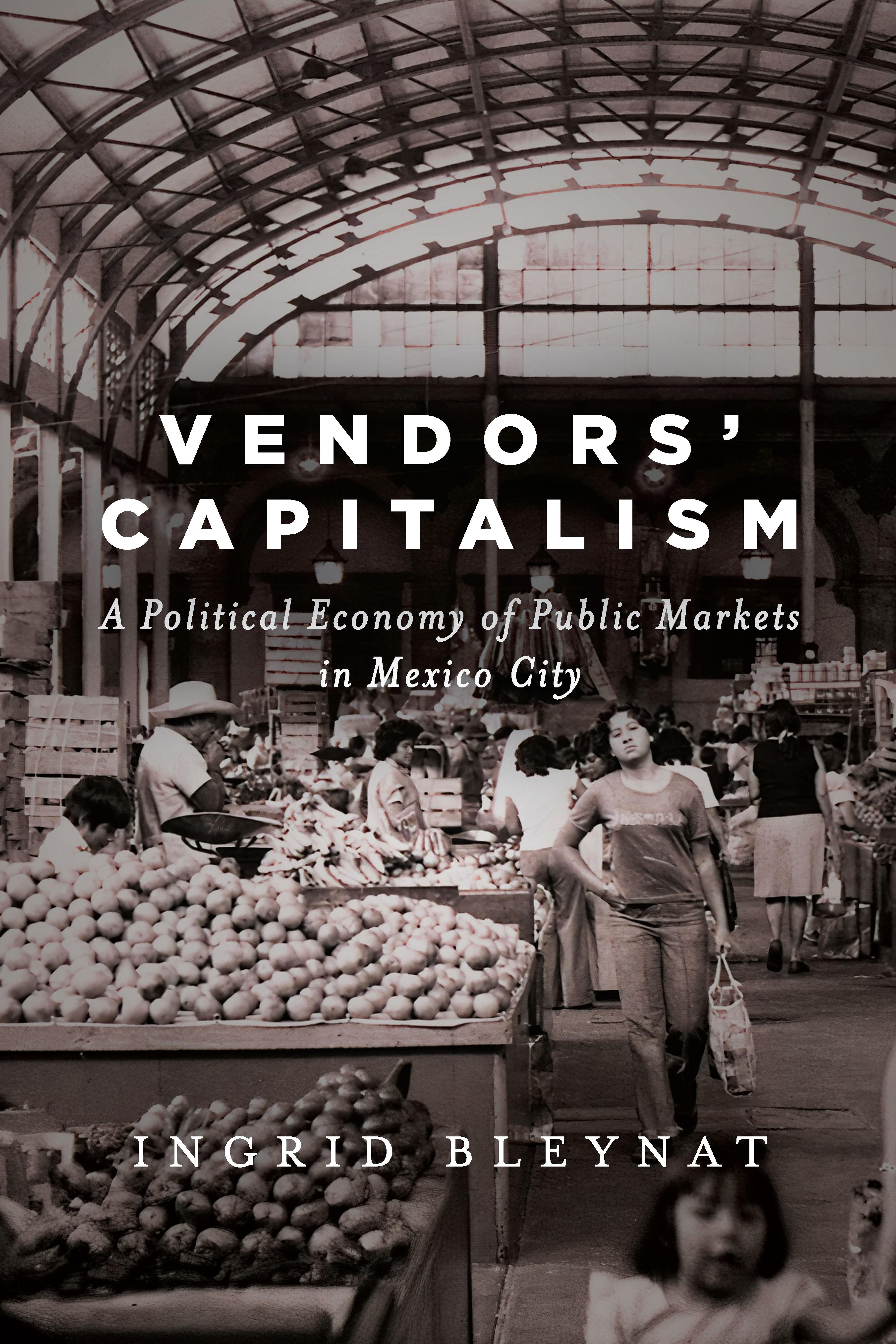
Mexico City's public markets were integral to the country's economic development, bolstering the expansion of capitalism from the mid-nineteenth to mid-twentieth centuries. These publicly owned and operated markets supplied households with everyday necessities and generated revenue for local authorities. At the same time, they were embedded in a wider network of economic and social relations that gave market vendors an influence far beyond the running of their stalls. As they fed the capital's population, these vendors fought to protect their own livelihoods, shaping the public sphere and broadening the scope of popular politics.
Vendors' Capitalism argues for the centrality of Mexico City's public markets to the political economy of the city from the restoration of the Republic in 1867 to the heyday of the Mexican miracle and the PRI in the 1960s. Each day vendors interacted with customers, suppliers, government officials, and politicians, and the multiple conflicts that arose repeatedly tested the institutional capacity of the state. Through a close reading of the archives and an analysis of vendors' intersecting economic and political lives, Ingrid Bleynat explores the dynamics, as well as the limits, of capitalist development in Mexico.
Betal enkelt med kort, Klarna, Apple Pay eller Google Pay. Ikke fornøyd? Du har alltid 14 dagers angrerett. Les mer i våre vilkår. Har du spørsmål, send oss en e-post på hello@memmo.org.
Memmo gjør det enklere å studere – uansett hvor du er i verden. Hos oss samler du pensumbøker og smarte studieverktøy på ett og samme sted: sammendrag, quizer, podkaster og flashcards. Og så Ted, din studiekompis som svarer på alt du lurer på. Over 50 000 studenter studerer allerede her – bygget for at du skal lære raskere og stresse mindre.