
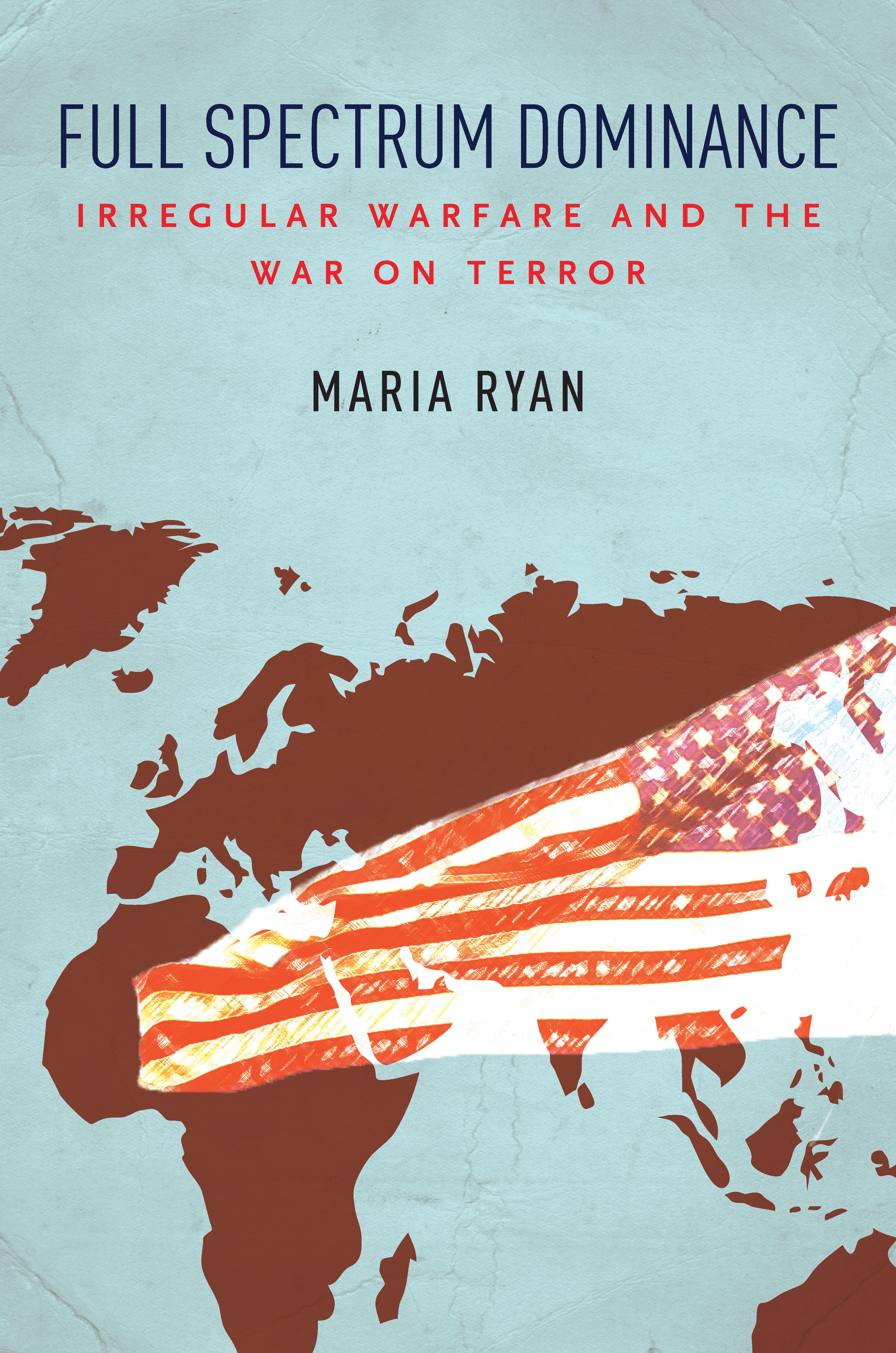
America's war on terror is widely defined by the Afghanistan and Iraq fronts. Yet, as this book demonstrates, both the international campaign and the new ways of fighting that grew out of it played out across multiple fronts beyond the Middle East. Maria Ryan explores how secondary fronts in the Philippines, sub-Saharan Africa, Georgia, and the Caspian Sea Basin became key test sites for developing what the Department of Defense called "full spectrum dominance": mastery across the entire range of possible conflict, from conventional through irregular warfare.
Full Spectrum Dominance is the first sustained historical examination of the secondary fronts in the war on terror. It explores whether irregular warfare has been effective in creating global stability or if new terrorist groups have emerged in response to the intervention. As the U.S. military, Department of Defense, White House, and State Department have increasingly turned to irregular capabilities and objectives, understanding the underlying causes as well as the effects of the quest for full spectrum dominance become ever more important. The development of irregular strategies has left a deeply ambiguous and concerning global legacy.
Betal enkelt med kort, Klarna, Apple Pay eller Google Pay. Ikke fornøyd? Du har alltid 14 dagers angrerett. Les mer i våre vilkår. Har du spørsmål, send oss en e-post på hello@memmo.org.
Memmo gjør det enklere å studere – uansett hvor du er i verden. Hos oss samler du pensumbøker og smarte studieverktøy på ett og samme sted: sammendrag, quizer, podkaster og flashcards. Og så Ted, din studiekompis som svarer på alt du lurer på. Over 50 000 studenter studerer allerede her – bygget for at du skal lære raskere og stresse mindre.