
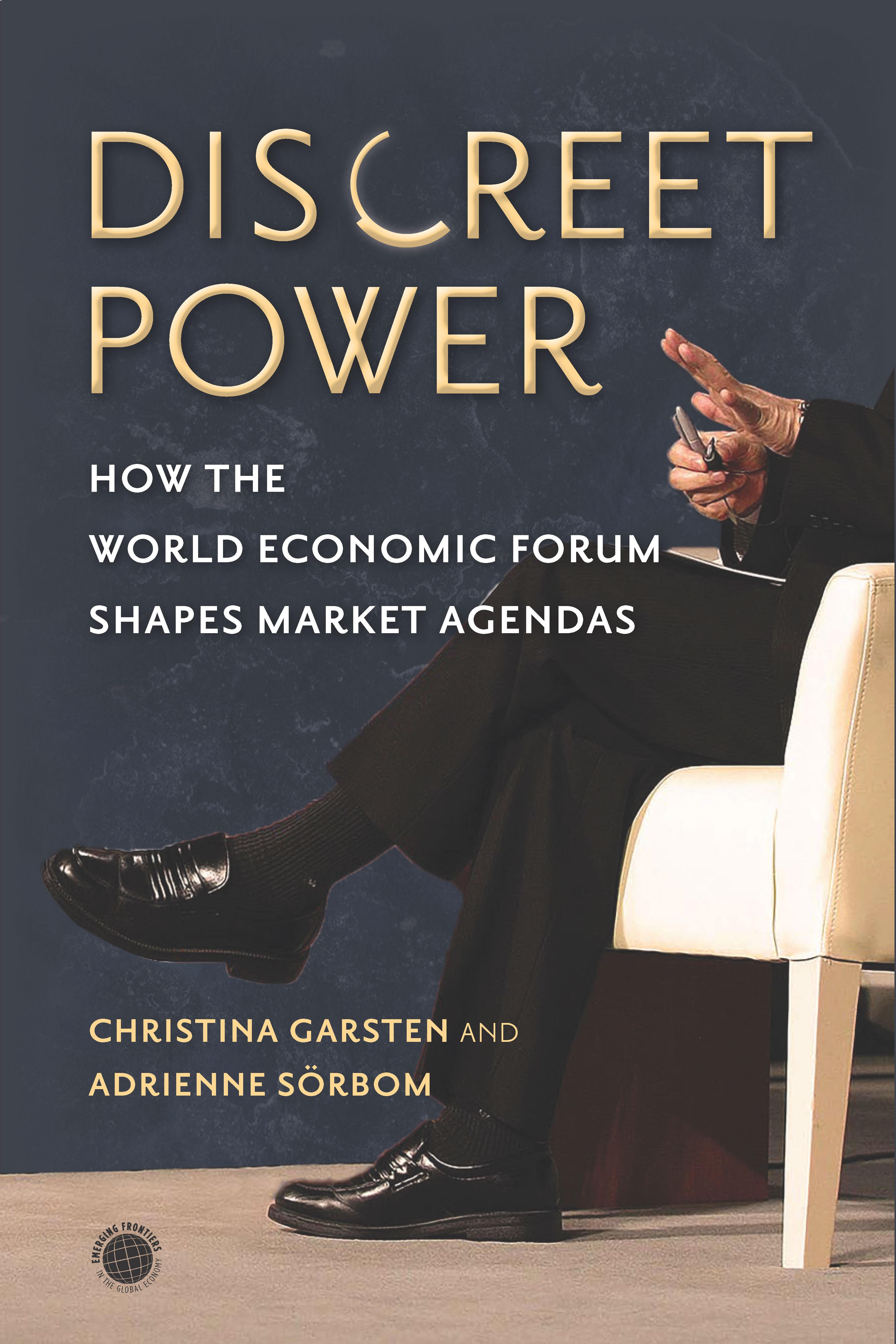
In Discreet Power, Christina Garsten and Adrienne Sörbom undertake an ethnographic study of the World Economic Forum (WEF). Accessing one of the primary agenda-setting organizations of our day, they draw on interviews and participant observation to examine how the WEF wields its influence. They situate the WEF within an emerging system of "discretionary governance," in which actors craft ideas and entice formal authorities and top leaders in order to garner significant sway. Yet in spite of its image as a powerful, exclusive brain trust, the WEF has no formal mandate to implement its positions. It must convince others to advance chosen causes and enact suggestions, rendering its position quite fragile.
Garsten and Sörbom argue that the WEF must be viewed relationally as a brokering organization that lives between the market and political spheres and that extends its reach through associated individuals and groups.They place the WEF in the context of a broader shift, arguing that while this type of governance opens up novel ways of dealing with urgent global problems, it challenges core democratic values.
Betal enkelt med kort, Klarna, Apple Pay eller Google Pay. Ikke fornøyd? Du har alltid 14 dagers angrerett. Les mer i våre vilkår. Har du spørsmål, send oss en e-post på hello@memmo.org.
Memmo gjør det enklere å studere – uansett hvor du er i verden. Hos oss samler du pensumbøker og smarte studieverktøy på ett og samme sted: sammendrag, quizer, podkaster og flashcards. Og så Ted, din studiekompis som svarer på alt du lurer på. Over 50 000 studenter studerer allerede her – bygget for at du skal lære raskere og stresse mindre.