
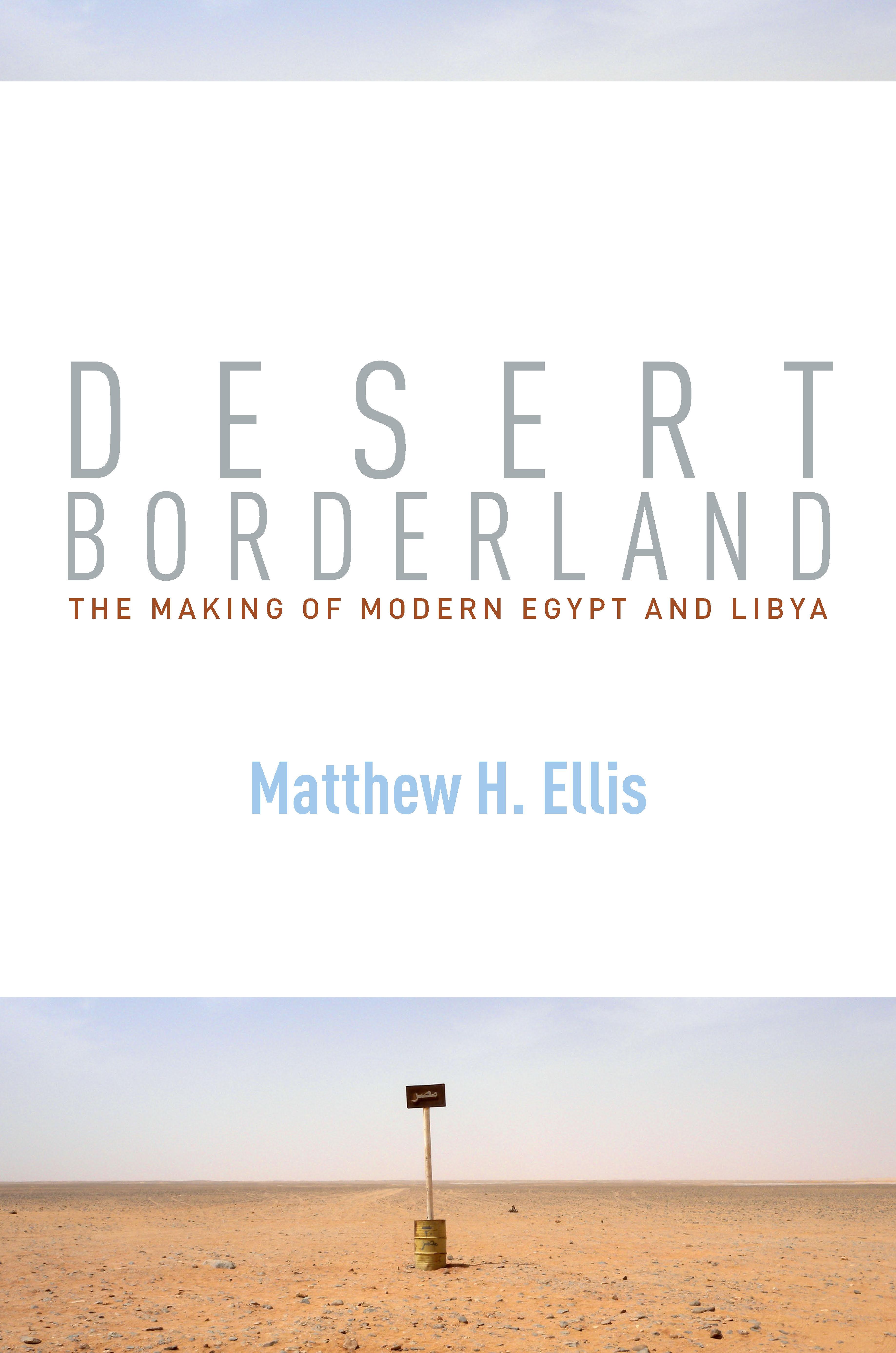
Desert Borderland investigates the historical processes that transformed political identity in the easternmost reaches of the Sahara Desert in the half century before World War I. Adopting a view from the margins—illuminating the little-known history of the Egyptian–Libyan borderland—the book challenges prevailing notions of how Egypt and Libya were constituted as modern territorial nation-states.
Matthew H. Ellis draws on a wide array of archival sources to reconstruct the multiple layers and meanings of territoriality in this desert borderland. Throughout the decades, a heightened awareness of the existence of distinctive Egyptian and Ottoman Libyan territorial spheres began to develop despite any clear-cut boundary markers or cartographic evidence. National territoriality was not simply imposed on Egypt's western—or Ottoman Libya's eastern—domains by centralizing state power. Rather, it developed only through a complex and multilayered process of negotiation with local groups motivated by their own local conceptions of space, sovereignty, and political belonging. By the early twentieth century, distinctive "Egyptian" and "Libyan" territorial domains emerged—what would ultimately become the modern nation-states of Egypt and Libya.
Betal enkelt med kort, Klarna, Apple Pay eller Google Pay. Ikke fornøyd? Du har alltid 14 dagers angrerett. Les mer i våre vilkår. Har du spørsmål, send oss en e-post på hello@memmo.org.
Memmo gjør det enklere å studere – uansett hvor du er i verden. Hos oss samler du pensumbøker og smarte studieverktøy på ett og samme sted: sammendrag, quizer, podkaster og flashcards. Og så Ted, din studiekompis som svarer på alt du lurer på. Over 50 000 studenter studerer allerede her – bygget for at du skal lære raskere og stresse mindre.