
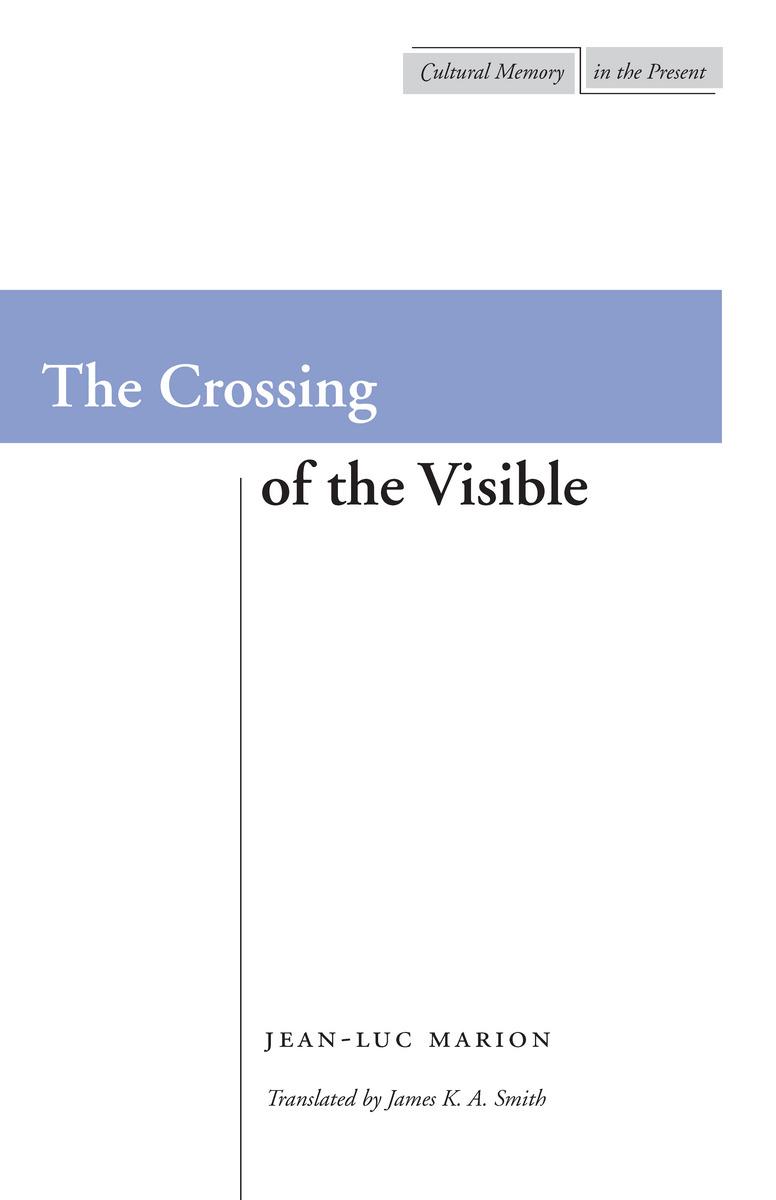
Painting, according to Jean-Luc Marion, is a central topic of concern for philosophy, particularly phenomenology. For the question of painting is, at its heart, a question of visibility—of appearance. As such, the painting is a privileged case of the phenomenon; the painting becomes an index for investigating the conditions of appearance—or what Marion describes as "phenomenality" in general.
In The Crossing of the Visible, Marion takes up just such a project. The natural outgrowth of his earlier reflections on icons, these four studies carefully consider the history of painting—from classical to contemporary—as a fund for phenomenological reflection on the conditions of (in)visibility. Ranging across artists from Raphael to Rothko, Caravaggio to Pollock, The Crossing of the Visible offers both a critique of contemporary accounts of the visual and a constructive alternative. According to Marion, the proper response to the "nihilism" of postmodernity is not iconoclasm, but rather a radically iconic account of the visual and the arts that opens them to the invisible.
Betal enkelt med kort, Klarna, Apple Pay eller Google Pay. Ikke fornøyd? Du har alltid 14 dagers angrerett. Les mer i våre vilkår. Har du spørsmål, send oss en e-post på hello@memmo.org.
Memmo gjør det enklere å studere – uansett hvor du er i verden. Hos oss samler du pensumbøker og smarte studieverktøy på ett og samme sted: sammendrag, quizer, podkaster og flashcards. Og så Ted, din studiekompis som svarer på alt du lurer på. Over 50 000 studenter studerer allerede her – bygget for at du skal lære raskere og stresse mindre.