
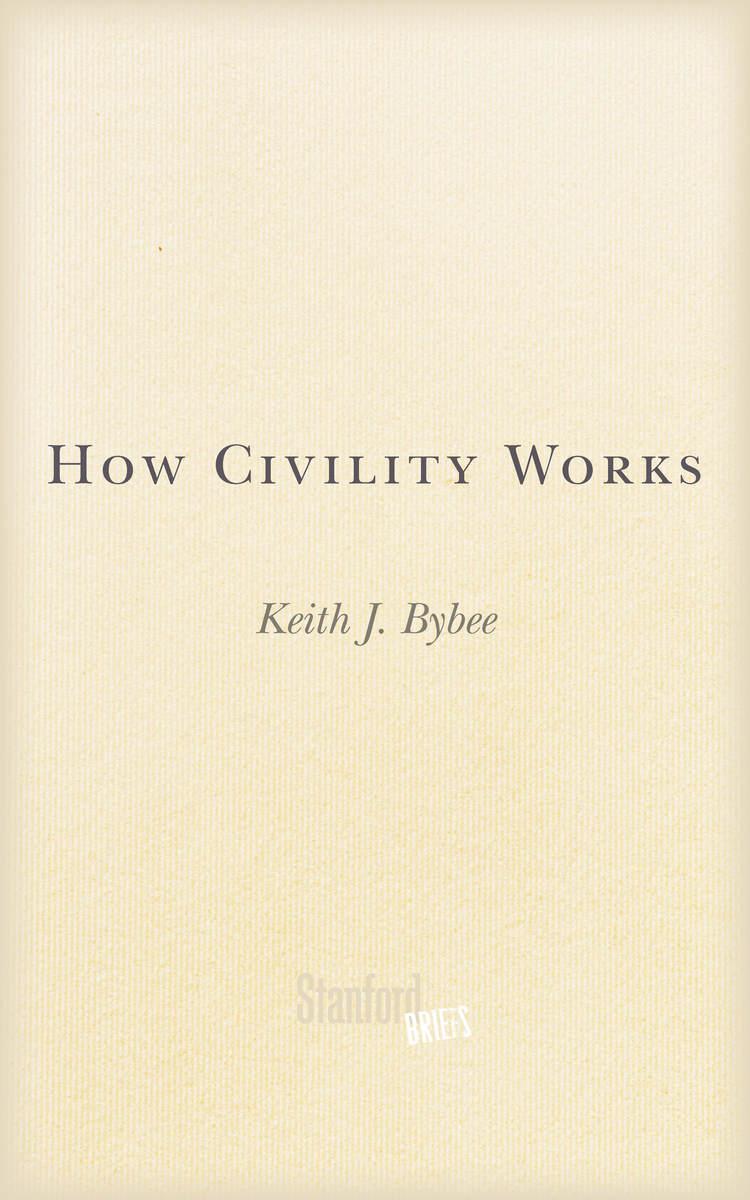
Is civility dead? Americans ask this question every election season, but their concern is hardly limited to political campaigns. Doubts about civility regularly arise in just about every aspect of American public life. Rudeness runs rampant. Our news media is saturated with aggressive bluster and vitriol. Our digital platforms teem with trolls and expressions of disrespect. Reflecting these conditions, surveys show that a significant majority of Americans believe we are living in an age of unusual anger and discord. Everywhere we look, there seems to be conflict and hostility, with shared respect and consideration nowhere to be found. In a country that encourages thick skins and speaking one's mind, is civility even possible, let alone desirable?
In How Civility Works, Keith J. Bybee elegantly explores the "crisis" in civility, looking closely at how civility intertwines with our long history of boorish behavior and the ongoing quest for pleasant company. Bybee argues that the very features that make civility ineffective and undesirable also point to civility's power and appeal. Can we all get along? If we live by the contradictions on which civility depends, then yes, we can, and yes, we should.
Betal enkelt med kort, Klarna, Apple Pay eller Google Pay. Ikke fornøyd? Du har alltid 14 dagers angrerett. Les mer i våre vilkår. Har du spørsmål, send oss en e-post på hello@memmo.org.
Memmo gjør det enklere å studere – uansett hvor du er i verden. Hos oss samler du pensumbøker og smarte studieverktøy på ett og samme sted: sammendrag, quizer, podkaster og flashcards. Og så Ted, din studiekompis som svarer på alt du lurer på. Over 50 000 studenter studerer allerede her – bygget for at du skal lære raskere og stresse mindre.