
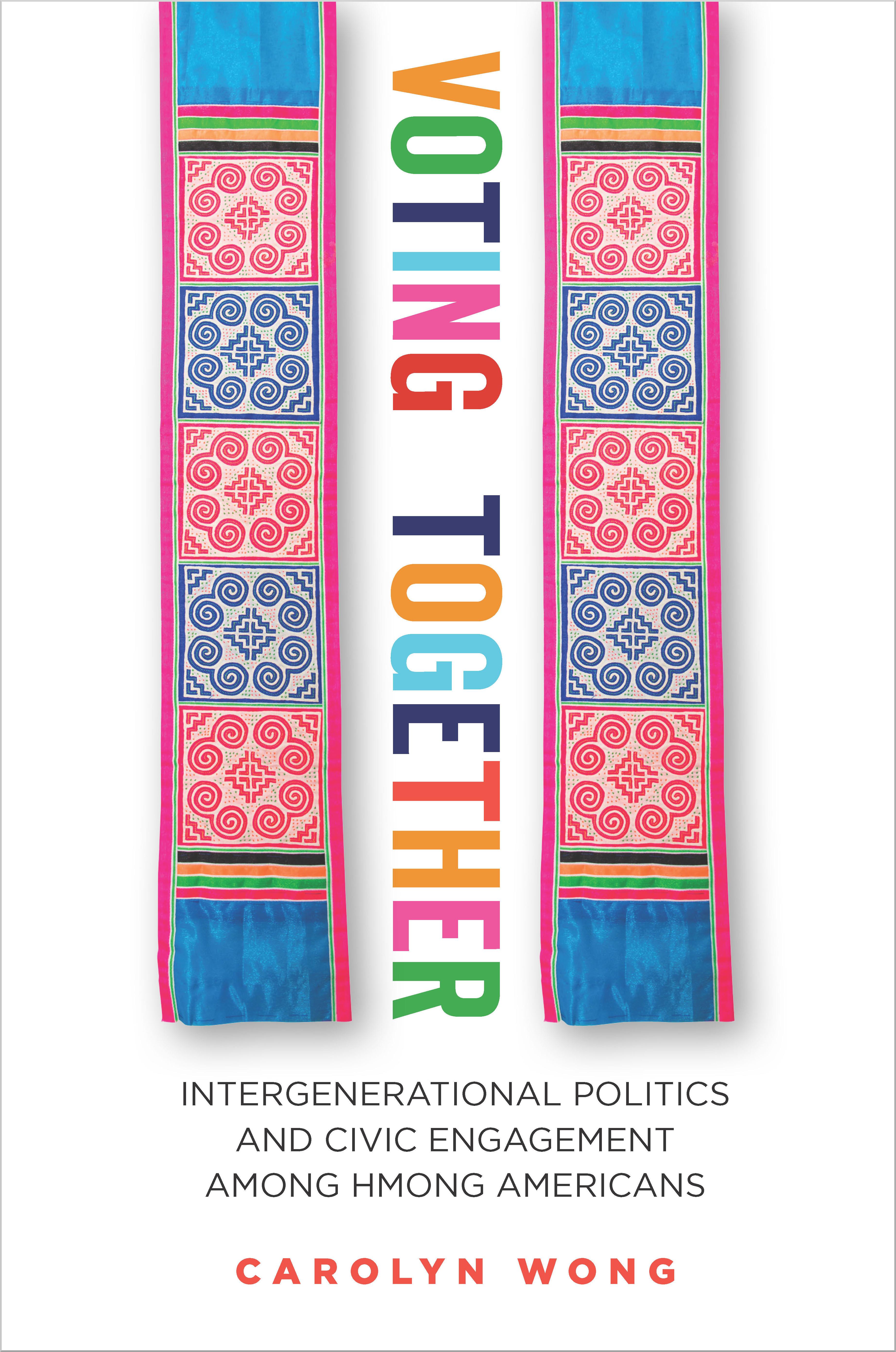
Hmong American immigrants first came to the United States as refugees of the Vietnam War. Forty years on, they have made a notable impact in American political life. They have voter participation rates higher than most other Asian American ethnic groups, and they have won seats in local and state legislative bodies. Yet the average level of education among Hmong Americans still lags behind that of the general U.S. population and high rates of poverty persist in their community, highlighting a curious disparity across the typical benchmarks of immigrant incorporation.
Carolyn Wong analyzes how the Hmong came to pursue politics as a key path to advancement and inclusion in the United States. Drawing on interviews with community leaders, refugees, and the second-generation children of immigrants, Wong shows that intergenerational mechanisms of social voting underlie the political participation of Hmong Americans. Younger Hmong Americans engage older community residents in grassroots elections and conversation about public affairs. And in turn, within families and communities, elders often transmit stories that draw connections between ancient Hmong aspirations for freedom and contemporary American egalitarian projects.
Betal enkelt med kort, Klarna, Apple Pay eller Google Pay. Ikke fornøyd? Du har alltid 14 dagers angrerett. Les mer i våre vilkår. Har du spørsmål, send oss en e-post på hello@memmo.org.
Memmo gjør det enklere å studere – uansett hvor du er i verden. Hos oss samler du pensumbøker og smarte studieverktøy på ett og samme sted: sammendrag, quizer, podkaster og flashcards. Og så Ted, din studiekompis som svarer på alt du lurer på. Over 50 000 studenter studerer allerede her – bygget for at du skal lære raskere og stresse mindre.