
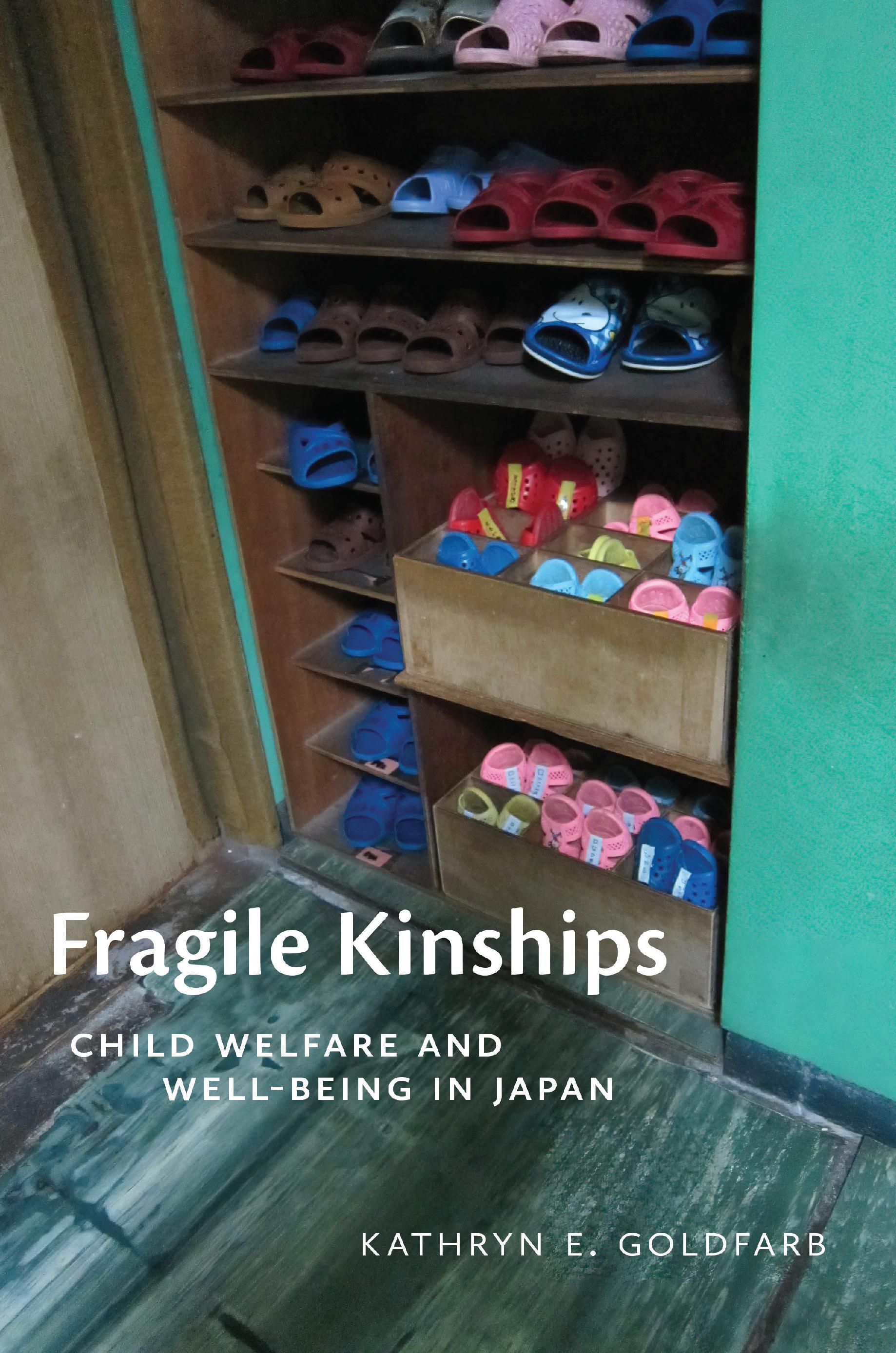
In Fragile Kinships, Kathryn E. Goldfarb shows how child welfare systems do not always generate well-being. This is true across the world, as it is in Japan. Policymakers, caregivers, and people with experience in state care endeavor to imagine—and implement—child welfare systems that are genuinely supportive. Yet despite these efforts, social welfare systems too often produce people who are alone. By centering relationality in theorizing social forms of care, Fragile Kinships offers key insights into embodied and socioemotional well-being. Goldfarb analyzes both the feelings and effects of lacking kin, and the transformative energy people invest in creating new forms of kinship and relatedness.
Fragile Kinships demonstrates why welfare systems must support relational well-being. In her contributions to anthropological theories of kinship, embodiment, and the field of Japanese studies, Goldfarb also speaks to academics, practitioners, and policymakers in Japan and globally with ethnographically grounded perspectives suggesting ways that child welfare systems might truly achieve wellbeing.
Betal enkelt med kort, Klarna, Apple Pay eller Google Pay. Ikke fornøyd? Du har alltid 14 dagers angrerett. Les mer i våre vilkår. Har du spørsmål, send oss en e-post på hello@memmo.org.
Memmo gjør det enklere å studere – uansett hvor du er i verden. Hos oss samler du pensumbøker og smarte studieverktøy på ett og samme sted: sammendrag, quizer, podkaster og flashcards. Og så Ted, din studiekompis som svarer på alt du lurer på. Over 50 000 studenter studerer allerede her – bygget for at du skal lære raskere og stresse mindre.