
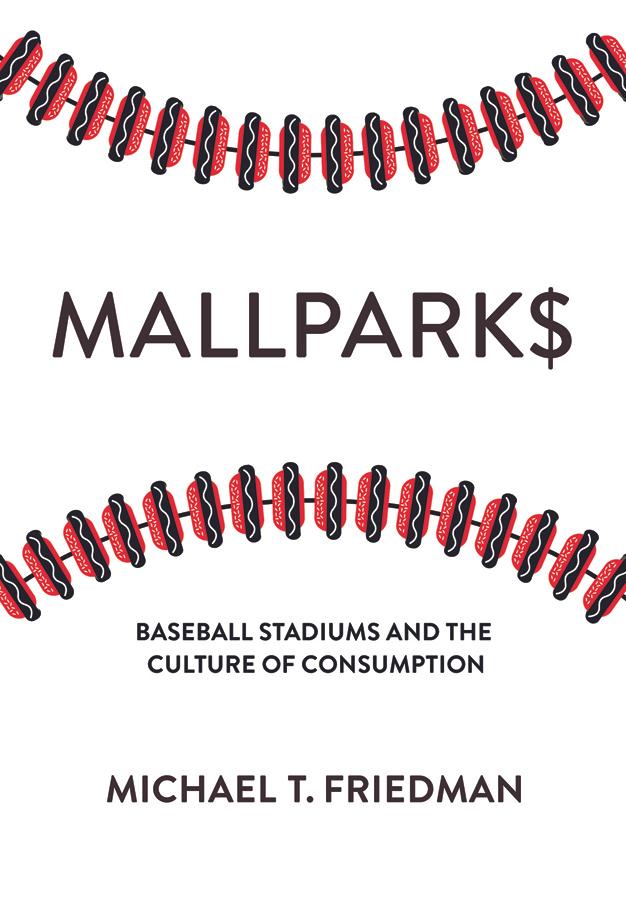
In Mallparks, Michael T. Friedman observes that as cathedrals represented power relations in medieval towns and skyscrapers epitomized those within industrial cities, sports stadiums exemplify urban American consumption at the turn of the twenty-first century. Grounded in Henri Lefebvre and George Ritzer's spatial theories in their analyses of consumption spaces, Mallparks examines how the designers of this generation of baseball stadiums follow the principles of theme park and shopping mall design to create highly effective and efficient consumption sites.
In his exploration of these contemporary cathedrals of sport and consumption, Friedman discusses the history of stadium design, the amenities and aesthetics of stadium spaces, and the intentions and conceptions of architects, team officials, and civic leaders. He grounds his analysis in case studies of Oriole Park at Camden Yards in Baltimore; Fenway Park in Boston; Dodger Stadium in Los Angeles; Nationals Park in Washington, DC; Target Field in Minneapolis; and Truist Park in Atlanta.
Betal enkelt med kort, Klarna, Apple Pay eller Google Pay. Ikke fornøyd? Du har alltid 14 dagers angrerett. Les mer i våre vilkår. Har du spørsmål, send oss en e-post på hello@memmo.org.
Memmo gjør det enklere å studere – uansett hvor du er i verden. Hos oss samler du pensumbøker og smarte studieverktøy på ett og samme sted: sammendrag, quizer, podkaster og flashcards. Og så Ted, din studiekompis som svarer på alt du lurer på. Over 50 000 studenter studerer allerede her – bygget for at du skal lære raskere og stresse mindre.