
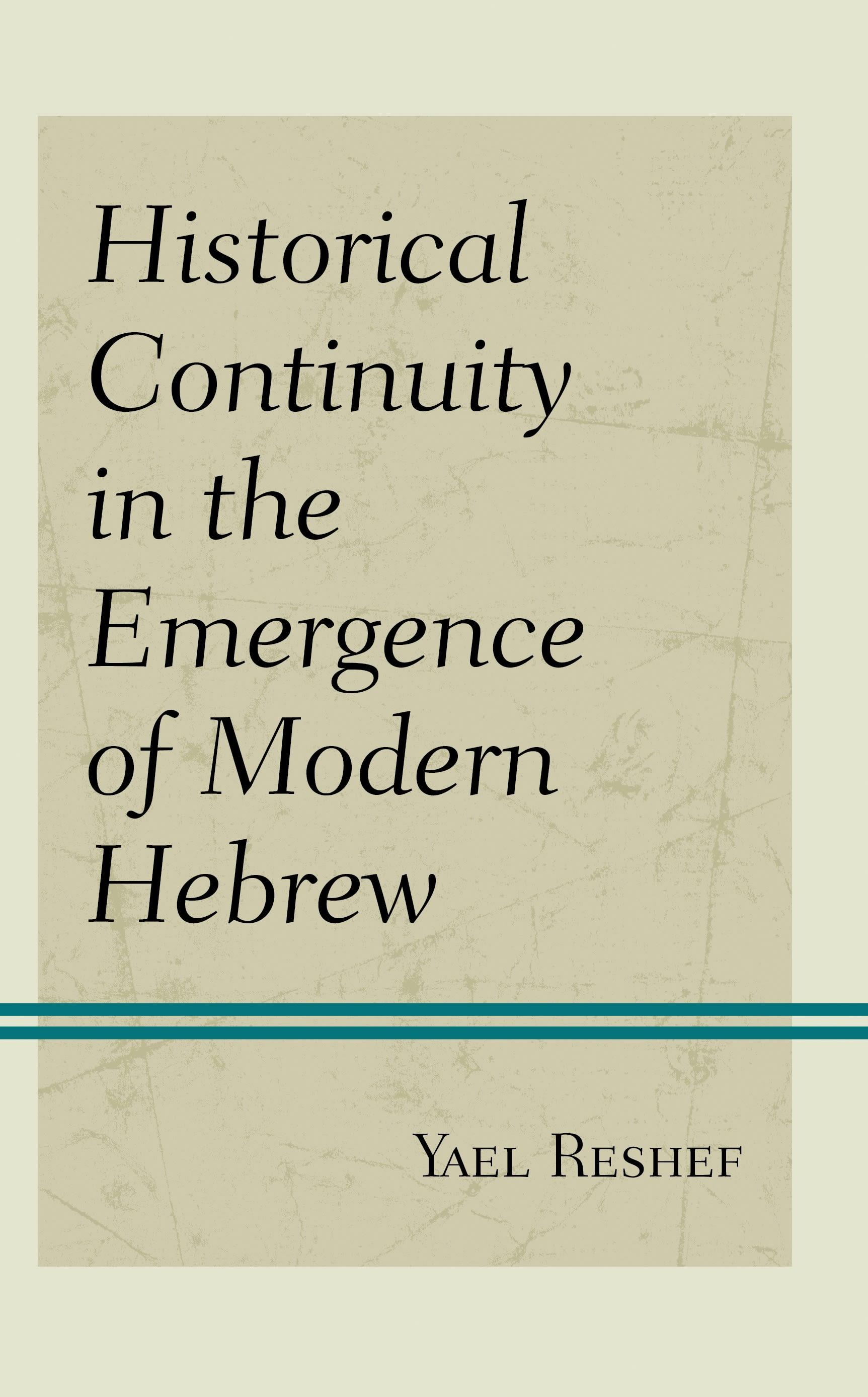
Historical Continuity in the Emergence of Modern Hebrew offers a new perspective on the emergence processes of Modern Hebrew and its relationship to earlier forms of Hebrew. Based on a textual examination of select case studies of language use throughout the modernization of Hebrew, this book shows that due to the unconventional sociolinguistic circumstances in the budding speech community, linguistic processes did not necessarily evolve in a linear manner, blurring the distinction between true and apparent historical continuity. The emergent language’s standardization involved the restructuring of linguistic habits that had initially taken root among the first speakers, often leading to a retreat from early contact-induced or non-classical phenomena. Yael Reshef demonstrates that as a result, superficial similarity to earlier forms of Hebrew did not necessarily stem from continuity, and deviation from canonical Hebrew features does not necessarily stem from change.
Betal enkelt med kort, Klarna, Apple Pay eller Google Pay. Ikke fornøyd? Du har alltid 14 dagers angrerett. Les mer i våre vilkår. Har du spørsmål, send oss en e-post på hello@memmo.org.
Memmo gjør det enklere å studere – uansett hvor du er i verden. Hos oss samler du pensumbøker og smarte studieverktøy på ett og samme sted: sammendrag, quizer, podkaster og flashcards. Og så Ted, din studiekompis som svarer på alt du lurer på. Over 50 000 studenter studerer allerede her – bygget for at du skal lære raskere og stresse mindre.