
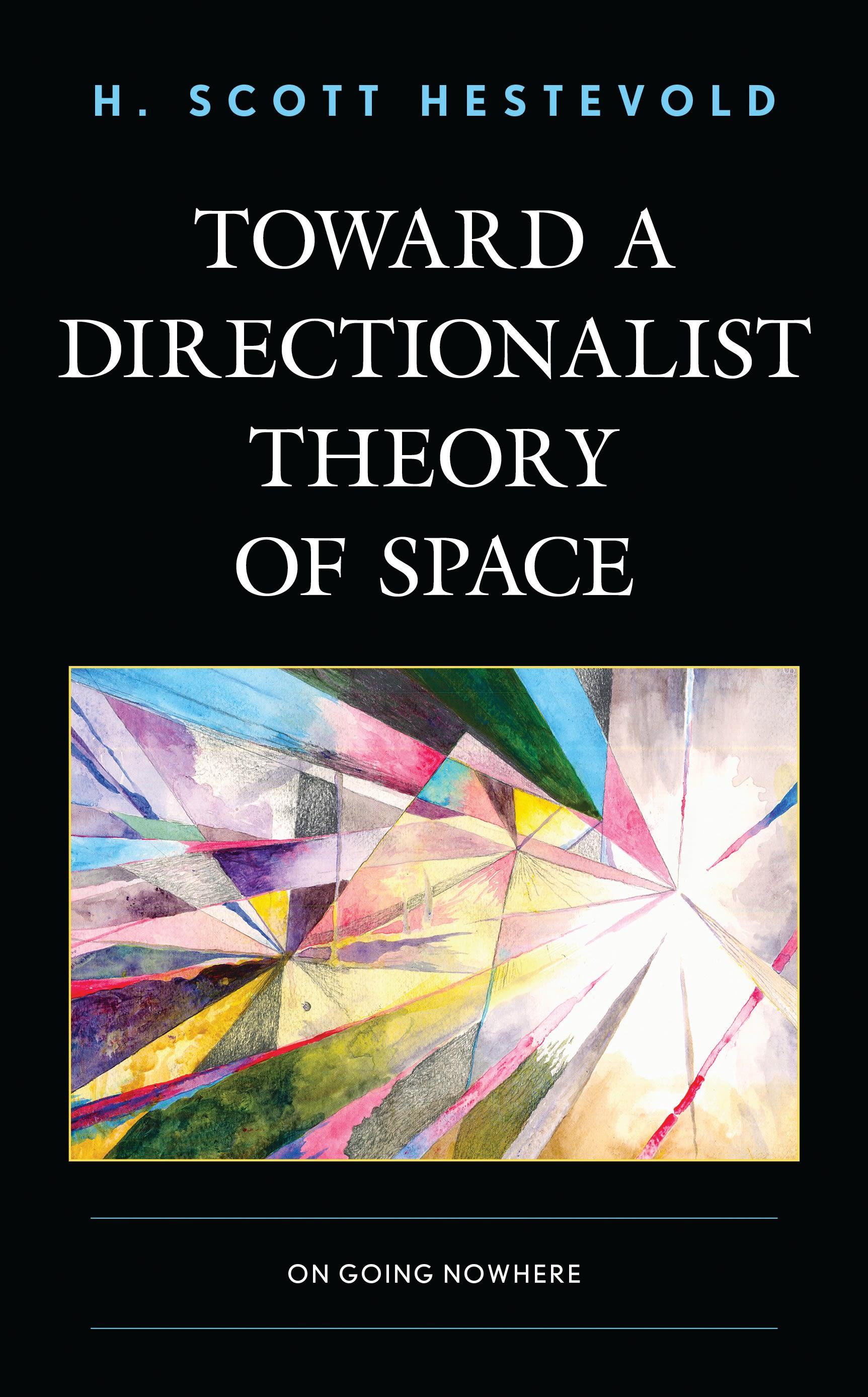
In Toward a Directionalist Theory of Space: On Going Nowhere, H. Scott Hestevold formulates a new relationalist theory of space by appealing to the view that the universe is directioned in the sense that there exist directional relations—a class of spatial relations that Leibniz overlooked. Extending the directionalist/relationalist theory of space to the problem of when it is that discrete objects compose a whole, Hestevold revisits his answer to the Special Composition Question. He also uses the directionalist/relationalist theory to formulate reductivist theories of boundaries and holes—theories that may allow one to resist the view that boundaries and holes are ontologically parasitic entities. Finally, he explores directionalism/relationalism vis-à-vis spacetime. After noting findings of modern physics that favor substantivalist spacetime and then developing metaphysical concerns that favor instead directionalist/relationalist spacetime, Hestevold notes the ontological benefit of endorsing spatiotemporal directional relations even if spacetime substantivalism is the winning theory.
Betal enkelt med kort, Klarna, Apple Pay eller Google Pay. Ikke fornøyd? Du har alltid 14 dagers angrerett. Les mer i våre vilkår. Har du spørsmål, send oss en e-post på hello@memmo.org.
Memmo gjør det enklere å studere – uansett hvor du er i verden. Hos oss samler du pensumbøker og smarte studieverktøy på ett og samme sted: sammendrag, quizer, podkaster og flashcards. Og så Ted, din studiekompis som svarer på alt du lurer på. Over 50 000 studenter studerer allerede her – bygget for at du skal lære raskere og stresse mindre.