
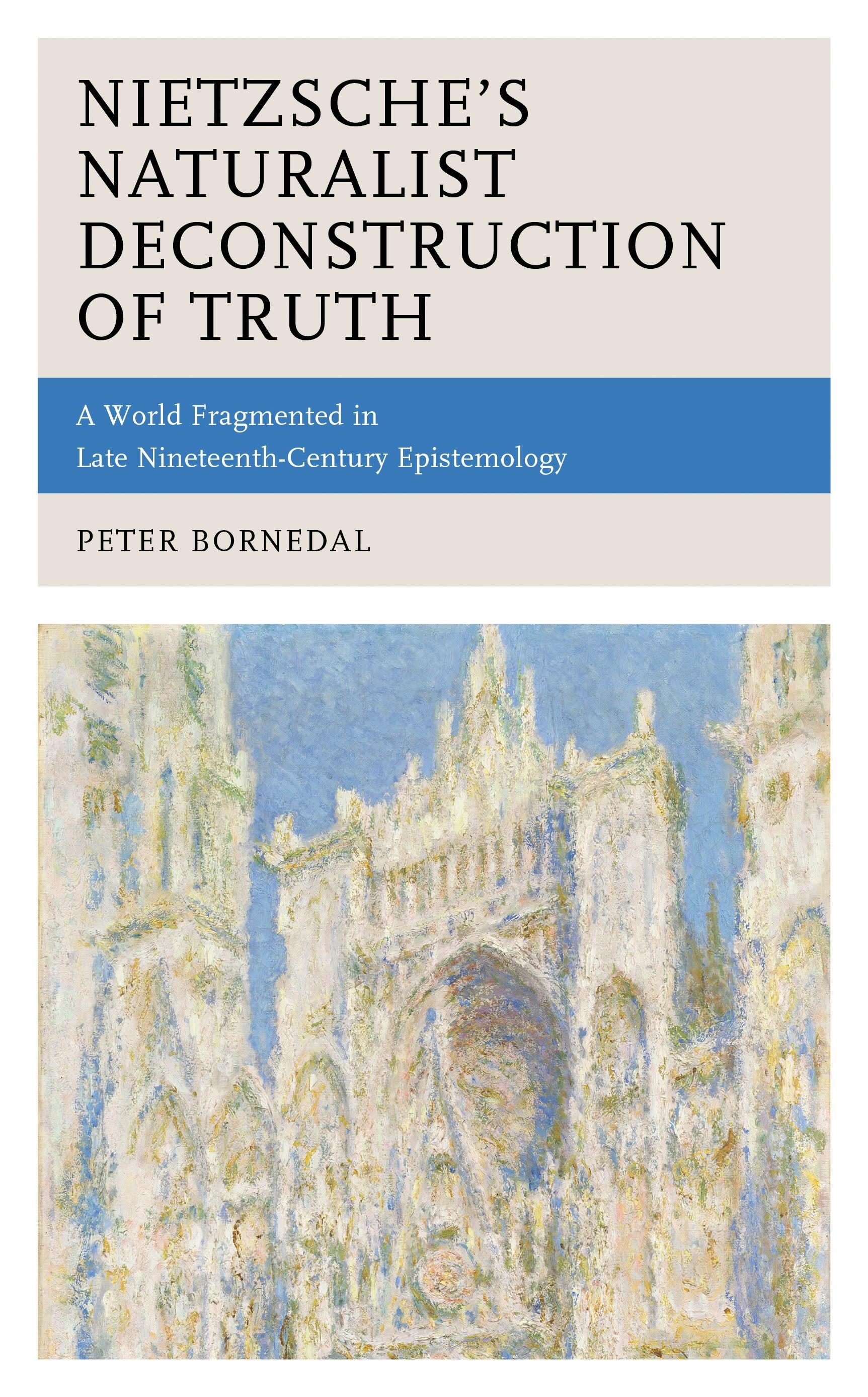
Nietzsche’s Naturalist Deconstruction of Truth: A World Fragmented in Late Nineteenth-Century Epistemology offers a new interpretation of Nietzsche’s discussions of truth and knowledge, covering the period from his early essay “On Truth and Lies in an Extra-Moral Sense” to his late notebooks. It places these discussions in the context of the neo-Kantian, Naturalist, Positivist, and Pragmatic schools influential in Nietzsche’s late nineteenth-century Europe. Peter Bornedal argues for a view of Nietzsche’s epistemological thought as an elaboration of this paradigm: proposing ideas that are anti-metaphysical and anti-theological in their polemic orientation, and in general promoting new scientific naturalist ideals in the discussions of knowledge. Bornedal suggests that the rational pursuit of these new ideals to the unencumbered mind logically leads to Nihilism in its most profound epistemological sense. Nietzsche’s “critique of metaphysics” is thus seen as having sprung from sources different from and, at times, in patent opposition to more recent postmodern and deconstructionist critiques. This book contextualizes Nietzsche in relation to a number of philosophical peers and juxtaposes him to contemporary thinkers in a way that resolves some of the difficulties that have plagued recent Nietzsche scholarship.
Betal enkelt med kort, Klarna, Apple Pay eller Google Pay. Ikke fornøyd? Du har alltid 14 dagers angrerett. Les mer i våre vilkår. Har du spørsmål, send oss en e-post på hello@memmo.org.
Memmo gjør det enklere å studere – uansett hvor du er i verden. Hos oss samler du pensumbøker og smarte studieverktøy på ett og samme sted: sammendrag, quizer, podkaster og flashcards. Og så Ted, din studiekompis som svarer på alt du lurer på. Over 50 000 studenter studerer allerede her – bygget for at du skal lære raskere og stresse mindre.