
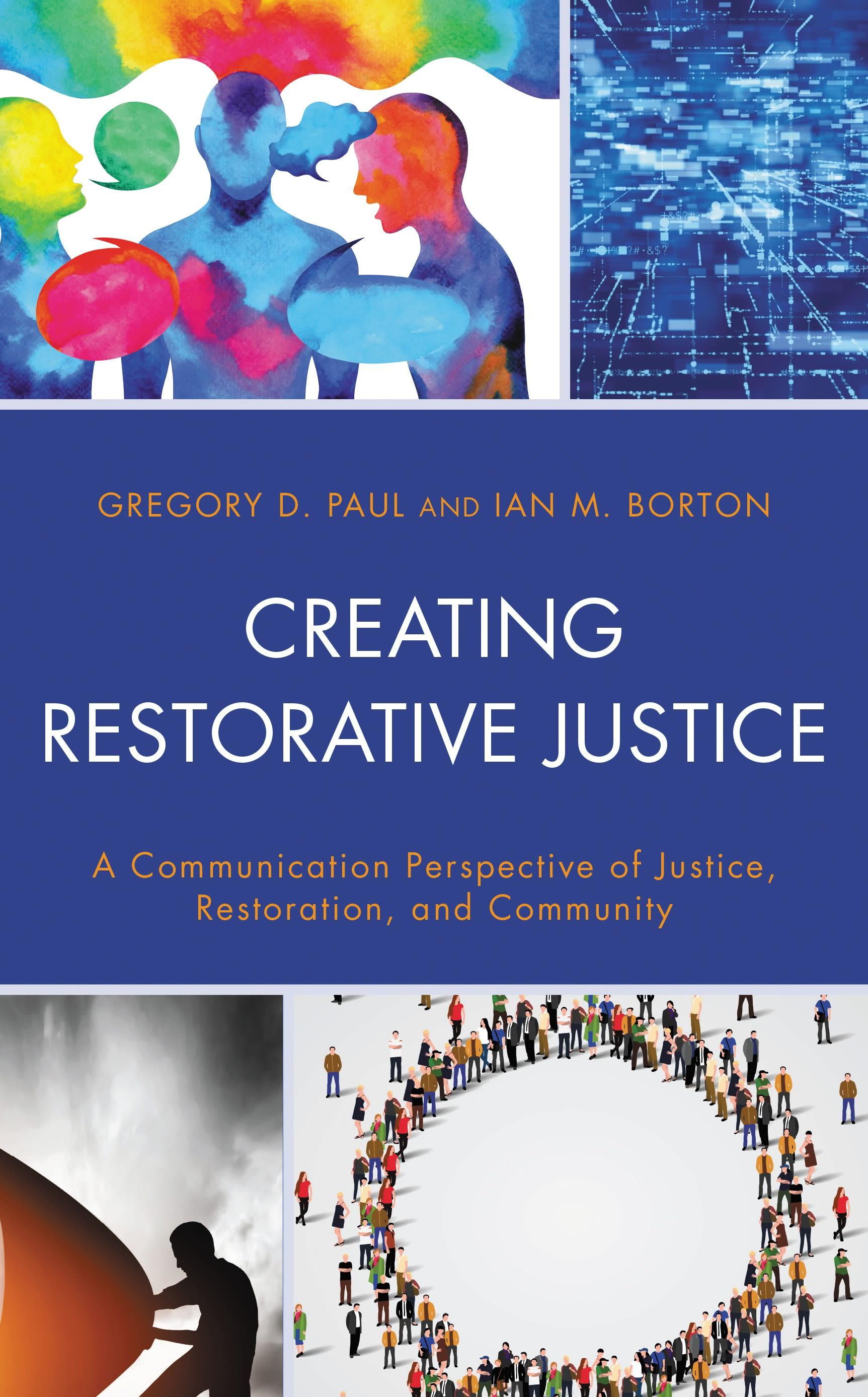
Discussion of the histories, meanings, and assumptions of restorative justice have enriched the development of its theory, research, and practices. While some of this work has addressed the role of communication, the treatment of communication within restorative justice remains rather under-developed. Communication plays a central role in processes of restoration and justice and a constitutive role in making restorative justice what it is. In Creating Restorative Justice: A Communication Perspective of Justice, Restoration, and Community, Gregory D. PaulandIan M. Borton argue that by centering communication in restorative justice as it occurs in various contexts (from families, to schools, to communities), we can simultaneously deepen our understanding, enrich our practice, and amplify our study of restoration and justice. From a communication perspective, restorative contexts both use and are created by the communication present. Any outcomes from restorative processes are thus the product of the communication both within and between restorative practices’ participants. As the world addresses the challenges presented by injustice, inequality, and insecurity, it is incumbent we expand our understanding of restorative processes to account for the vital role of communication.
Betal enkelt med kort, Klarna, Apple Pay eller Google Pay. Ikke fornøyd? Du har alltid 14 dagers angrerett. Les mer i våre vilkår. Har du spørsmål, send oss en e-post på hello@memmo.org.
Memmo gjør det enklere å studere – uansett hvor du er i verden. Hos oss samler du pensumbøker og smarte studieverktøy på ett og samme sted: sammendrag, quizer, podkaster og flashcards. Og så Ted, din studiekompis som svarer på alt du lurer på. Over 50 000 studenter studerer allerede her – bygget for at du skal lære raskere og stresse mindre.