
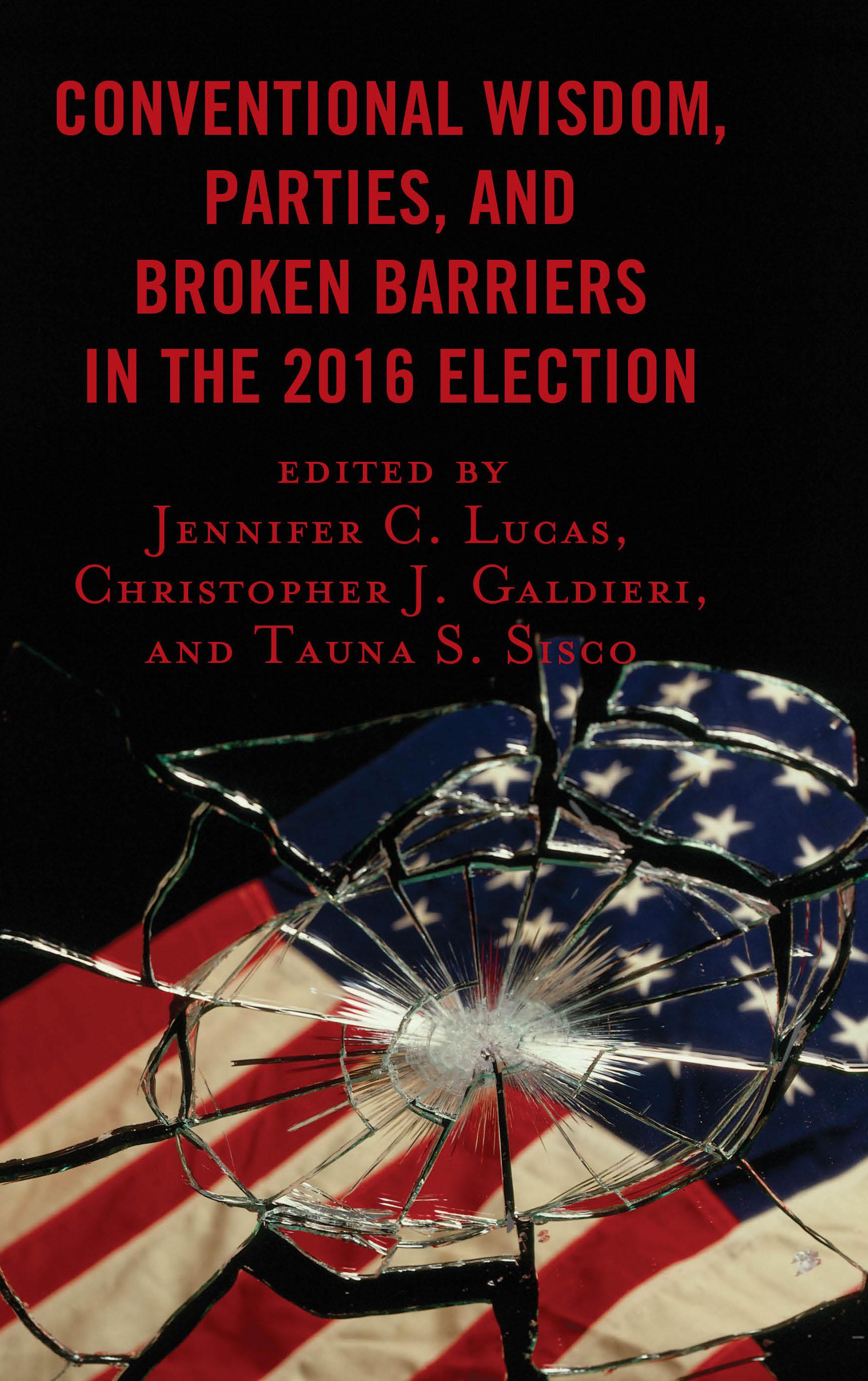
Conventional Wisdom, Parties, and Broken Barriers in the 2016 Election
Forfatter: Julia R. Azari, Joseph E. Uscinski, Robert G. Boatright, Richard Powell, Terri Susan Fine, David P. Redlawsk, Seth Masket, Mark D. Brewer, Chad Kinsella, Kevin J. McMahon, Atiya Kai Stokes-Brown, Matthew D. Atkinson, Tyler Benning, Christopher Chapp, Jack D. Collens, Dan Hofrenning, Jennifer C. Lucas, Kyle Mattes, Elizabeth P. Ossoff, Elizabeth Hahn Rickenbach, Ira J. Roseman, Tauna Starbuck Sisco, Valerie Sperling, Charles Stewart III, Sean Tatar, Emily O. Wanless, Aidan Zielske, Darin DeWitt, Christopher J. Galdieri
Forlag: Bloomsbury Publishing
Utgave: 1
Utgivelsesår: 2017
ISBN: 9781498566612
The 2016 presidential election was unconventional in many ways. The election of President Donald Trump caught many by surprise, with a true outsider — a candidate with no previous governmental experience and mixed support from his own party — won the election by winning in traditionally Democratic states with coattails that extended to Republican Senate candidates and resulted in unified Republican government for the first time since 2008. This result broke with the pre-election conventional wisdom, which expected Hillary Clinton to win the presidency and a closer Senate divide. This surprising result led many political scientists to question whether 2016 truly marked a major turning point in American elections as portrayed in the media — a break from the conventional wisdom – or whether it was really the exception that proved the rule.
In this volume, political scientists examine previous theories and trends in light of the 2016 election to determine the extent to which 2016 was a break from previous theories. While in some areas it seems as though 2016 was really just what would have been predicted, in others, this election and the new president pose significant challenges to mainstream theories in political science. In particular, prominent political scientists examine whether voter trends, with particular focus on groups by gender, age, geography, and ethnicity, and election issues, especially the role of the Supreme Court, followed or bucked recent trends. Several political scientists examine the unconventional nomination process and whether this signals a new era for political parties. The role of conspiracy theories and voter confidence in the administration of elections are also discussed. Finally, contributors also examine the indirect effect the presidential candidates, especially Trump, played in congressional election rhetoric.
In this volume, political scientists examine previous theories and trends in light of the 2016 election to determine the extent to which 2016 was a break from previous theories. While in some areas it seems as though 2016 was really just what would have been predicted, in others, this election and the new president pose significant challenges to mainstream theories in political science. In particular, prominent political scientists examine whether voter trends, with particular focus on groups by gender, age, geography, and ethnicity, and election issues, especially the role of the Supreme Court, followed or bucked recent trends. Several political scientists examine the unconventional nomination process and whether this signals a new era for political parties. The role of conspiracy theories and voter confidence in the administration of elections are also discussed. Finally, contributors also examine the indirect effect the presidential candidates, especially Trump, played in congressional election rhetoric.
Sider: 272
Kategori: Statsvetenskap & Politik
e-ISBN: 9781498566629
Fraktvekt: 1.2 kg
Sendes innen: 1-2 dager
Betal enkelt med kort, Klarna, Apple Pay eller Google Pay. Ikke fornøyd? Du har alltid 14 dagers angrerett. Les mer i våre vilkår. Har du spørsmål, send oss en e-post på hello@memmo.org.
Memmo gjør det enklere å studere – uansett hvor du er i verden. Hos oss samler du pensumbøker og smarte studieverktøy på ett og samme sted: sammendrag, quizer, podkaster og flashcards. Og så Ted, din studiekompis som svarer på alt du lurer på. Over 50 000 studenter studerer allerede her – bygget for at du skal lære raskere og stresse mindre.