
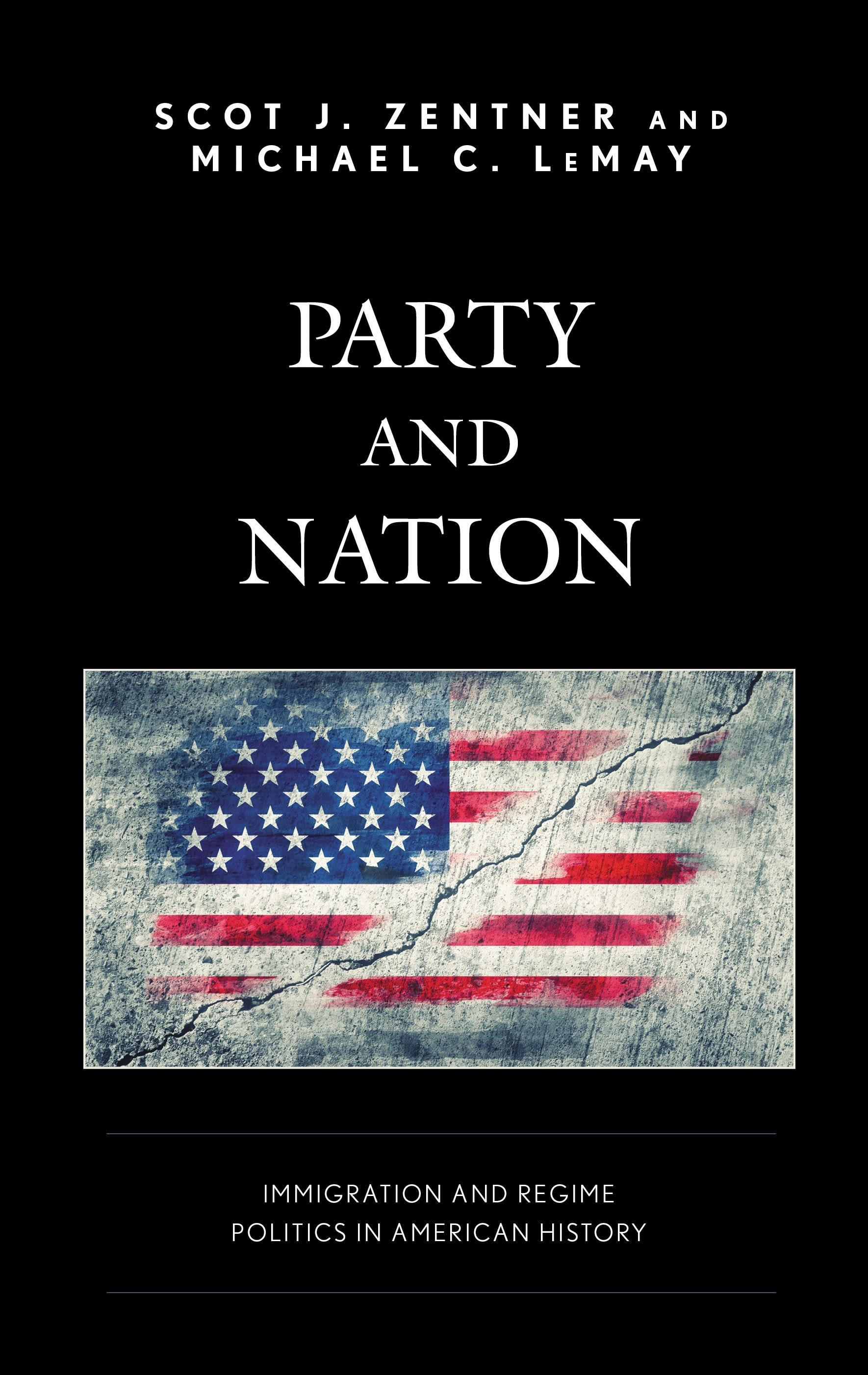
Party and Nation examines immigration as a means to understand party competition in American history. The rise of Donald Trump reflects an ongoing regime change in the U.S., in which multiculturalism and nationalism have emerged as central aspects of the major parties’ ideological and coalitional bases. This phenomenon of a multiculturalist Democratic Party and a nationalist Republican Party, the authors suggest, is a dramatic departure from the first American political regime. That older regime was grounded in the Founding generation’s commitment to the principle of natural rights and the shaping of a national culture to support that principle. Partisan debates over immigration set into relief the tensions inherent in that commitment. The authors present the permutations of that first regime amidst the territorial expansion of the country and the tragic conflicts over slavery and segregation. With industrialization, the great immigrant wave at the turn of the 20th century, and the rise of the progressive administrative state, the parties began their century-long transformation into the plebiscitary institutions they are today. This new political reality, it is argued, brought with it a situation in which the debate over immigration not only illuminates party differences, but has begun to define them.
Betal enkelt med kort, Klarna, Apple Pay eller Google Pay. Ikke fornøyd? Du har alltid 14 dagers angrerett. Les mer i våre vilkår. Har du spørsmål, send oss en e-post på hello@memmo.org.
Memmo gjør det enklere å studere – uansett hvor du er i verden. Hos oss samler du pensumbøker og smarte studieverktøy på ett og samme sted: sammendrag, quizer, podkaster og flashcards. Og så Ted, din studiekompis som svarer på alt du lurer på. Over 50 000 studenter studerer allerede her – bygget for at du skal lære raskere og stresse mindre.