
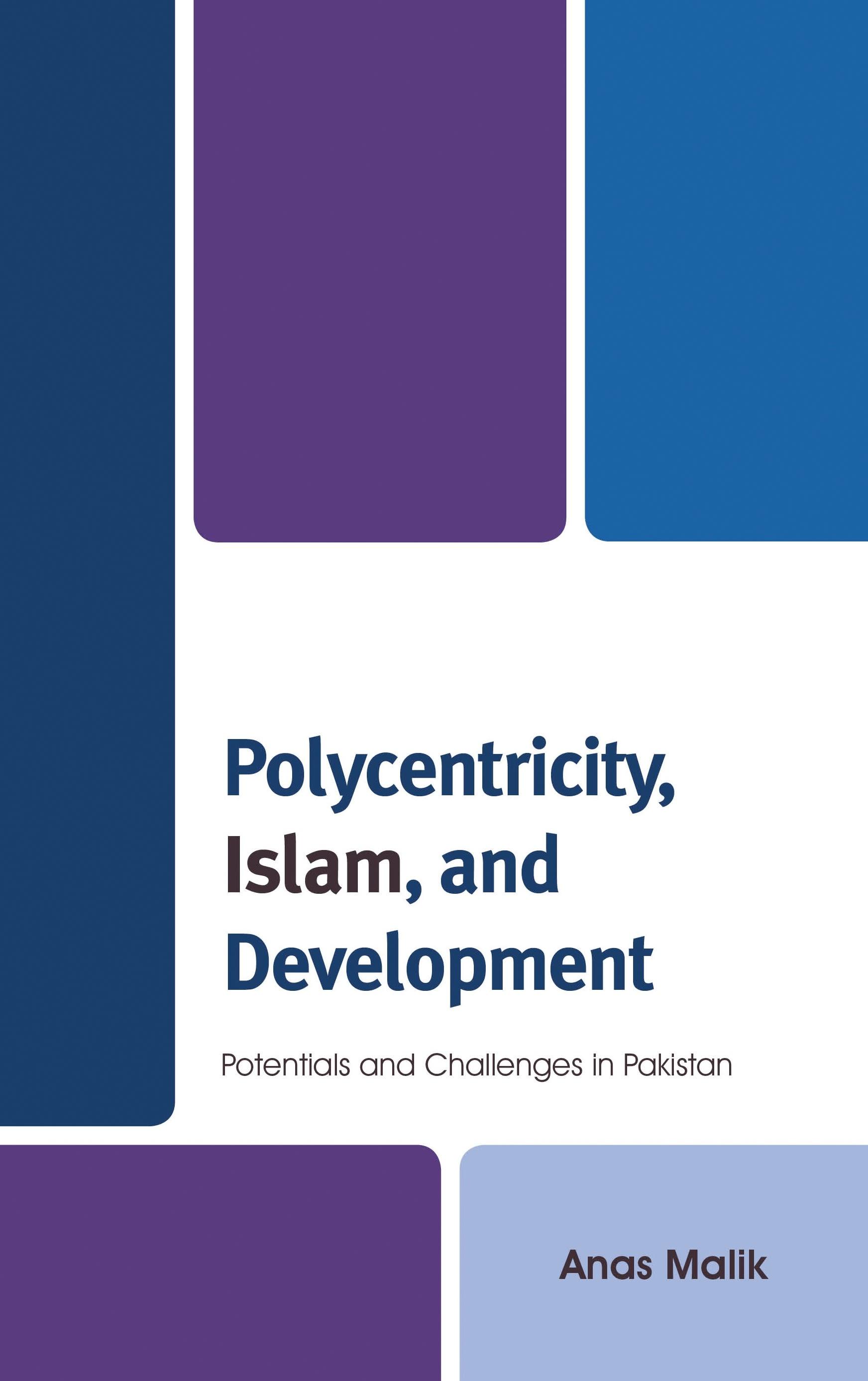
Development analysts often focus on the role of “the state” in making the right rules by which to govern society, assuming that governance is exclusively or mainly the work of the central government authority. The reality in many developing countries, particularly those with weak central government authorities, is that governance happens through diverse rules and in many centers of decision-making, in ways that are formal and informal, official and unofficial. This real-world polycentricity can be dysfunctional or productive, depending in part on shared understandings between decision-making entities about how to relate to each other. Those shared understandings come from cultural backgrounds, historical interactions, and other sources.
Political economist Anas Malik argues that well-functioning polycentricity in developing countries depends in part on the shared understandings between official government entities and unofficial units that provide collective choice in particular arenas. In Muslim-majority contexts, the Islamic tradition – contrary to the image of a top-down, single-voiced religious law- provides ample resources supporting shared understandings that accommodate diverse rules and collective choice units. Pakistan, the largest Muslim-majority country at its founding, provides an important case. After building on the development literature to suggest a typology of collective choice units in developing countries, Malik explores resources in the Islamic tradition that support polycentric governance. The book then examines major deliberations in Pakistan’s history, particularly through documented inquiries into serious political crises such as sectarian religious agitation and civil war, and through a selective survey of types of jurisdictions and collective choice units. Malik argues that there are significant polycentric understandings in Pakistan’s historical lineage, but that these are heavily contested. While there is potential for polycentric development in Pakistan, the viability of polycentric order is constrained by countering forces and contextual factors.
Political economist Anas Malik argues that well-functioning polycentricity in developing countries depends in part on the shared understandings between official government entities and unofficial units that provide collective choice in particular arenas. In Muslim-majority contexts, the Islamic tradition – contrary to the image of a top-down, single-voiced religious law- provides ample resources supporting shared understandings that accommodate diverse rules and collective choice units. Pakistan, the largest Muslim-majority country at its founding, provides an important case. After building on the development literature to suggest a typology of collective choice units in developing countries, Malik explores resources in the Islamic tradition that support polycentric governance. The book then examines major deliberations in Pakistan’s history, particularly through documented inquiries into serious political crises such as sectarian religious agitation and civil war, and through a selective survey of types of jurisdictions and collective choice units. Malik argues that there are significant polycentric understandings in Pakistan’s historical lineage, but that these are heavily contested. While there is potential for polycentric development in Pakistan, the viability of polycentric order is constrained by countering forces and contextual factors.
Sider: 342
Kategori: Ekonomi & Utveckling
e-ISBN: 9781498539760
Fraktvekt: 1.2 kg
Sendes innen: 1-2 dager
Betal enkelt med kort, Klarna, Apple Pay eller Google Pay. Ikke fornøyd? Du har alltid 14 dagers angrerett. Les mer i våre vilkår. Har du spørsmål, send oss en e-post på hello@memmo.org.
Memmo gjør det enklere å studere – uansett hvor du er i verden. Hos oss samler du pensumbøker og smarte studieverktøy på ett og samme sted: sammendrag, quizer, podkaster og flashcards. Og så Ted, din studiekompis som svarer på alt du lurer på. Over 50 000 studenter studerer allerede her – bygget for at du skal lære raskere og stresse mindre.