
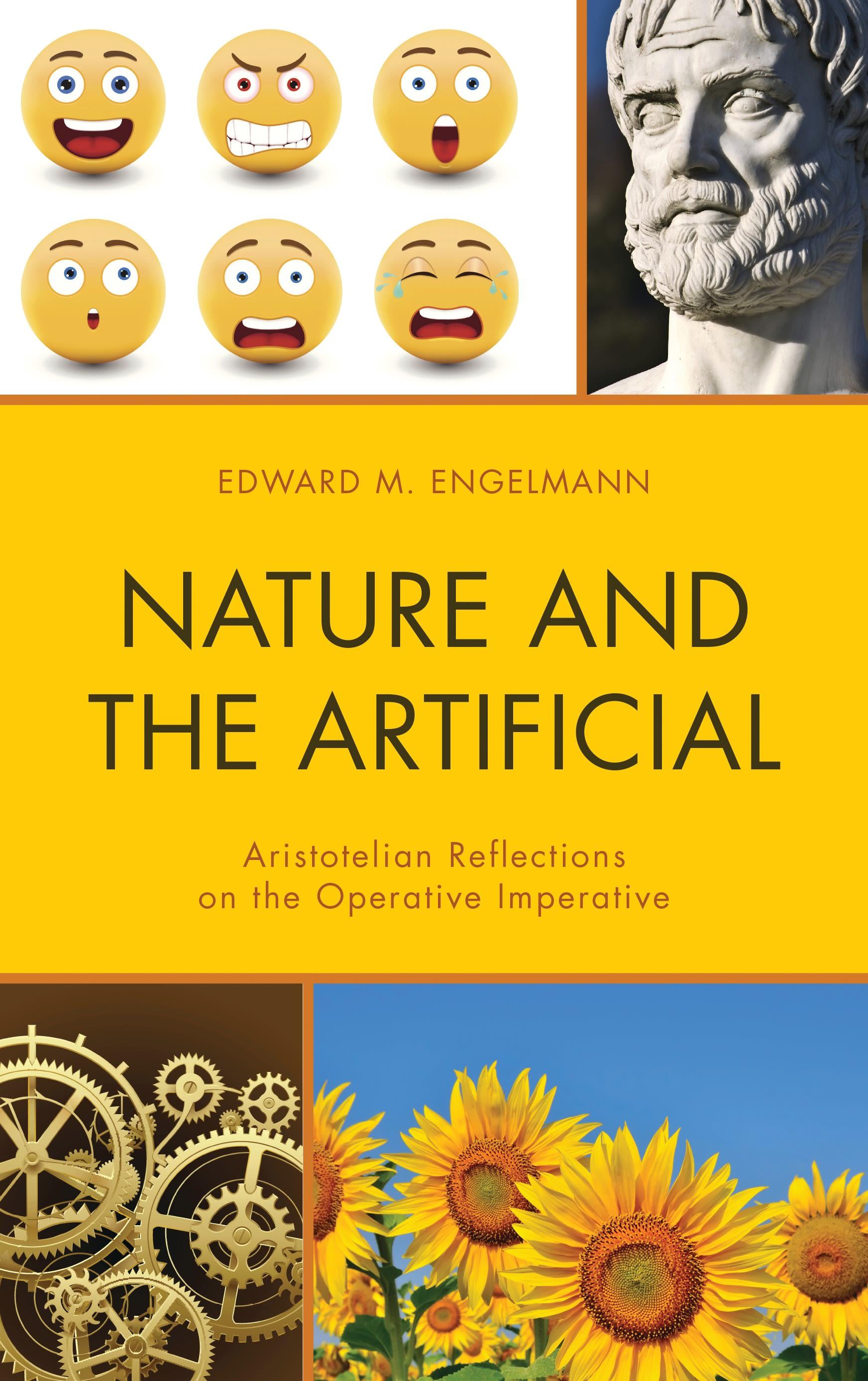
For years now much attention has been given to the phenomenon of the artificial. Speculation regarding “what is real?” abounds in the sciences, literature, as well as films and other visual arts. This work presents the first critical, sustained, philosophical study on this topic.
Nature and the Artificial: Aristotelian Reflections on the Operative Imperative reveals the inner logic of the artificial by reflecting it off the metaphysical relationship between nature and techne as conceived by Aristotle and Thomas Aquinas. During early modernity, figures such as Descartes and Bacon transformed this understanding, giving rise to the notion of the “operative imperative.” Nature and techne, for the Aristotelian tradition and for us, can only be understood in terms of their dialectical relationship to one another. Aristotle articulates this relationship with the phrase “techne imitates nature.” With the operative imperative, however, a certain reversal takes place, whereby techne becomes the paradigm for nature. As Ed Engelmann demonstrates, the operative imperative, together with the phenomenon of the artificial it implies, stands to Aristotelian metaphysics of nature as image is to original.
Anyone who believes that the rise of the artificial in our civilization needs the intensive study it deserves—as well as those who are seeking innovative insights into Aristotelian tradition—will want to read this book.
Nature and the Artificial: Aristotelian Reflections on the Operative Imperative reveals the inner logic of the artificial by reflecting it off the metaphysical relationship between nature and techne as conceived by Aristotle and Thomas Aquinas. During early modernity, figures such as Descartes and Bacon transformed this understanding, giving rise to the notion of the “operative imperative.” Nature and techne, for the Aristotelian tradition and for us, can only be understood in terms of their dialectical relationship to one another. Aristotle articulates this relationship with the phrase “techne imitates nature.” With the operative imperative, however, a certain reversal takes place, whereby techne becomes the paradigm for nature. As Ed Engelmann demonstrates, the operative imperative, together with the phenomenon of the artificial it implies, stands to Aristotelian metaphysics of nature as image is to original.
Anyone who believes that the rise of the artificial in our civilization needs the intensive study it deserves—as well as those who are seeking innovative insights into Aristotelian tradition—will want to read this book.
Betal enkelt med kort, Klarna, Apple Pay eller Google Pay. Ikke fornøyd? Du har alltid 14 dagers angrerett. Les mer i våre vilkår. Har du spørsmål, send oss en e-post på hello@memmo.org.
Memmo gjør det enklere å studere – uansett hvor du er i verden. Hos oss samler du pensumbøker og smarte studieverktøy på ett og samme sted: sammendrag, quizer, podkaster og flashcards. Og så Ted, din studiekompis som svarer på alt du lurer på. Over 50 000 studenter studerer allerede her – bygget for at du skal lære raskere og stresse mindre.