
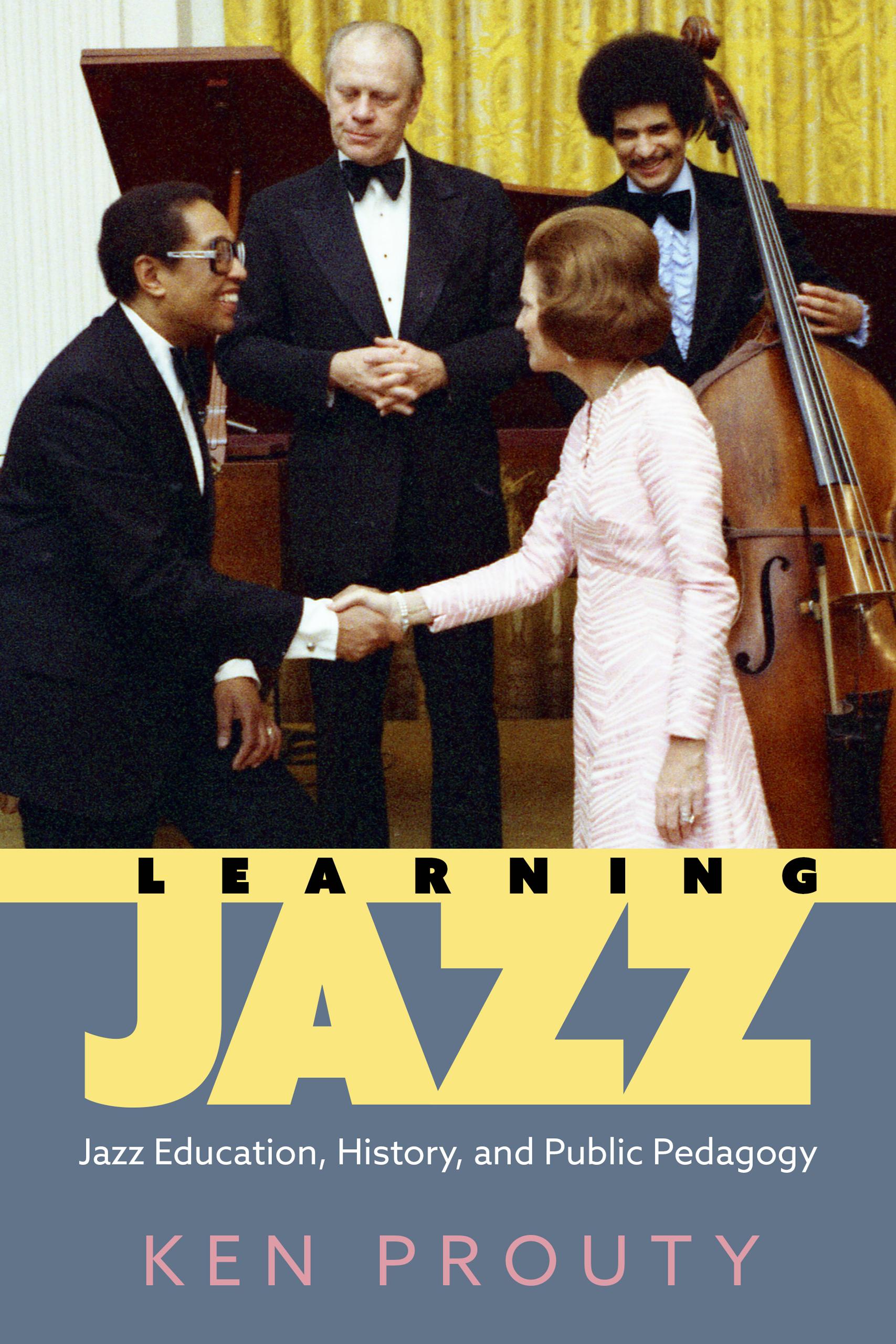
Learning Jazz: Jazz Education, History, and Public Pedagogy addresses a debate that has consumed practitioners and advocates since the music's early days. Studies on jazz learning typically focus on one of two methods: institutional education or the kinds of informal mentoring relationships long associated with the tradition. Ken Prouty argues that this distinction works against a common identity for audiences and communities. Rather, what happens within the institution impacts—and is impacted by—events and practices outside institutional contexts.
While formal institutions are well-defined in educational and civic contexts, informal institutions have profoundly influenced the development of jazz and its discourses. Drawing on historical case studies, Prouty details significant moments in jazz history. He examines the ways that early method books capitalized on a new commercial market, commandeering public expertise about the music. Chapters also discuss critic Paul Eduard Miller and his attempts to develop a jazz canon, as well as the disconnect between the spotlighted “great men” and the everyday realities of artists. Tackling race in jazz education, Prouty explores the intersections between identity and assessment; bandleaders Stan Kenton and Maynard Ferguson; public school segregation; Jazz at Lincoln Center; and more. He further examines jazz’s “public pedagogy,” and the sometimes-difficult relationships between “jazz people” and the general public. Ultimately, Learning Jazz posits that there is room for both institutional and noninstitutional forces in the educational realm of jazz.
While formal institutions are well-defined in educational and civic contexts, informal institutions have profoundly influenced the development of jazz and its discourses. Drawing on historical case studies, Prouty details significant moments in jazz history. He examines the ways that early method books capitalized on a new commercial market, commandeering public expertise about the music. Chapters also discuss critic Paul Eduard Miller and his attempts to develop a jazz canon, as well as the disconnect between the spotlighted “great men” and the everyday realities of artists. Tackling race in jazz education, Prouty explores the intersections between identity and assessment; bandleaders Stan Kenton and Maynard Ferguson; public school segregation; Jazz at Lincoln Center; and more. He further examines jazz’s “public pedagogy,” and the sometimes-difficult relationships between “jazz people” and the general public. Ultimately, Learning Jazz posits that there is room for both institutional and noninstitutional forces in the educational realm of jazz.
Betal enkelt med kort, Klarna, Apple Pay eller Google Pay. Ikke fornøyd? Du har alltid 14 dagers angrerett. Les mer i våre vilkår. Har du spørsmål, send oss en e-post på hello@memmo.org.
Memmo gjør det enklere å studere – uansett hvor du er i verden. Hos oss samler du pensumbøker og smarte studieverktøy på ett og samme sted: sammendrag, quizer, podkaster og flashcards. Og så Ted, din studiekompis som svarer på alt du lurer på. Over 50 000 studenter studerer allerede her – bygget for at du skal lære raskere og stresse mindre.
Du vil kanskje også like
Kjøp boken0