
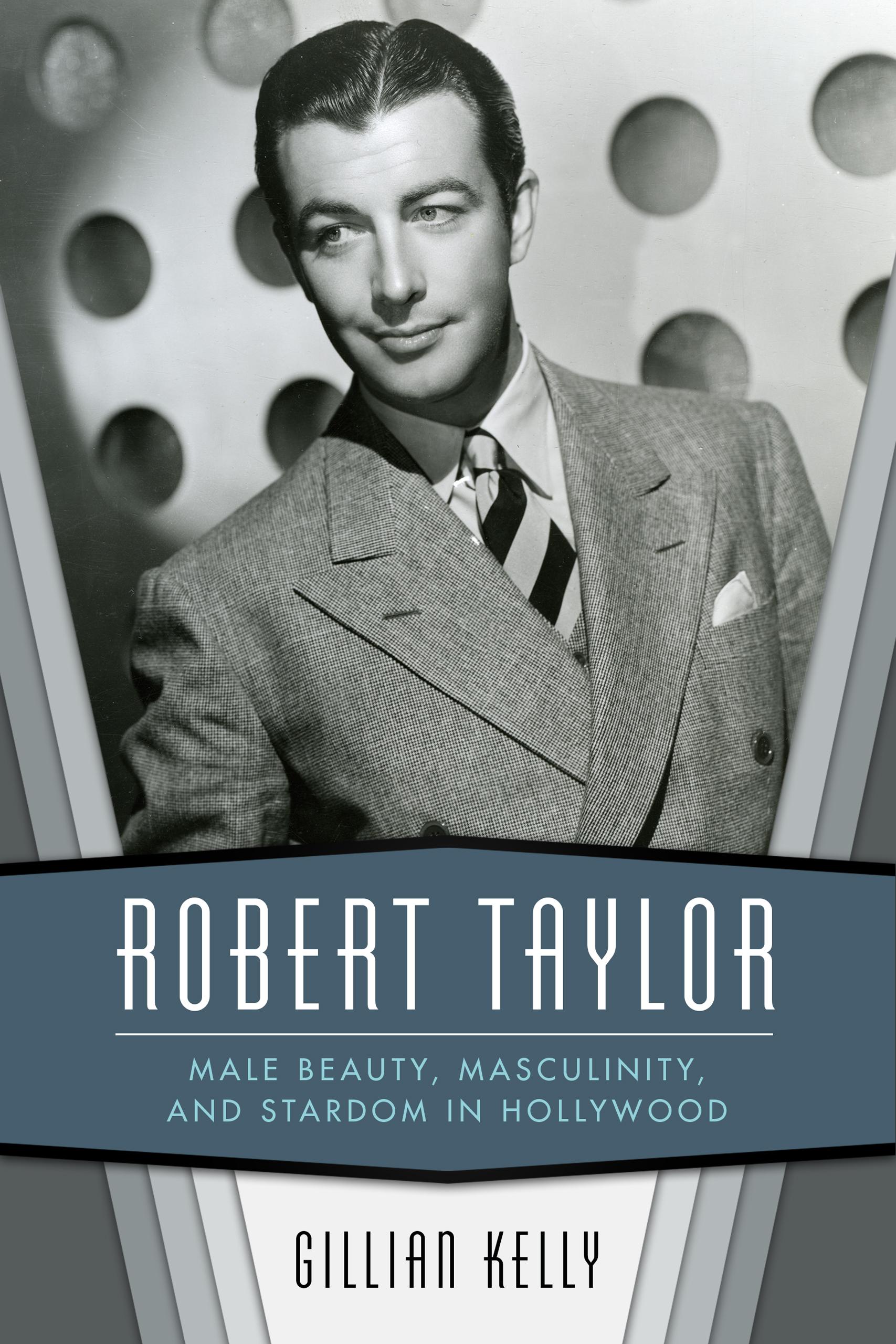
Because of his lengthy screen resume that includes almost eighty appearances in such movies as Camille and Waterloo Bridge, as well as a marriage and divorce to actress Barbara Stanwyck, Robert Taylor was a central figure of Hollywood’s classical era. Despite this, he can be regarded as a “lost” star, an interesting contradiction given the continued success he enjoyed during his lifetime.
In Robert Taylor: Male Beauty, Masculinity, and Stardom in Hollywood, author Gillian Kelly investigates the initial construction and subsequent developments of Taylor's star persona across his thirty-five-year career. By examining concepts of male beauty, men as object of the erotic gaze, white American masculinity, and the unusual longevity of a career initially based on looks, Kelly highlights how gender, masculinity, and male stars and the ageing process affected Taylor's career. Placing Taylor within the histories of both Hollywood’s classical era and mid-twentieth-century America, this study positions him firmly within the wider industrial, cultural, and socioeconomic contexts in which he worked.
Kelly examines Taylor’s film and television work as well as ephemeral material, such as fan magazines, to assess how his on- and off-screen personas were created and developed over time. Taking a mostly chronological approach, Kelly places Taylor’s persona within specific historical moments in order to show the complex paradox of his image remaining consistently recognizable while also shifting seamlessly within the Hollywood industry. Furthermore, she explores Taylor’s importance to Hollywood cinema by demonstrating how a star persona like his can “fit” so well, and for so long, that it almost becomes invisible and, eventually, almost forgotten.
In Robert Taylor: Male Beauty, Masculinity, and Stardom in Hollywood, author Gillian Kelly investigates the initial construction and subsequent developments of Taylor's star persona across his thirty-five-year career. By examining concepts of male beauty, men as object of the erotic gaze, white American masculinity, and the unusual longevity of a career initially based on looks, Kelly highlights how gender, masculinity, and male stars and the ageing process affected Taylor's career. Placing Taylor within the histories of both Hollywood’s classical era and mid-twentieth-century America, this study positions him firmly within the wider industrial, cultural, and socioeconomic contexts in which he worked.
Kelly examines Taylor’s film and television work as well as ephemeral material, such as fan magazines, to assess how his on- and off-screen personas were created and developed over time. Taking a mostly chronological approach, Kelly places Taylor’s persona within specific historical moments in order to show the complex paradox of his image remaining consistently recognizable while also shifting seamlessly within the Hollywood industry. Furthermore, she explores Taylor’s importance to Hollywood cinema by demonstrating how a star persona like his can “fit” so well, and for so long, that it almost becomes invisible and, eventually, almost forgotten.
Betal enkelt med kort, Klarna, Apple Pay eller Google Pay. Ikke fornøyd? Du har alltid 14 dagers angrerett. Les mer i våre vilkår. Har du spørsmål, send oss en e-post på hello@memmo.org.
Memmo gjør det enklere å studere – uansett hvor du er i verden. Hos oss samler du pensumbøker og smarte studieverktøy på ett og samme sted: sammendrag, quizer, podkaster og flashcards. Og så Ted, din studiekompis som svarer på alt du lurer på. Over 50 000 studenter studerer allerede her – bygget for at du skal lære raskere og stresse mindre.
Du vil kanskje også like
Kjøp boken0