
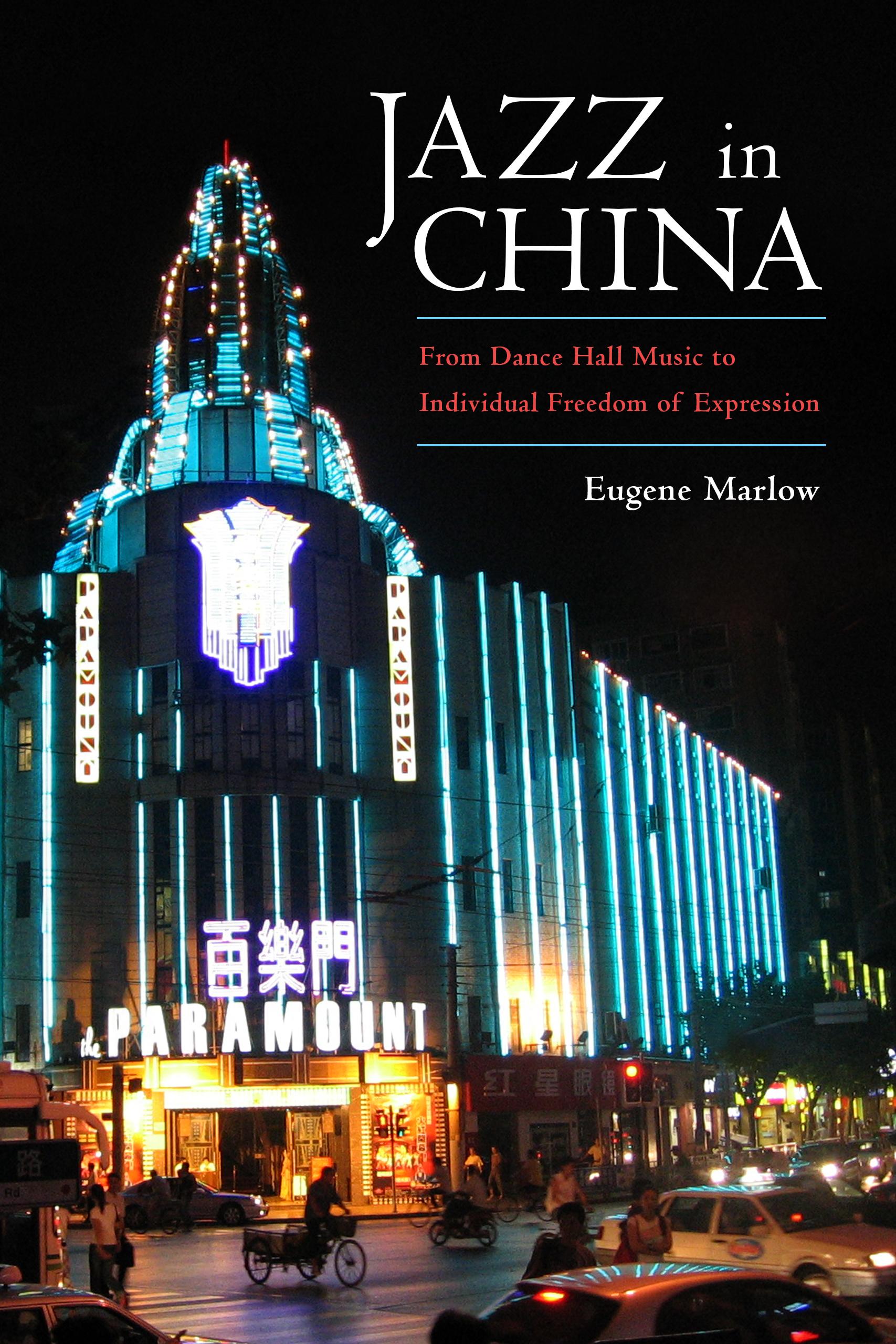
Finalist for the 2019 Jazz Journalists Association Book of the Year About Jazz, Jazz Awards for Journalism
"Is there jazz in China?" This is the question that sent author Eugene Marlow on his quest to uncover the history of jazz in China. Marlow traces China's introduction to jazz in the early 1920s, its interruption by Chinese leadership under Mao in 1949, and its rejuvenation in the early 1980s with the start of China's opening to the world under Premier Deng Xiaoping.
Covering a span of almost one hundred years, Marlow focuses on a variety of subjects--the musicians who initiated jazz performances in China, the means by which jazz was incorporated into Chinese culture, and the musicians and venues that now present jazz performances.
Featuring unique, face-to-face interviews with leading indigenous jazz musicians in Beijing and Shanghai, plus interviews with club owners, promoters, expatriates, and even diplomats, Marlow marks the evolution of jazz in China as it parallels China's social, economic, and political evolution through the twentieth and into the twenty-first century. Also featured is an interview with one of the extant members of the Jimmy King Big Band of the 1940s, one of the first major all-Chinese jazz big bands in Shanghai.
Ultimately, Jazz in China: From Dance Hall Music to Individual Freedom of Expression is a cultural history that reveals the inexorable evolution of a democratic form of music in a Communist state.
"Is there jazz in China?" This is the question that sent author Eugene Marlow on his quest to uncover the history of jazz in China. Marlow traces China's introduction to jazz in the early 1920s, its interruption by Chinese leadership under Mao in 1949, and its rejuvenation in the early 1980s with the start of China's opening to the world under Premier Deng Xiaoping.
Covering a span of almost one hundred years, Marlow focuses on a variety of subjects--the musicians who initiated jazz performances in China, the means by which jazz was incorporated into Chinese culture, and the musicians and venues that now present jazz performances.
Featuring unique, face-to-face interviews with leading indigenous jazz musicians in Beijing and Shanghai, plus interviews with club owners, promoters, expatriates, and even diplomats, Marlow marks the evolution of jazz in China as it parallels China's social, economic, and political evolution through the twentieth and into the twenty-first century. Also featured is an interview with one of the extant members of the Jimmy King Big Band of the 1940s, one of the first major all-Chinese jazz big bands in Shanghai.
Ultimately, Jazz in China: From Dance Hall Music to Individual Freedom of Expression is a cultural history that reveals the inexorable evolution of a democratic form of music in a Communist state.
Betal enkelt med kort, Klarna, Apple Pay eller Google Pay. Ikke fornøyd? Du har alltid 14 dagers angrerett. Les mer i våre vilkår. Har du spørsmål, send oss en e-post på hello@memmo.org.
Memmo gjør det enklere å studere – uansett hvor du er i verden. Hos oss samler du pensumbøker og smarte studieverktøy på ett og samme sted: sammendrag, quizer, podkaster og flashcards. Og så Ted, din studiekompis som svarer på alt du lurer på. Over 50 000 studenter studerer allerede her – bygget for at du skal lære raskere og stresse mindre.
Du vil kanskje også like
Kjøp boken0