
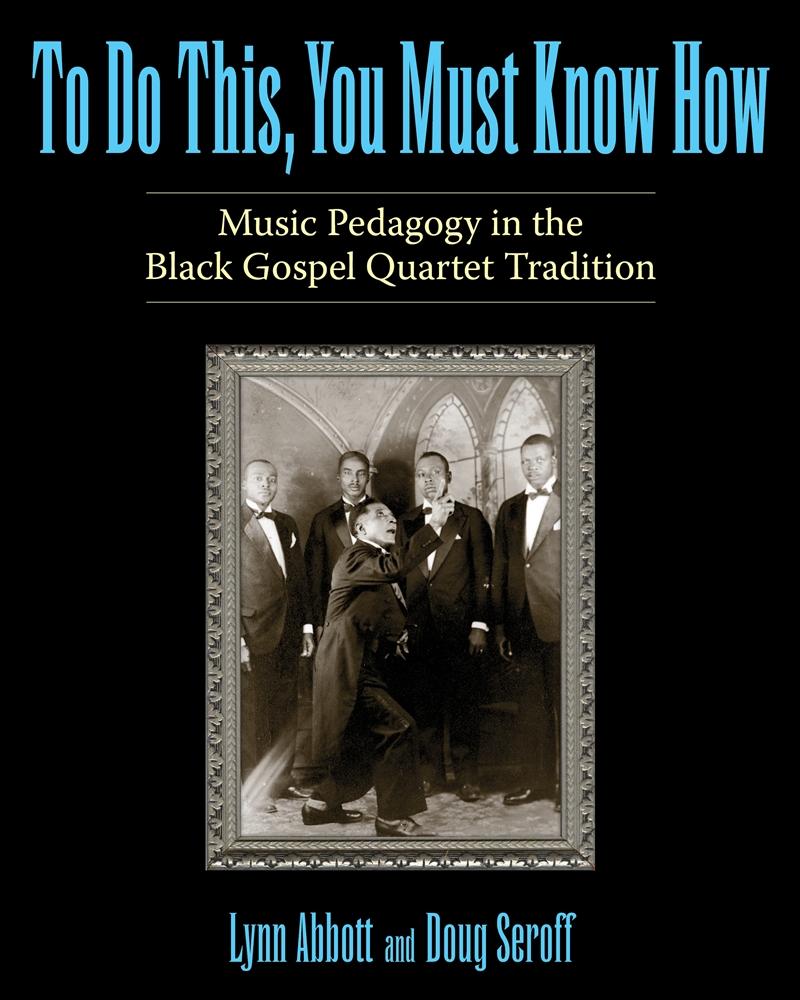
To Do This, You Must Know How traces black vocal music instruction and inspiration from the halls of Fisk University to the mining camps of Birmingham and Bessemer, Alabama, and on to Chicago and New Orleans. In the 1870s, the Original Fisk University Jubilee Singers successfully combined Negro spirituals with formal choral music disciplines and established a permanent bond between spiritual singing and music education. Early in the twentieth century there were countless initiatives in support of black vocal music training conducted on both national and local levels. The surge in black religious quartet singing that occurred in the 1920s owed much to this vocal music education movement.
In Bessemer, Alabama, the effect of school music instruction was magnified by the emergence of community-based quartet trainers who translated the spirit and substance of the music education movement for the inhabitants of working-class neighborhoods. These trainers adapted standard musical precepts, traditional folk practices, and popular music conventions to create something new and vital
Bessemer's musical values directly influenced the early development of gospel quartet singing in Chicago and New Orleans through the authority of emigrant trainers whose efforts bear witness to the effectiveness of “trickle down” black music education. A cappella gospel quartets remained prominent well into the 1950s, but by the end of the century the close harmony aesthetic had fallen out of practice, and the community-based trainers who were its champions had virtually disappeared, foreshadowing the end of this remarkable musical tradition.
In Bessemer, Alabama, the effect of school music instruction was magnified by the emergence of community-based quartet trainers who translated the spirit and substance of the music education movement for the inhabitants of working-class neighborhoods. These trainers adapted standard musical precepts, traditional folk practices, and popular music conventions to create something new and vital
Bessemer's musical values directly influenced the early development of gospel quartet singing in Chicago and New Orleans through the authority of emigrant trainers whose efforts bear witness to the effectiveness of “trickle down” black music education. A cappella gospel quartets remained prominent well into the 1950s, but by the end of the century the close harmony aesthetic had fallen out of practice, and the community-based trainers who were its champions had virtually disappeared, foreshadowing the end of this remarkable musical tradition.
Betal enkelt med kort, Klarna, Apple Pay eller Google Pay. Ikke fornøyd? Du har alltid 14 dagers angrerett. Les mer i våre vilkår. Har du spørsmål, send oss en e-post på hello@memmo.org.
Memmo gjør det enklere å studere – uansett hvor du er i verden. Hos oss samler du pensumbøker og smarte studieverktøy på ett og samme sted: sammendrag, quizer, podkaster og flashcards. Og så Ted, din studiekompis som svarer på alt du lurer på. Over 50 000 studenter studerer allerede her – bygget for at du skal lære raskere og stresse mindre.
Du vil kanskje også like
Kjøp boken0