
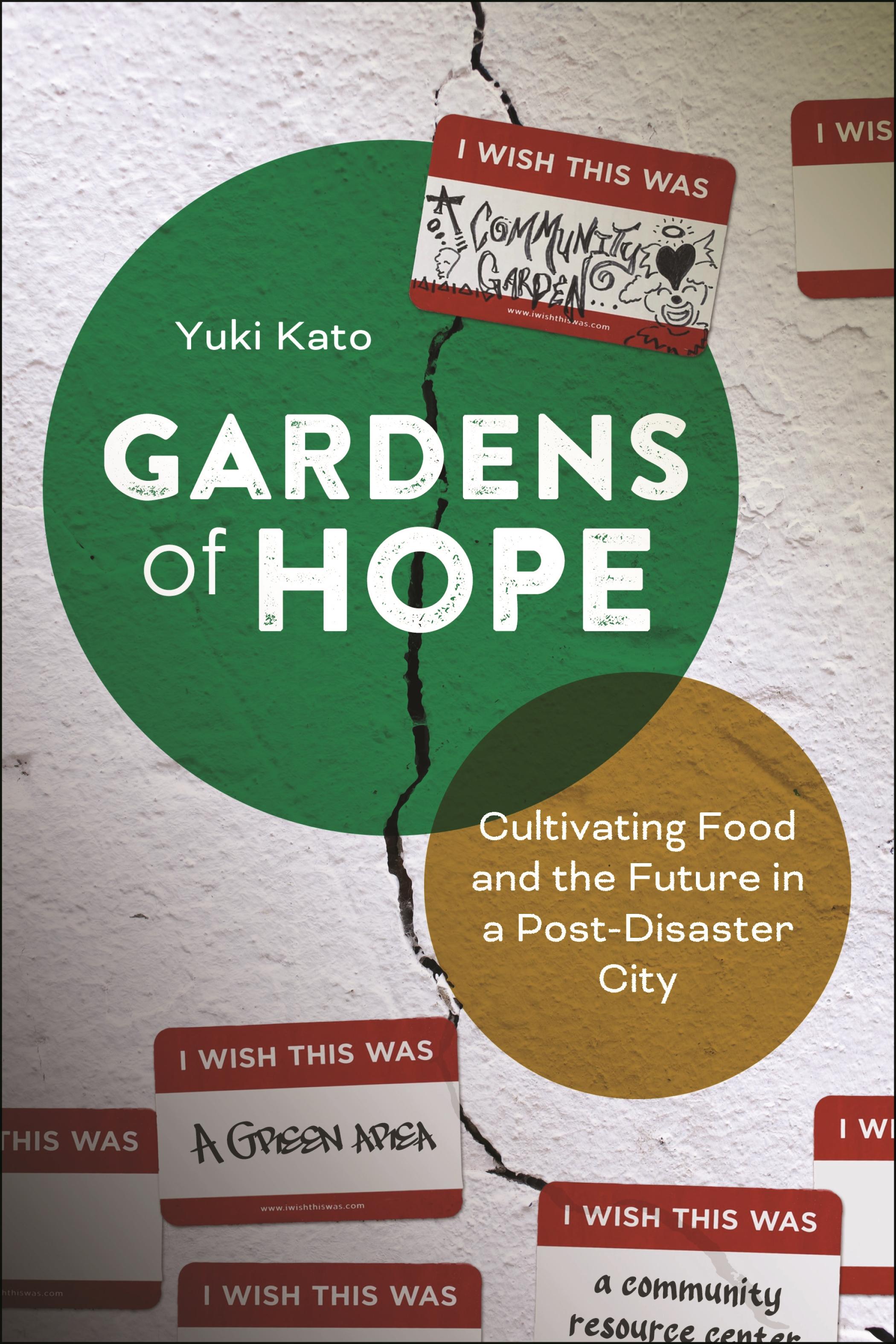
Social changes through urban gardening and farming
Gardens are often spaces of hope, expected to solve many problems in a city including food insecurity and climate resilience. In fact, there has been a historical trend of urban gardening gaining popularity during times of crisis. Gardens of Hope is the story of urban gardening in New Orleans in the decade after Hurricane Katrina. Yuki Kato highlights the impact urban gardens have on communities after disasters and the efforts of well-intended individuals envisioning alternative futures in the form of urban farming.
Drawing on repeated interviews with residents who began cultivation projects in New Orleans between 2005 and 2015, Kato explains how good intentions and grit were not enough to implement or sustain urban gardeners’ visions for the post-disaster city’s future. Coining the term “prefigurative urbanism,” Kato illustrates how individuals tried to realize alternative ways of living and working in the city through pragmatism and innovation. Gardens of Hope asks key questions about what inspires and enables individuals to pursue prefigurative urbanism and about the potential and limitations of this form of civic engagement to bring about short- and long-term changes in cities undergoing transformation, from gentrification, post-pandemic recovery, to climate change.
Betal enkelt med kort, Klarna, Apple Pay eller Google Pay. Ikke fornøyd? Du har alltid 14 dagers angrerett. Les mer i våre vilkår. Har du spørsmål, send oss en e-post på hello@memmo.org.
Memmo gjør det enklere å studere – uansett hvor du er i verden. Hos oss samler du pensumbøker og smarte studieverktøy på ett og samme sted: sammendrag, quizer, podkaster og flashcards. Og så Ted, din studiekompis som svarer på alt du lurer på. Over 50 000 studenter studerer allerede her – bygget for at du skal lære raskere og stresse mindre.