
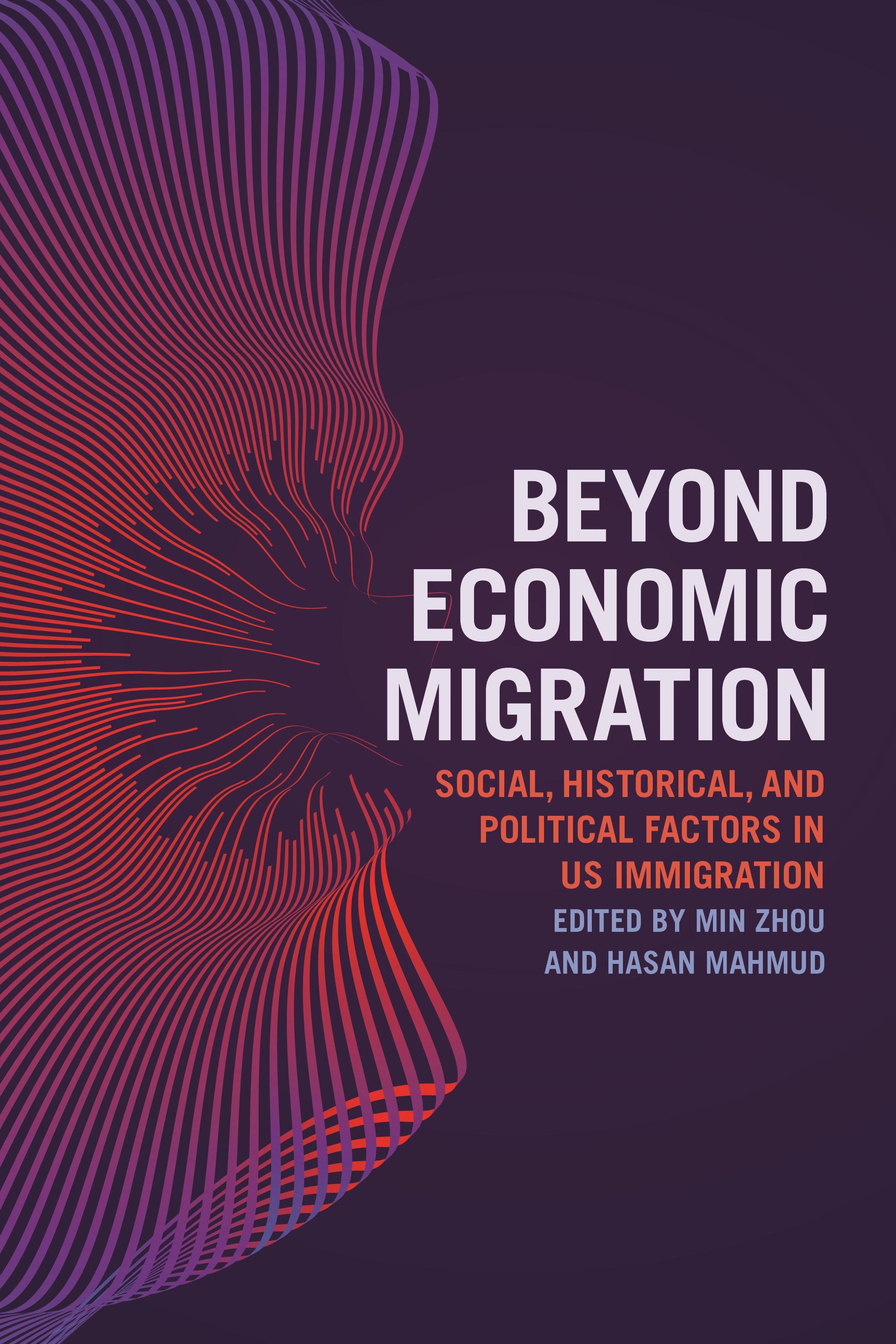
Offers a critique of the economic model of immigration
Most understandings of migration to the US focus on two primary factors. Either there was trouble in the home country, such as political unrest or famine, that pushed people out, or there was a general yearning for “a better life” or “more opportunity,” often conceptualized as the American Dream.
Although many contemporary migrants in the United States have been driven by economic interests, the processes of immigration and integration are shaped also by the intersection of a range of noneconomic factors in both sending and receiving countries. The contributors to Beyond Economic Migration offer a nuanced look at a range of issues affecting motives to migrate and outcomes of integration, including US immigration policy and the visa system, labor market incorporation, employment precarity, identity and belonging, and transnationalism relating to female migrants, student migrants, and temporary foreign workers.
Beyond Economic Migration argues that, for the dream of fair and equitable migration to be realized, analyses of cross-border movements, resettlement, and integration must pay attention to how migrants’ individual attributes interact with institutional mechanisms and social processes.
Betal enkelt med kort, Klarna, Apple Pay eller Google Pay. Ikke fornøyd? Du har alltid 14 dagers angrerett. Les mer i våre vilkår. Har du spørsmål, send oss en e-post på hello@memmo.org.
Memmo gjør det enklere å studere – uansett hvor du er i verden. Hos oss samler du pensumbøker og smarte studieverktøy på ett og samme sted: sammendrag, quizer, podkaster og flashcards. Og så Ted, din studiekompis som svarer på alt du lurer på. Over 50 000 studenter studerer allerede her – bygget for at du skal lære raskere og stresse mindre.