
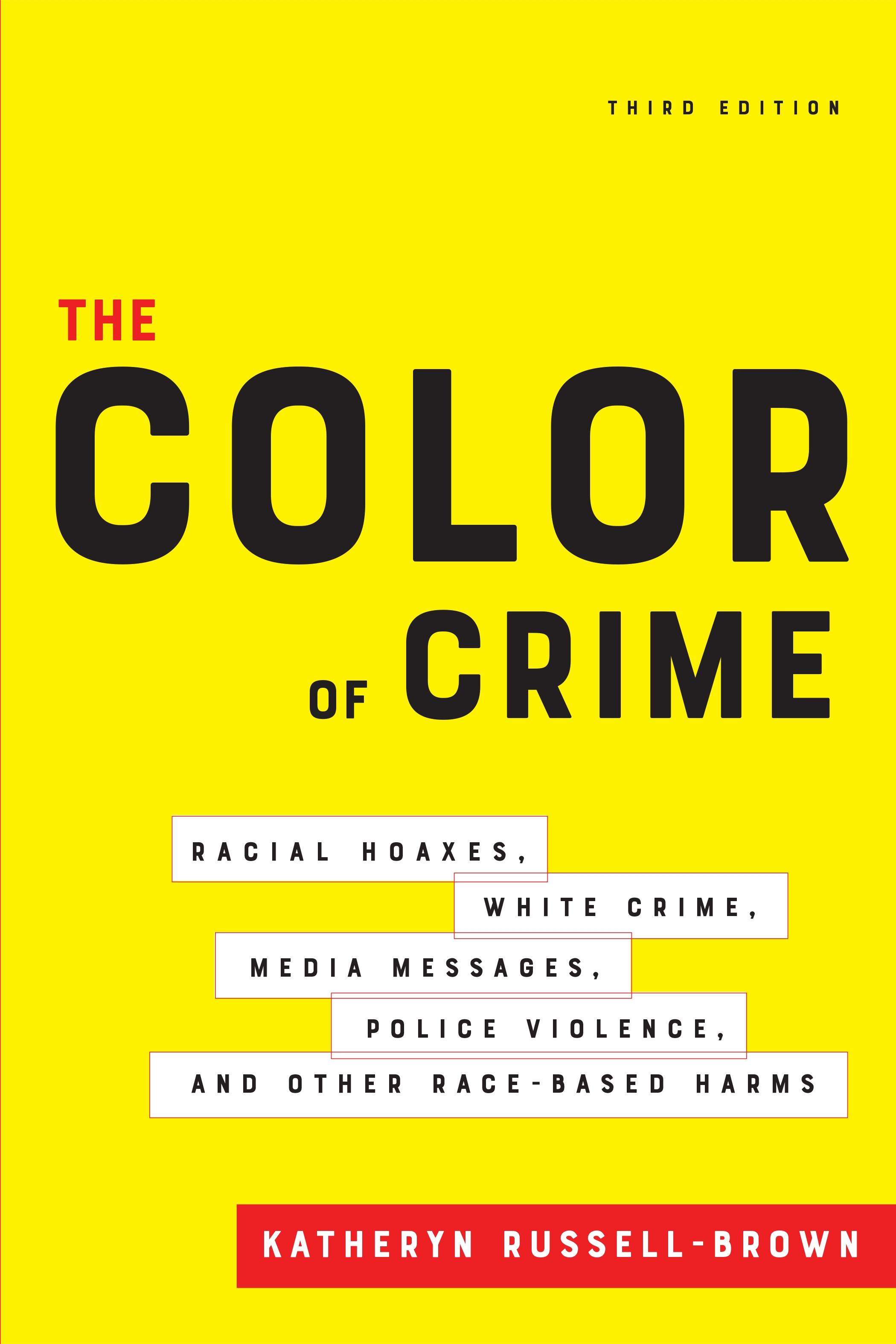
How we can understand race, crime, and punishment in the age of Black Lives Matter
When The Color of Crime was first published in 1998, it was heralded as a path-breaking book on race and crime. Now, in its third edition, Katheryn Russell-Brown’s book is more relevant than ever, as police killings of unarmed Black civilians—such as George Floyd, Breonna Taylor, and Daniel Prude—continue to make headlines around the world. She continues to ask, why do Black and white Americans perceive police actions so differently? Is white fear of Black crime justified?
With three new chapters, over forty new racial hoax cases, and other timely updates, this edition offers an even more expansive view of crime and punishment in the twenty-first century. Russell-Brown gives us much-needed insight into some of the most recent racial hoaxes, such as the one perpetrated by Amy Cooper. Should perpetrators of racial hoaxes be charged with a felony? Further, Russell-Brown makes a compelling case for race and crime literacy and the need to address and name White crime. Russell-Brown powerfully concludes the book with a parable that invites readers to imagine what would happen if Blacks decided to abandon the United States.
Russell-Brown explores the tacit and subtle ways that crime is systematically linked to people of color. The Color of Crime is a lucid and forceful volume that calls for continued vigilance on the part of scholars, policymakers, journalists, and others in the age of Black Lives Matter.
Betal enkelt med kort, Klarna, Apple Pay eller Google Pay. Ikke fornøyd? Du har alltid 14 dagers angrerett. Les mer i våre vilkår. Har du spørsmål, send oss en e-post på hello@memmo.org.
Memmo gjør det enklere å studere – uansett hvor du er i verden. Hos oss samler du pensumbøker og smarte studieverktøy på ett og samme sted: sammendrag, quizer, podkaster og flashcards. Og så Ted, din studiekompis som svarer på alt du lurer på. Over 50 000 studenter studerer allerede her – bygget for at du skal lære raskere og stresse mindre.