
For more than 2,000 years, between 1500 BCE and 600 CE, the Egyptian processional oracle was one of the main points of contact between temple-based religion and the general population. In a public ceremony, a god would indicate its will or answer questions through the movements of a portable cult statue borne by priests or important members of the community.
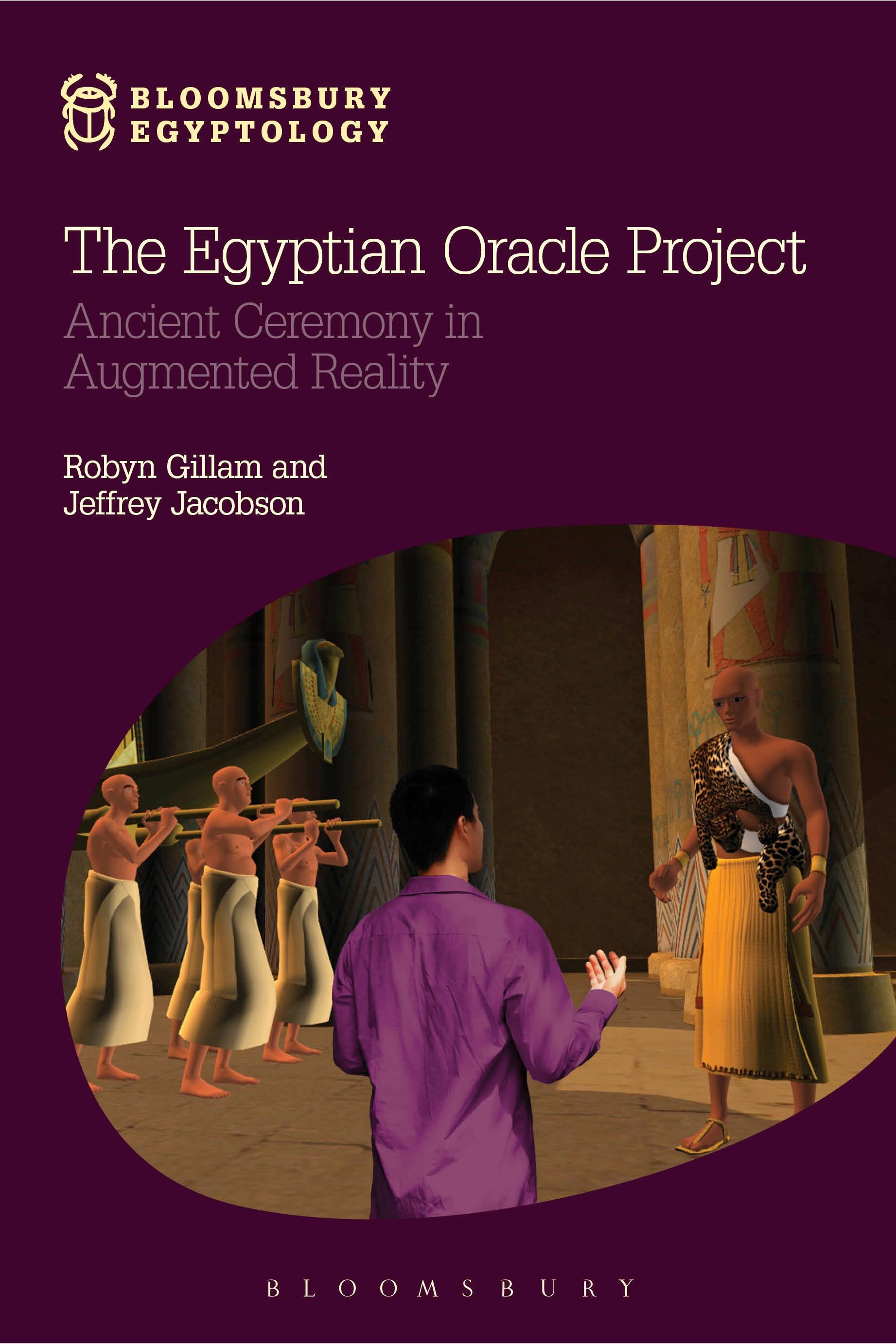
The Egyptian Oracle Project is an interactive performance that adapts this ceremony to serve as the basis for a mixed-reality educational experience for children and young adults, using both virtual reality and live performance. The scene is set in a virtual Egyptian temple projected onto a wall. An oracle led by a high priest avatar (controlled by a live human puppeteer) is brought into the presence of a live audience, who act in the role of the Egyptian populace. Through the mediation of an actress, the audience interacts with the avatar, recreating the event.
The series of carefully focused essays in this book provides vital background to this path-breaking project in three sections. After a brief introduction to educational theatre and virtual reality, the first section describes the ancient ceremony and its development, along with cross-cultural connections. Then the development of the script and its performance in the context of mixed-reality and educational theatre are examined. The final set of essays describes the virtual temple setting in more detail and explores the wider implications of this project for virtual heritage.
The Egyptian Oracle Project is an interactive performance that adapts this ceremony to serve as the basis for a mixed-reality educational experience for children and young adults, using both virtual reality and live performance. The scene is set in a virtual Egyptian temple projected onto a wall. An oracle led by a high priest avatar (controlled by a live human puppeteer) is brought into the presence of a live audience, who act in the role of the Egyptian populace. Through the mediation of an actress, the audience interacts with the avatar, recreating the event.
The series of carefully focused essays in this book provides vital background to this path-breaking project in three sections. After a brief introduction to educational theatre and virtual reality, the first section describes the ancient ceremony and its development, along with cross-cultural connections. Then the development of the script and its performance in the context of mixed-reality and educational theatre are examined. The final set of essays describes the virtual temple setting in more detail and explores the wider implications of this project for virtual heritage.
Betal enkelt med kort, Klarna, Apple Pay eller Google Pay. Ikke fornøyd? Du har alltid 14 dagers angrerett. Les mer i våre vilkår. Har du spørsmål, send oss en e-post på hello@memmo.org.
Memmo gjør det enklere å studere – uansett hvor du er i verden. Hos oss samler du pensumbøker og smarte studieverktøy på ett og samme sted: sammendrag, quizer, podkaster og flashcards. Og så Ted, din studiekompis som svarer på alt du lurer på. Over 50 000 studenter studerer allerede her – bygget for at du skal lære raskere og stresse mindre.