
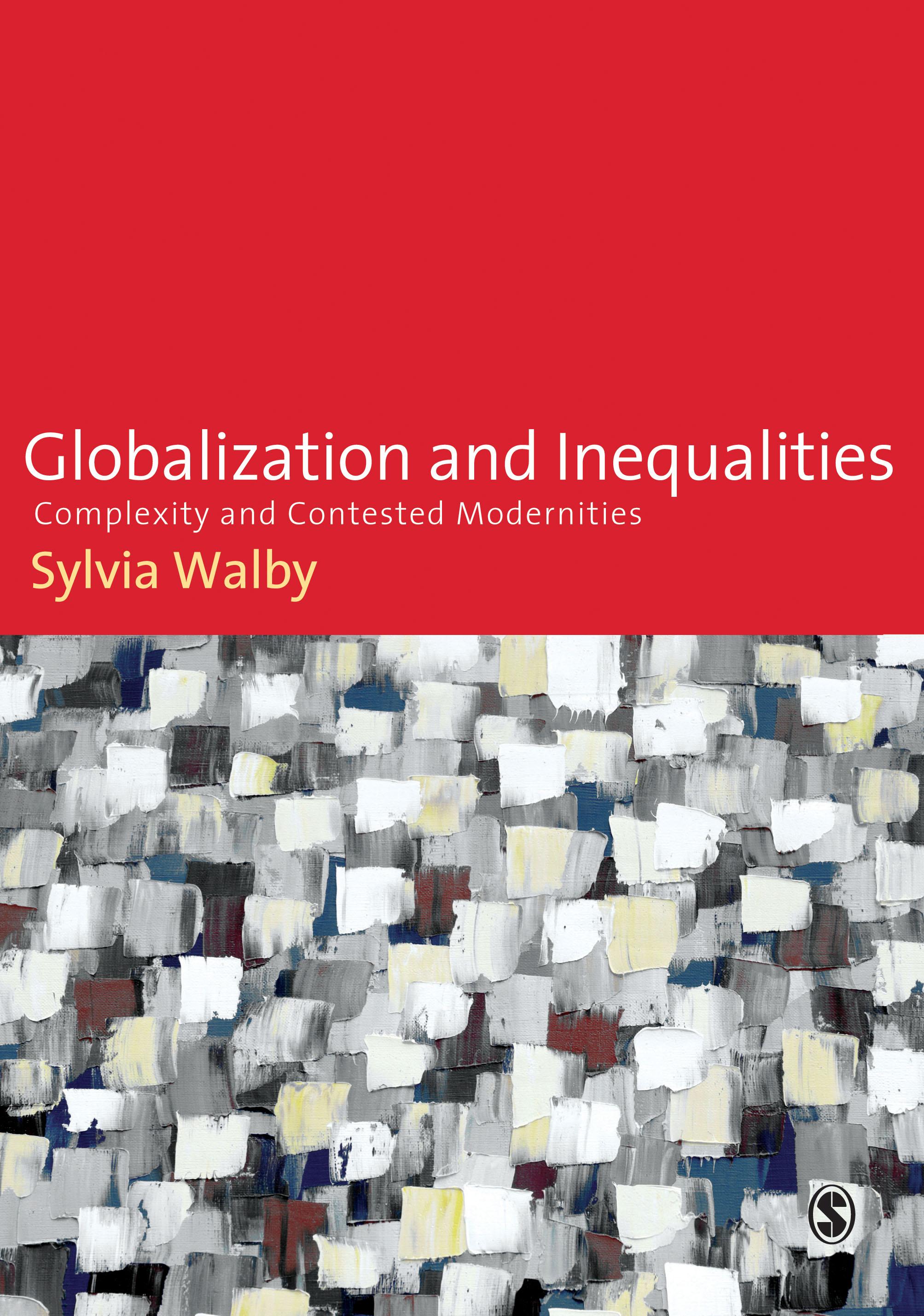
How has globalization changed social inequality? Why do Americans die younger than Europeans, despite larger incomes? Is there an alternative to neoliberalism? Who are the champions of social democracy? Why are some countries more violent than others?
In this groundbreaking book, Sylvia Walby examines the many changing forms of social inequality and their intersectionalities at both country and global levels. She shows how the contest between different modernities and conceptions of progress shape the present and future.
The book re-thinks the nature of economy, polity, civil society and violence. It places globalization and inequalities at the centre of an innovative new understanding of modernity and progress and demonstrates the power of these theoretical reformulations in practice, drawing on global data and in-depth analysis of the US and EU.
Walby analyses the tensions between the different forces that are shaping global futures. She examines the regulation and deregulation of employment and welfare; domestic and public gender regimes; secular and religious polities; path dependent trajectories and global political waves; and global inequalities and human rights.
In this groundbreaking book, Sylvia Walby examines the many changing forms of social inequality and their intersectionalities at both country and global levels. She shows how the contest between different modernities and conceptions of progress shape the present and future.
The book re-thinks the nature of economy, polity, civil society and violence. It places globalization and inequalities at the centre of an innovative new understanding of modernity and progress and demonstrates the power of these theoretical reformulations in practice, drawing on global data and in-depth analysis of the US and EU.
Walby analyses the tensions between the different forces that are shaping global futures. She examines the regulation and deregulation of employment and welfare; domestic and public gender regimes; secular and religious polities; path dependent trajectories and global political waves; and global inequalities and human rights.
Betal enkelt med kort, Klarna, Apple Pay eller Google Pay. Ikke fornøyd? Du har alltid 14 dagers angrerett. Les mer i våre vilkår. Har du spørsmål, send oss en e-post på hello@memmo.org.
Memmo gjør det enklere å studere – uansett hvor du er i verden. Hos oss samler du pensumbøker og smarte studieverktøy på ett og samme sted: sammendrag, quizer, podkaster og flashcards. Og så Ted, din studiekompis som svarer på alt du lurer på. Over 50 000 studenter studerer allerede her – bygget for at du skal lære raskere og stresse mindre.