
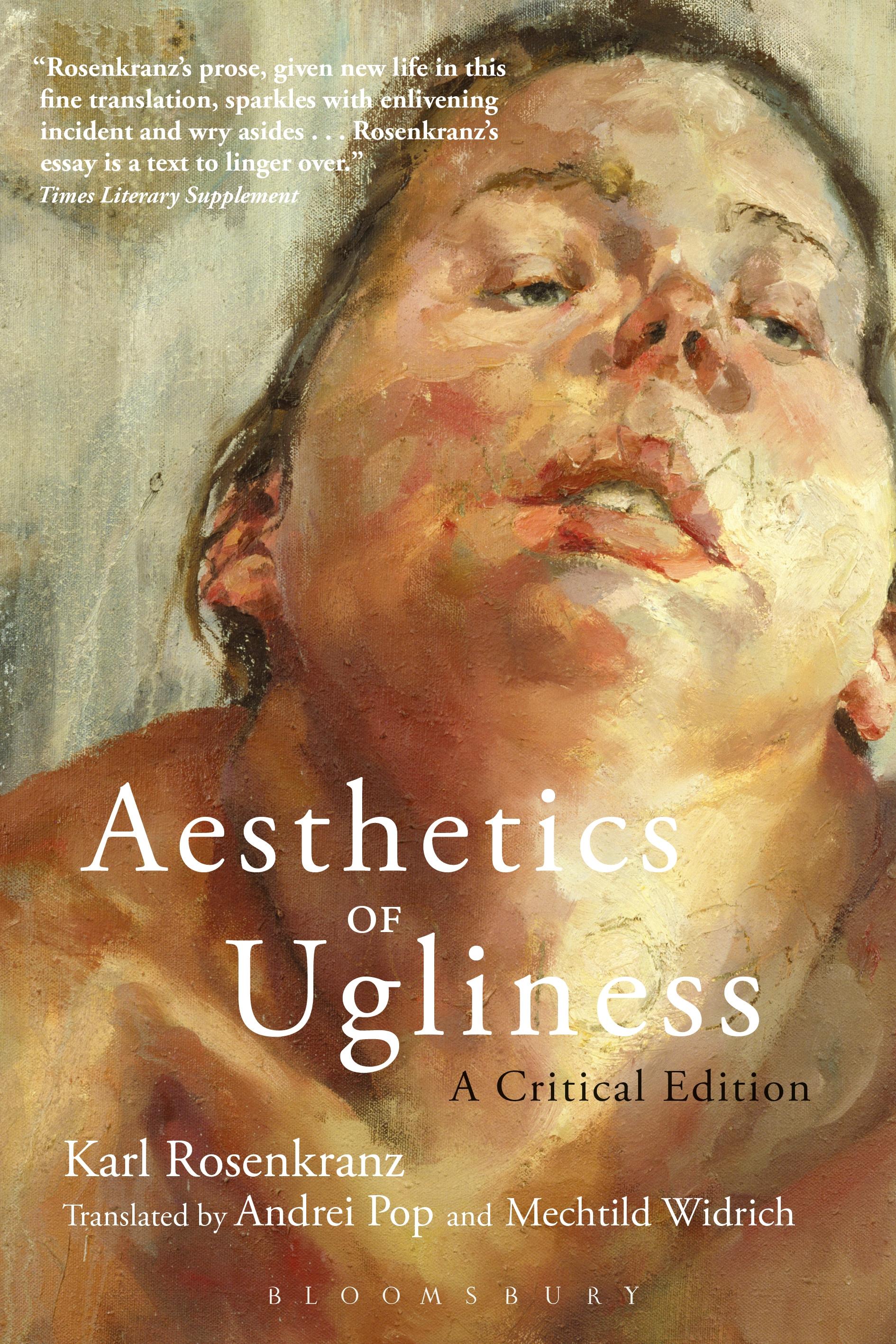
In this key text in the history of art and aesthetics, Karl Rosenkranz shows ugliness to be the negation of beauty without being reducible to evil, materiality, or other negative terms used it's conventional condemnation. This insistence on the specificity of ugliness, and on its dynamic status as a process afflicting aesthetic canons, reflects Rosenkranz's interest in the metropolis - like Walter Benjamin, he wrote on Paris and Berlin - and his voracious collecting of caricature and popular prints. Rosenkranz, living and teaching, like Kant, in remote Königsberg, reflects on phenomena of modern urban life from a distance that results in critical illumination. The struggle with modernization and idealist aesthetics makes Aesthetics of Ugliness, published four years before Baudelaire's Fleurs du Mal, hugely relevant to modernist experiment as well as to the twenty-first century theoretical revival of beauty.
Translated into English for the first time, Aesthetics of Ugliness is an indispensable work for scholars and students of modern aesthetics and modernist art, literary studies and cultural theory, which fundamentally reworks conceptual understandings of what it means for a thing to be ugly.
Translated into English for the first time, Aesthetics of Ugliness is an indispensable work for scholars and students of modern aesthetics and modernist art, literary studies and cultural theory, which fundamentally reworks conceptual understandings of what it means for a thing to be ugly.
Betal enkelt med kort, Klarna, Apple Pay eller Google Pay. Ikke fornøyd? Du har alltid 14 dagers angrerett. Les mer i våre vilkår. Har du spørsmål, send oss en e-post på hello@memmo.org.
Memmo gjør det enklere å studere – uansett hvor du er i verden. Hos oss samler du pensumbøker og smarte studieverktøy på ett og samme sted: sammendrag, quizer, podkaster og flashcards. Og så Ted, din studiekompis som svarer på alt du lurer på. Over 50 000 studenter studerer allerede her – bygget for at du skal lære raskere og stresse mindre.