
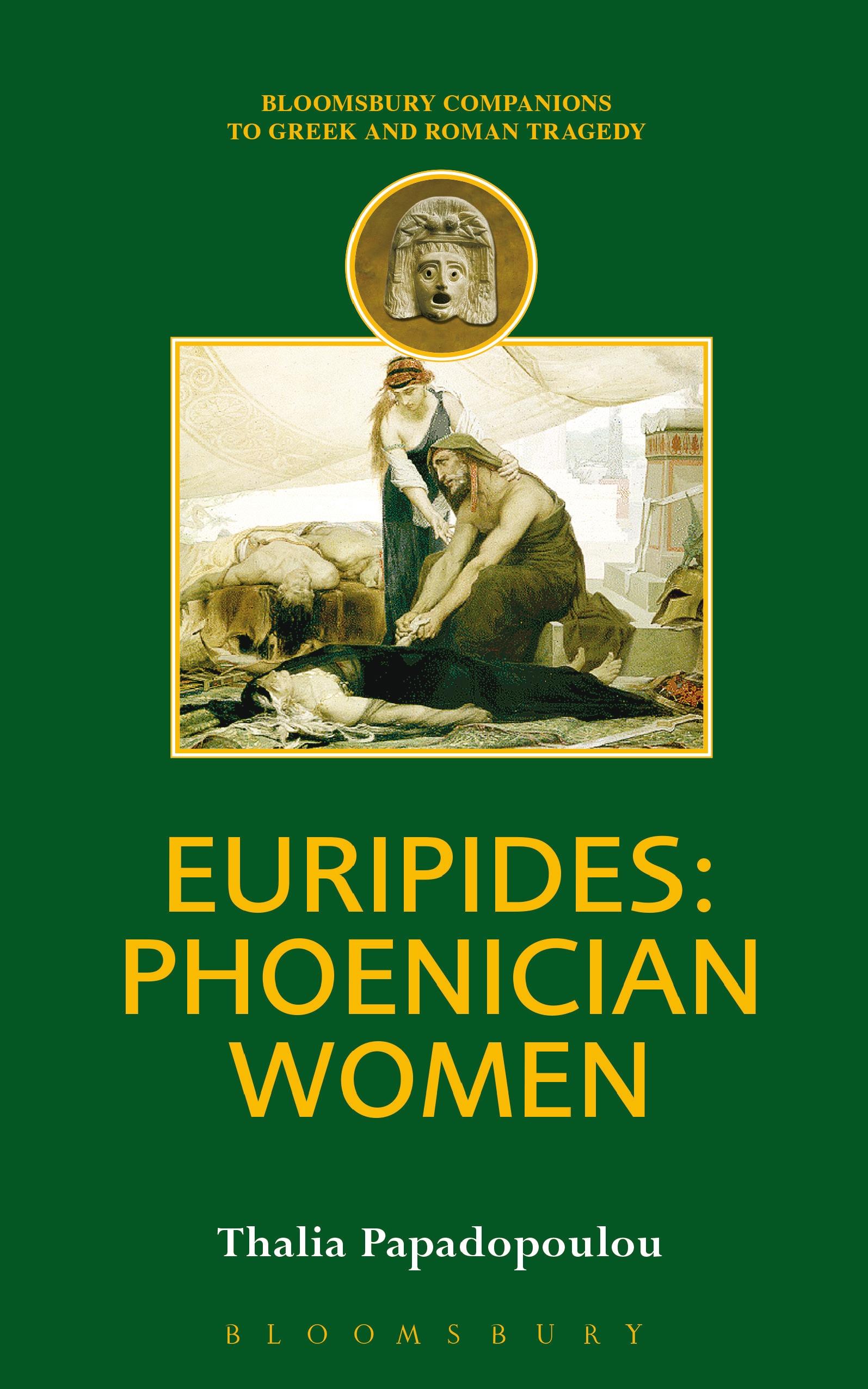
"Phoenician Women", one of Euripides' later tragedies, is an intriguing play that arguably displays some of his finest dramatic technique. Rich in cast and varied in incident, it is an example of Euripides' experimentation with structure. It dramatises the most fertile mythical tradition of the city of Thebes and its doomed royal family, focusing in particular on the conflict between Eteocles and Polyneices as a result of their father Oedipus' curse, which eventually leads to mutual fratricide. The play was very popular throughout antiquity, and became part of the so-called "Byzantine Triad" (along with "Hecuba" and "Orestes"), of plays studied in the school curriculum.Thalia Papadopoulou here offers a thorough survey of the play in its historical context, against the background of Athenian tragedy and Euripidean dramaturgy. Employing various critical approaches, she investigates the literary tradition and the dynamics of intertextuality, Euripidean dramatic technique, the use of rhetoric, characterisation, gender, the function of the Chorus, aspects of performance and the reception of the play from antiquity to modern times.
Betal enkelt med kort, Klarna, Apple Pay eller Google Pay. Ikke fornøyd? Du har alltid 14 dagers angrerett. Les mer i våre vilkår. Har du spørsmål, send oss en e-post på hello@memmo.org.
Memmo gjør det enklere å studere – uansett hvor du er i verden. Hos oss samler du pensumbøker og smarte studieverktøy på ett og samme sted: sammendrag, quizer, podkaster og flashcards. Og så Ted, din studiekompis som svarer på alt du lurer på. Over 50 000 studenter studerer allerede her – bygget for at du skal lære raskere og stresse mindre.