
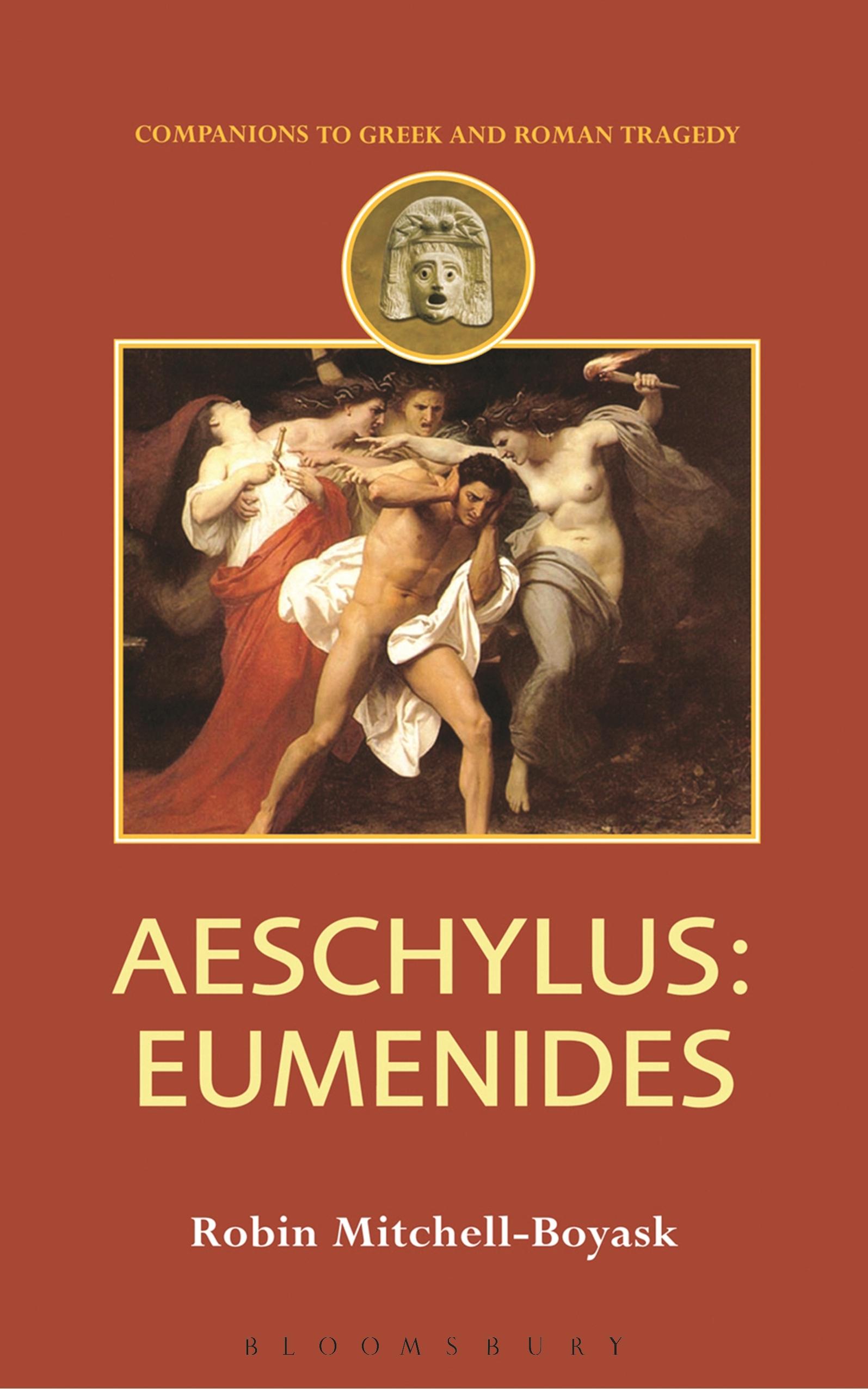
The "Eumenides", the concluding drama in Aeschylus' sole surviving trilogy, the "Oresteia", is not only one of the most admired Greek tragedies, but also one of the most controversial and contested, both to specialist scholars and public intellectuals. It stands at the crux of the controversies over the relationship between the fledgling democracy of Athens and the dramas it produced during the City Dionysia, and over the representation of women in the theatre and their implied status in Athenian society. The "Eumenides" enacts the trial of Agamemnon's son Orestes, who had been ordered under the threat of punishment by the god Apollo to murder his mother Clytemnestra, who had earlier killed Agamemnon.In the "Eumenides", Orestes, hounded by the Eumenides (Furies), travels first to Delphi to obtain ritual purgation of his mother's blood, and then, at Apollo's urging, to Athens to seek the help of Athena, who then decides herself that an impartial jury of Athenians should decide the matter. Aeschylus thus presents a drama that shows a growing awareness of the importance of free will in Athenian thought through the mythologized institution of the first jury trial.
Betal enkelt med kort, Klarna, Apple Pay eller Google Pay. Ikke fornøyd? Du har alltid 14 dagers angrerett. Les mer i våre vilkår. Har du spørsmål, send oss en e-post på hello@memmo.org.
Memmo gjør det enklere å studere – uansett hvor du er i verden. Hos oss samler du pensumbøker og smarte studieverktøy på ett og samme sted: sammendrag, quizer, podkaster og flashcards. Og så Ted, din studiekompis som svarer på alt du lurer på. Over 50 000 studenter studerer allerede her – bygget for at du skal lære raskere og stresse mindre.